

When men begin exploring hormonal health, one question often comes up quietly but carries significant weight. What happens to cholesterol when testosterone levels are altered? It is a fair question. Cholesterol is not just a number on a lab report. It is deeply tied to cardiovascular health, metabolic balance, and long term well being.
Testosterone replacement therapy has gained attention in clinical discussions, including those surrounding TRT Cleveland, not just for its effects on energy and physical performance but also for how it interacts with lipid metabolism. The relationship is not simple. It is layered, dynamic, and influenced by multiple factors.
Understanding how lipid profiles respond to testosterone changes requires stepping back and looking at the bigger picture. Hormones do not work in isolation. They influence systems, and cholesterol is part of that system.
Understanding Cholesterol and Lipid Profiles
What Are Lipids and Why They Matter
Lipids are fats that circulate in the bloodstream. They are essential for survival. They help build cell membranes, produce hormones, and store energy. But balance is everything.
Too much of certain lipids can contribute to plaque buildup in arteries. Too little of others can disrupt normal physiological function. The body constantly works to maintain equilibrium.
Types of Cholesterol Explained
LDL Cholesterol
LDL is often labeled as bad cholesterol. It carries cholesterol to tissues, but when levels are high, it can deposit in artery walls. Over time, this contributes to narrowing of blood vessels.
HDL Cholesterol
HDL is considered good cholesterol. It helps remove excess cholesterol from the bloodstream and transports it back to the liver for processing. Higher levels are generally associated with protective effects.
Triglycerides
Triglycerides are another type of fat found in the blood. They store unused calories and provide energy. Elevated levels can signal metabolic imbalance.
The Role of Testosterone in Metabolic Health
Hormonal Influence on Fat Metabolism
Testosterone plays a critical role in how the body processes fat. It influences whether the body burns fat for energy or stores it. This has a direct impact on lipid levels.
Low testosterone often correlates with increased fat storage, particularly visceral fat. This type of fat is metabolically active and closely linked to changes in cholesterol levels.
Testosterone and Lipid Regulation
Testosterone also interacts with enzymes that regulate lipid breakdown and synthesis. These biochemical pathways determine how cholesterol is produced, transported, and cleared.
When testosterone levels change, these pathways adjust. The result is a shift in lipid profiles.
What Is Testosterone Replacement Therapy
Why TRT Is Prescribed
Testosterone replacement therapy is used to restore hormone levels in men with clinically low testosterone. The goal is not enhancement but normalization.
In discussions related to TRT, the focus often includes not just symptom relief but also metabolic health, including lipid balance.
How TRT Interacts With Cholesterol Levels
Initial Changes After Starting TRT
When TRT begins, the body enters a period of adjustment. Hormonal levels shift, and metabolic processes respond.
Some men may experience early changes in lipid levels. These changes are not always permanent. They often reflect the body recalibrating.
Short Term vs Long Term Effects
Short term effects can differ from long term outcomes. Initially, certain lipid markers may fluctuate. Over time, as the body adapts, a more stable pattern emerges.
This is why single lab results do not tell the full story. Trends over time are more meaningful.
Effects of TRT on LDL Cholesterol
Potential Increases or Stability
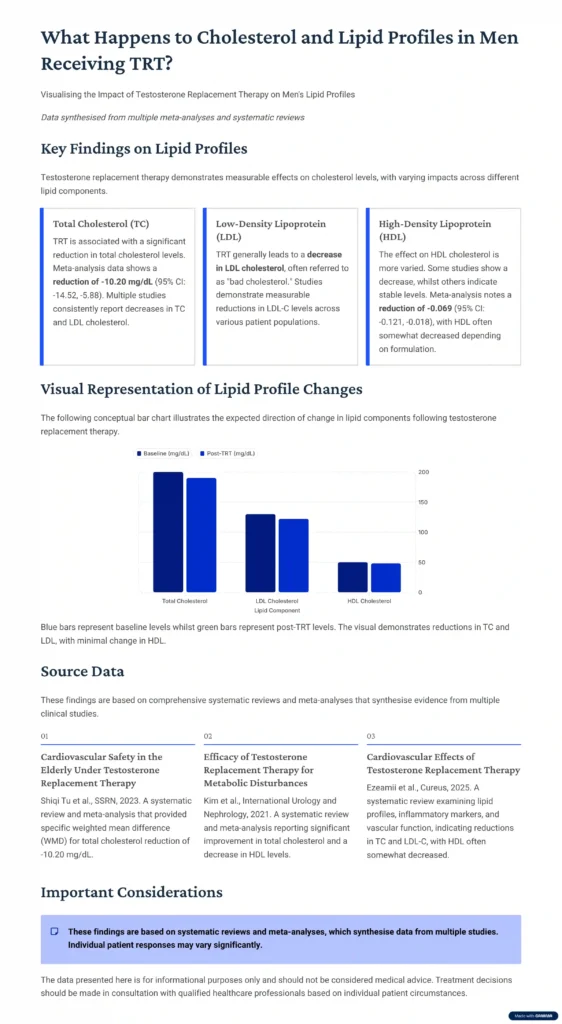
Research shows mixed outcomes regarding LDL levels during TRT. In some cases, LDL may increase slightly. In others, it remains stable.
The variation depends on baseline health, lifestyle factors, and how the body responds to hormonal changes.
Factors That Influence LDL Changes
Diet, physical activity, and genetics all play a role. TRT does not act in isolation. It interacts with existing metabolic conditions.
For example, a person with a balanced diet and active lifestyle may experience minimal changes, while others may see more noticeable shifts.
Effects of TRT on HDL Cholesterol
Why HDL May Decrease
One commonly observed effect is a modest reduction in HDL levels. This can raise questions, as HDL is associated with cardiovascular protection.
The mechanism is linked to how testosterone influences liver enzymes involved in lipid transport.
Clinical Significance of HDL Changes
A decrease in HDL does not automatically translate to increased risk. It must be evaluated alongside other factors such as LDL levels, triglycerides, and overall metabolic health.
Context matters more than isolated numbers.
Impact on Triglycerides
Changes in Fat Storage and Breakdown
TRT can influence triglyceride levels by altering how the body stores and uses fat. Increased muscle mass and reduced fat mass often contribute to improved triglyceride profiles.
However, results vary depending on lifestyle habits.
Body Composition and Lipid Profile Connection
Muscle Mass Increase
One of the well documented effects of TRT is an increase in lean muscle mass. Muscle tissue is metabolically active and helps regulate glucose and lipid metabolism.
Fat Reduction Effects
As body fat decreases, particularly visceral fat, lipid profiles may improve. This is because visceral fat is closely linked to higher LDL and triglyceride levels.
The interplay between body composition and lipids is a key factor in understanding TRT outcomes.
Cardiovascular Health Considerations
Risk vs Benefit Perspective
The relationship between TRT and cardiovascular health is complex. Lipid changes are just one piece of the puzzle.
Other factors such as blood pressure, inflammation, and insulin sensitivity also play important roles.
Understanding risk requires looking at the whole system, not just cholesterol numbers.
Individual Variability in Lipid Response
Age and Baseline Health
Age influences how the body responds to hormonal changes. Younger individuals may adapt differently compared to older adults.
Baseline health also matters. Pre existing metabolic conditions can shape outcomes.
Lifestyle and Diet Influence
Diet and exercise have a profound impact on lipid profiles. TRT may enhance or interact with these factors, but it does not replace them.
Healthy habits remain central to maintaining balanced cholesterol levels.
Monitoring Lipid Profiles During TRT
Importance of Regular Blood Tests
Monitoring is essential. Regular blood tests help track changes over time and provide insight into how the body is responding.
This allows for adjustments if needed and ensures that lipid levels remain within a healthy range.
Monitoring lipid profiles during testosterone replacement therapy is only one part of understanding overall cardiovascular health. Cholesterol markers such as LDL, HDL, and triglycerides provide important insights, but they do not exist in isolation. Long-term health outcomes depend on how these values interact with broader circulatory and metabolic factors over time. This is why ongoing evaluation is essential, especially when considering how hormonal therapy influences heart health. Exploring topics like What Long-Term Cardiovascular Monitoring Is Needed During Testosterone Replacement Therapy can provide a deeper understanding of how clinicians assess risk and maintain balance throughout treatment.
Misconceptions About TRT and Cholesterol
Separating Myths From Evidence
There are many misconceptions about TRT and cholesterol. Some assume it always worsens lipid profiles, while others believe it always improves them.
The truth lies somewhere in between. The effects are individualized and depend on multiple variables.
Long Term Trends in Lipid Profiles
Adaptation Over Time
Over the long term, the body often adapts to hormonal changes. Lipid levels may stabilize, reflecting a new equilibrium.
This adaptation highlights the importance of patience and consistent monitoring.
The Role of Medical Oversight
Interpreting Lab Results
Interpreting lipid changes requires context. A single value does not define health.
Patterns, trends, and overall clinical picture provide a more accurate understanding.
Discussions around TRT Cleveland often emphasize this comprehensive approach to evaluation.
When Lipid Changes Require Attention
Warning Signs in Blood Work
Significant increases in LDL, sharp decreases in HDL, or rising triglycerides may warrant closer evaluation.
These changes should be assessed alongside other health indicators to determine their significance.
Vitality Lounge Med Spa Serving the The Flats Community and Beyond in Cleveland
Vitality Lounge Med Spa is dedicated to serving the diverse needs of the local community of Cleveland, including individuals residing in neighborhood like The Flats. With its convenient location near landmarks such as the Wasmer Field and Gabor Track and major intersections like Bridge Ave and W28th St (coordinates: Latitude: 41.4855734, Longitude: -81.7061015), we offer TRT services.
Get TRT services at The Flats Now
Call Us or Contact Us (216) 202-4770
Navigate from The Flats Bend to Vitality Lounge Med Spa Now
The relationship between testosterone replacement therapy and cholesterol is not straightforward. It is shaped by biology, lifestyle, and individual variability. While some lipid markers may shift, these changes do not occur in isolation.
Understanding how TRT influences cholesterol requires looking beyond single numbers and focusing on patterns over time. Testosterone affects metabolism, body composition, and energy regulation, all of which contribute to lipid balance.
By paying attention to these interconnected systems, it becomes clear that cholesterol changes during TRT are part of a broader physiological response rather than a simple cause and effect scenario.
FAQs
1. Does TRT always increase cholesterol levels?
No, TRT does not consistently increase cholesterol. Effects vary depending on individual health, lifestyle, and baseline hormone levels.
2. Why might HDL decrease during TRT?
Testosterone can influence enzymes involved in lipid transport, which may lead to a modest reduction in HDL levels in some individuals.
3. Can TRT improve triglyceride levels?
In some cases, yes. Improvements in body composition and fat metabolism may contribute to lower triglyceride levels.
4. How often should lipid levels be monitored during TRT?
Regular monitoring is important, typically through periodic blood tests that track trends over time.
5. Are lipid changes during TRT permanent?
Not necessarily. The body often adapts over time, and lipid levels may stabilize as hormonal balance is achieved.