
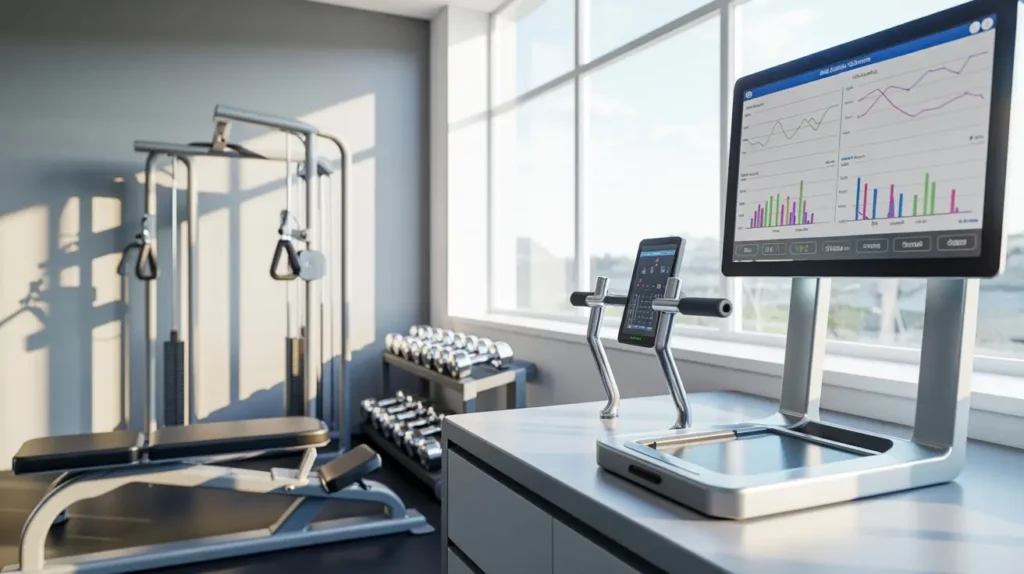
Physical strength is not just about lifting heavier weights or pushing harder in the gym. It reflects how well your muscles, nerves, and hormones are working together. When strength begins to fluctuate or decline, it often signals deeper changes within the body. One of the most influential factors behind these changes is hormonal balance, particularly testosterone. Understanding how strength evolves over time requires more than casual observation. It calls for structured evaluation and consistent monitoring. This is where the approach taken by a Low Testosterone Clinic Cleveland becomes relevant, as it focuses on tracking physical performance alongside hormonal health in a systematic way.
Why Strength Changes Matter
Strength is closely tied to daily function. It influences posture, mobility, endurance, and even injury prevention. A gradual loss of strength can make routine activities feel more demanding. On the other hand, improvements in strength often lead to better physical confidence and resilience. Monitoring these changes helps identify whether the body is adapting positively or facing underlying challenges.
Link Between Hormones and Muscle Function
Hormones act as messengers that regulate how muscles grow, repair, and perform. Testosterone, in particular, plays a key role in protein synthesis and muscle fiber development. When hormone levels shift, muscle performance often follows.
Understanding Testosterone and Muscle Strength
To understand how clinics assess strength, it helps to first understand the biological connection between testosterone and muscle tissue.
Role of Testosterone in Muscle Growth
Testosterone supports the development of lean muscle mass by enhancing the body’s ability to build and repair muscle fibers. Higher levels are generally associated with greater muscle strength and faster recovery.
Neuromuscular Efficiency and Hormones
Strength is not only about muscle size. It also depends on how effectively the nervous system communicates with muscles. Testosterone influences this connection, affecting coordination and force generation.
Causes of Declining Physical Strength
Strength loss does not happen in isolation. It is usually the result of multiple interacting factors.
Age Related Muscle Loss
As people age, muscle mass naturally decreases. This process, often referred to as sarcopenia, can be accelerated by hormonal decline.
Hormonal Imbalances
Low testosterone levels can reduce the body’s ability to maintain and build muscle, leading to noticeable strength declines over time.
Lifestyle Factors
Sedentary behavior, poor nutrition, and inadequate sleep all contribute to reduced strength. These factors can also influence hormone levels, creating a cycle that reinforces decline.
Initial Assessment at a Low Testosterone Clinic
A structured assessment provides a starting point for tracking changes in strength.
Medical History and Symptom Evaluation
The process begins with a detailed review of medical history and current symptoms. This helps identify patterns that may be linked to strength changes.
Baseline Strength Measurements
Establishing a baseline is essential. It provides a reference point against which future progress can be measured.
Functional Movement Screening
Functional tests evaluate how the body performs basic movements such as squatting, lifting, and reaching. These assessments reveal strengths and weaknesses in muscle groups.
Diagnostic Testing and Biomarkers
Objective data adds depth to the evaluation process.
Blood Tests for Hormone Levels
Blood tests measure testosterone levels along with other hormones that influence muscle function. These results help explain observed changes in strength.
Additional Health Markers
Markers such as inflammation levels, vitamin deficiencies, and metabolic indicators provide further insight into physical performance.
Methods for Measuring Physical Strength
Strength can be measured in several ways, each offering a different perspective.
Grip Strength Testing
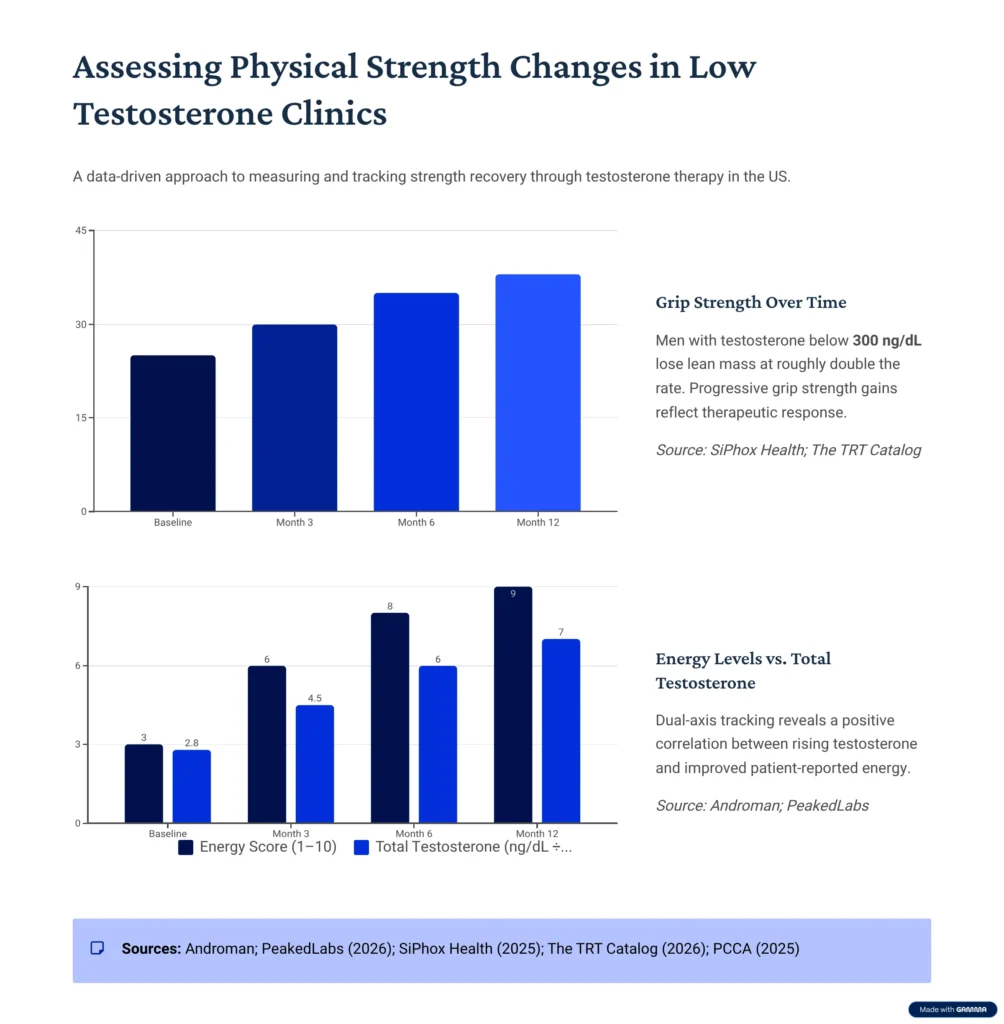
Grip strength is often used as a simple yet effective indicator of overall muscle function. It correlates with general strength and health.
Resistance and Load Based Assessments
These tests measure how much weight a person can lift or move. They provide direct insight into muscular capacity.
Endurance and Repetition Analysis
Endurance tests evaluate how long muscles can sustain activity. This adds another dimension to strength assessment.
Tracking Muscle Mass and Body Composition
Strength is closely related to muscle mass, but they are not identical.
Understanding strength changes over time also requires looking beyond performance alone and examining how muscle mass and body composition shift alongside hormone levels. Testosterone plays a major role in maintaining lean muscle while helping regulate fat distribution, which directly affects physical performance and endurance.
Changes in body composition often reveal early signs of hormonal imbalance before noticeable strength loss occurs. Learning more about How TRT Influences Muscle Mass and Body Composition helps explain why Low Testosterone Clinics track both strength and physical composition together as part of a complete long-term health assessment.
Body Fat Versus Lean Muscle
Body composition analysis distinguishes between fat mass and lean muscle. Changes in these components can influence strength levels.
Imaging and Measurement Tools
Advanced tools such as bioelectrical impedance or scanning technologies provide detailed data on muscle distribution and growth.
Monitoring Progress Over Time
Tracking progress is an ongoing process that requires consistency.
Periodic Strength Evaluations
Regular assessments help identify trends in strength development. These evaluations are typically conducted at set intervals.
Adjusting Measurement Benchmarks
As strength improves or declines, benchmarks are adjusted to reflect current capabilities. This ensures that progress remains meaningful.
Role of Exercise and Physical Activity
Exercise is a key factor in strength development and assessment.
Strength Training Programs
Structured training programs are often used to stimulate muscle growth and improve strength. These programs also provide measurable outcomes.
Recovery and Adaptation
Recovery allows muscles to repair and grow stronger. Monitoring recovery patterns helps assess whether the body is adapting effectively.
Nutritional Influence on Strength Changes
Nutrition plays a critical role in supporting muscle function.
Protein Intake and Muscle Repair
Protein provides the building blocks for muscle tissue. Adequate intake supports strength gains and recovery.
Micronutrients and Hormonal Support
Vitamins and minerals influence hormone production and muscle function. Deficiencies can hinder progress.
Psychological Factors in Strength Development
Strength is not purely physical. Mental factors also play a role.
Motivation and Consistency
Consistent effort is essential for strength improvement. Motivation influences how regularly individuals engage in physical activity.
Mind Muscle Connection
The ability to focus on muscle activation during exercise can enhance performance and results.
Regional Context of Low Testosterone Clinic cleveland
Environmental and lifestyle factors vary by region, influencing strength trends.
Lifestyle Patterns and Strength Trends
In areas like Cleveland, seasonal changes and daily routines can affect physical activity levels and, in turn, strength.
Environmental Influences
Weather conditions, access to outdoor spaces, and cultural habits all play a role in shaping physical performance.
Insights Related to Vitality Lounge Med Spa
Discussions involving Vitality Lounge Med Spa often highlight the importance of combining data analysis with individualized care. While the focus remains informational, it is clear that integrating multiple assessment methods leads to a more complete understanding of strength changes.
Integrated Approach to Strength Monitoring
Combining physical tests, hormonal analysis, and lifestyle evaluation creates a comprehensive picture of strength development.
Importance of Data Driven Care
Using measurable data ensures that changes in strength are accurately tracked and interpreted.
Common Challenges in Assessing Strength
Assessing strength is not without its difficulties.
Variability in Daily Performance
Strength can fluctuate from day to day بسبب factors such as fatigue, stress, and nutrition. This variability must be considered during assessment.
Measurement Limitations
No single test can capture all aspects of strength. Multiple methods are needed for a complete evaluation.
Long Term Evaluation Strategies
Sustained progress requires long term planning and monitoring.
Establishing Realistic Progress Goals
Setting achievable goals helps maintain motivation and ensures steady improvement.
Sustaining Strength Gains
Maintaining strength requires ongoing effort, including regular exercise and balanced nutrition.
Vitality Lounge Med Spa Serving the Irishtown Bend Community and Beyond in Cleveland
Vitality Lounge Med Spa is dedicated to serving the diverse needs of the local community of Cleveland, including individuals residing in neighborhood like Irishtown Bend. With its convenient location near landmarks such as the Jimmy Bivins Park and major intersections like Washington Ave and W24th St (coordinates: Latitude: 41.4930734, Longitude: -81.7061015), we offer Testosterone Therapy services.
Get Testosterone Therapy services at Irishtown Bend Now
Call Us or Contact Us (216) 202-4770
Navigate from Irishtown Bend to Vitality Lounge Med Spa Now
Assessing changes in physical strength over time is a complex process that involves more than simply measuring how much weight someone can lift. It requires a combination of baseline evaluations, diagnostic testing, regular monitoring, and lifestyle analysis. By focusing on both hormonal health and physical performance, a Low Testosterone Clinic provides a structured approach to understanding strength changes. This process highlights the interconnected nature of the body, where hormones, muscles, nutrition, and mindset all play a role. With consistent evaluation and informed adjustments, it becomes possible to track progress accurately and support long term strength development in a meaningful way.
FAQs
1. How often should strength be assessed in relation to hormone levels?
Strength assessments are typically conducted at regular intervals, depending on individual goals and treatment plans.
2. Can strength improve even if testosterone levels are low?
Yes, but improvements may be limited compared to individuals with balanced hormone levels.
3. What is the simplest way to measure strength at home?
Grip strength tests or basic bodyweight exercises can provide a general indication of strength.
4. Why is body composition important in strength assessment?
Body composition helps distinguish between muscle gain and fat changes, which both affect strength.
5. Do psychological factors really impact physical strength?
Yes, factors such as motivation and focus can influence performance and overall strength development.