

Hydration is one of those things people often take for granted until something feels off. You wake up tired, your muscles feel tight, or your body seems heavier than usual. Now imagine adding hormonal changes into that mix. This is where testosterone therapy enters the conversation. Many individuals exploring Testosterone Therapy Cleveland at places like Vitality Lounge Med Spa often wonder how it affects not just energy or strength, but also something as basic as water balance.
The truth is, hormones and hydration are closely connected. Testosterone does more than influence muscle mass or mood. It also plays a role in how the body manages fluids. Understanding this relationship helps you stay ahead of changes rather than reacting to them.
Understanding Testosterone and Its Role in the Body
Testosterone is often associated with strength and physical performance, but its influence goes much deeper. It acts as a regulator across multiple systems in the body.
Key Functions of Testosterone Beyond Muscle Growth
Testosterone supports red blood cell production, bone density, fat distribution, and even how your body processes nutrients. It also interacts with hormones that control fluid balance. This means changes in testosterone levels can subtly shift how your body holds onto or releases water.
What Is Testosterone Therapy?
Testosterone therapy involves restoring hormone levels when they fall below an optimal range. While the primary goal is balance, the effects extend into many areas, including hydration.
Why Hormone Levels Matter for Balance
Hormones operate like a control system. When one shifts, others respond. Testosterone influences hormones such as aldosterone and antidiuretic hormone, both of which regulate fluid levels. So when testosterone levels change, hydration patterns can shift as well.
The Connection Between Hormones and Hydration
Hydration is not just about drinking water. It is about how your body uses, stores, and distributes that water.
How the Body Regulates Fluid Balance
The body maintains fluid balance through a complex system involving the kidneys, hormones, and electrolytes. This system decides how much water to retain and how much to release.
Role of Electrolytes in Hydration
Electrolytes like sodium, potassium, and magnesium help control where water goes in the body. They act like gatekeepers, guiding fluid into and out of cells. When hormone levels shift, these electrolyte balances can shift too.
How Testosterone Therapy Influences Hydration Needs
Once testosterone therapy begins, the body starts adapting. This adaptation often changes how much water the body needs.
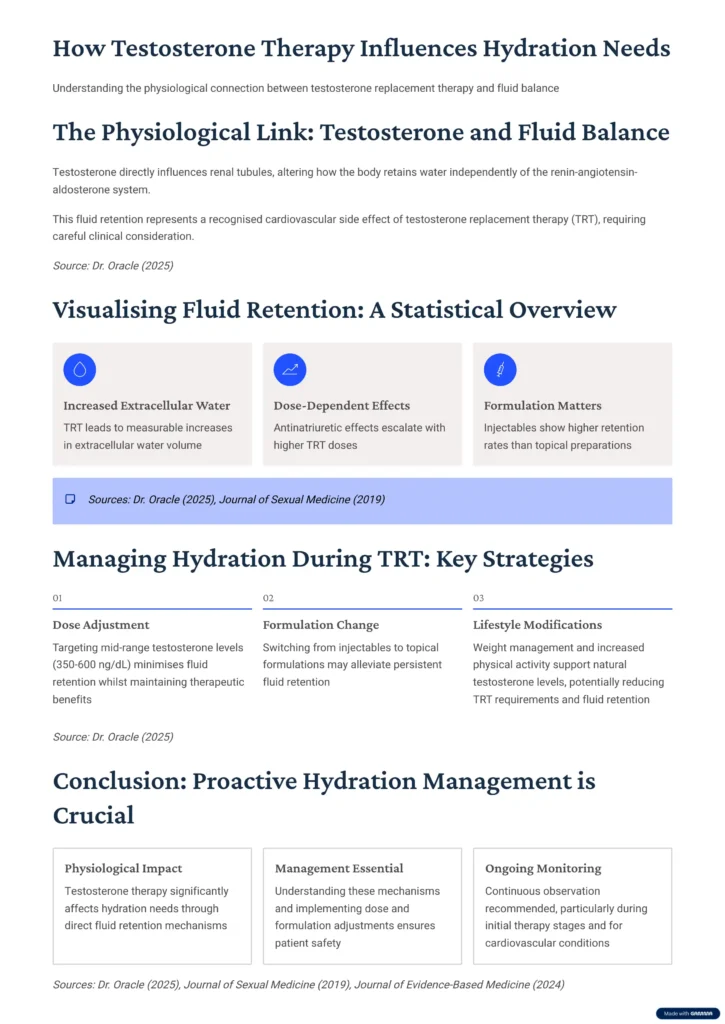
As hydration demands increase and the body adjusts to shifting hormone levels, it becomes important to understand that fluid balance is not only about intake but also about how efficiently the body circulates and utilizes that fluid. Internal systems such as blood volume regulation, electrolyte distribution, and cellular energy processes all play a role in maintaining stability during these changes. Exploring topics like How Does Testosterone Therapy Influence Hydration Needs and Fluid Retention Patterns? can provide deeper insight into how hydration functions at a physiological level and how the body maintains equilibrium during hormonal adjustments.
Changes in Metabolism and Water Demand
Testosterone can increase metabolic activity. A faster metabolism means the body uses more resources, including water. Cells become more active, and with that comes an increased need for hydration.
Increased Physical Activity and Fluid Requirements
Many individuals notice improved energy and stamina. Naturally, this can lead to more physical activity. More movement means more sweating, which increases fluid loss. As a result, hydration needs rise.
Fluid Retention Explained
Fluid retention happens when the body holds onto excess water. It can show up as puffiness, swelling, or a feeling of heaviness.
What Causes Water Retention in the Body
Water retention can be influenced by diet, activity levels, and hormonal changes. It is not always a negative sign. Sometimes it is simply the body adjusting.
Hormonal Triggers of Fluid Retention
Hormones like aldosterone signal the kidneys to retain sodium, which in turn holds water. Testosterone can influence this process indirectly, leading to temporary shifts in fluid retention.
How Testosterone Therapy Affects Fluid Retention Patterns
The impact of testosterone therapy on fluid retention is often most noticeable in the early stages.
Early-Stage Fluid Shifts
At the beginning, the body is adjusting to new hormone levels. This can lead to mild water retention. It may feel like slight bloating or tightness, but this is often temporary.
Long-Term Adaptation in Fluid Balance
Over time, the body usually stabilizes. Fluid retention patterns become more consistent, and the initial fluctuations tend to settle. This is part of the body’s natural adaptation process.
Signs Your Hydration Needs Are Changing
Recognizing changes early can help you stay balanced.
Physical Indicators to Watch
You might notice increased thirst, dry skin, or changes in urine color. On the other hand, signs of fluid retention include swelling in the hands or feet and a feeling of heaviness.
Managing Hydration During Testosterone Therapy
Staying hydrated is not just about drinking more water. It is about drinking smart.
Daily Hydration Strategies
Consistent water intake throughout the day helps maintain balance. Instead of drinking large amounts at once, spreading it out keeps the body stable.
Balancing Water and Electrolytes
Too much water without electrolytes can dilute essential minerals. Including foods rich in potassium and magnesium helps maintain proper balance.
Lifestyle Factors That Influence Fluid Balance
Hydration does not exist in isolation. It is influenced by everyday habits.
Diet and Sodium Intake
High sodium intake can lead to water retention. Reducing excess salt and focusing on whole foods can help maintain balance.
Sleep and Recovery
Sleep plays a key role in hormone regulation. Poor sleep can disrupt fluid balance and increase the likelihood of retention.
Individual Variability in Hydration Response
Not everyone responds to testosterone therapy in the same way.
Why Everyone Responds Differently
Factors like age, activity level, diet, and overall health all play a role. Some people may notice significant changes, while others experience only subtle shifts.
Common Misconceptions About Fluid Retention
Fluid retention often gets a bad reputation, but it is not always harmful.
Separating Temporary Changes from Long-Term Issues
Short-term fluid retention is often part of the adjustment process. It does not necessarily indicate a problem. Understanding this can prevent unnecessary concern.
The Role of Monitoring and Awareness
Awareness is one of the most effective tools for managing hydration.
Tracking Changes Over Time
Keeping an eye on hydration habits, body weight fluctuations, and physical sensations can help identify patterns. Over time, this awareness leads to better balance.
For individuals exploring Testosterone Therapy Cleveland through educational resources shared by Vitality Lounge Med Spa, understanding these patterns can provide valuable insight into how the body adapts.
Vitality Lounge Med Spa Serving the Irishtown Bend Community and Beyond in Cleveland
Vitality Lounge Med Spa is dedicated to serving the diverse needs of the local community of Cleveland, including individuals residing in neighborhood like Irishtown Bend. With its convenient location near landmarks such as the Jimmy Bivins Park and major intersections like Washington Ave and W24th St (coordinates: Latitude: 41.4930734, Longitude: -81.7061015), we offer Testosterone Therapy services.
Get Testosterone Therapy services at Irishtown Bend Now
Call Us or Contact Us (216) 202-4770
Navigate from Irishtown Bend to Vitality Lounge Med Spa Now
Testosterone therapy influences more than just energy or muscle development. It plays a meaningful role in how the body manages hydration and fluid retention. From increased water needs due to higher metabolic activity to temporary fluid retention during early stages, these changes are part of a broader adjustment process.
By understanding how hydration needs shift and recognizing signs of fluid imbalance, individuals can maintain better overall balance. Small, consistent habits such as proper hydration, balanced nutrition, and attention to lifestyle factors can make a significant difference.
Ultimately, the body is always working to find equilibrium. Testosterone therapy simply introduces a new variable into that equation, and with awareness, it becomes easier to adapt and maintain stability.
FAQs
1. What is the main reason hydration needs change during testosterone therapy?
Changes in metabolism and activity levels often increase the body’s demand for water.
2. Is fluid retention during testosterone therapy permanent?
In most cases, it is temporary and part of the body’s adjustment process.
3. How can someone tell if they are properly hydrated?
Clear or light-colored urine, steady energy levels, and minimal thirst are common indicators.
4. Does increased water intake prevent fluid retention?
Balanced hydration helps, but electrolyte balance and sodium intake also play important roles.
5. Why do some people experience more fluid changes than others?
Individual factors like diet, activity level, and overall health influence how the body responds.