


Starting hormone replacement therapy (HRT) is a significant medical decision. Whether you’re exploring it for managing menopause, testosterone decline, or other hormonal imbalances, the process should always begin with a comprehensive evaluation. Before introducing hormones into the body, it’s essential to understand your current health status.
In Cleveland, healthcare providers like Vitality Lounge Med Spa may follow standard medical protocols to evaluate patients before beginning HRT. This article outlines the full range of tests commonly recommended before starting hormone replacement therapy in Cleveland, offering you a clear, evidence-based understanding of the process.
Why Pre-Treatment Testing Is Essential
Minimizing Risks with a Thorough Evaluation
Hormones play a major role in various body systems—from cardiovascular to metabolic health. Jumping into therapy without testing can lead to complications, such as blood clots, liver stress, or exacerbating underlying conditions. Medical testing helps reduce these risks and ensures that treatment is both safe and necessary.
Tailoring Therapy to the Individual
Everyone’s hormonal baseline is different. Some people may have naturally lower hormone levels without symptoms, while others may have imbalances that strongly affect their daily life. Medical testing provides the objective data needed to determine whether HRT is appropriate and what approach would be best.
Basic Health Screenings Everyone Should Expect
Before discussing hormone-specific tests, a general health screening sets the foundation for safe therapy.
Full Medical History Review
Clinicians usually begin with a thorough review of your medical history. This includes current medications, past illnesses, surgeries, lifestyle factors, and family health trends. It helps identify risk factors—such as a family history of cancer or cardiovascular disease—that could influence HRT eligibility.
Physical Examination
A physical exam includes checking your heart rate, blood pressure, weight, and other vital signs. It’s a basic yet essential step to identify any immediate concerns or abnormalities before initiating treatment.
Blood Tests: The Core of Pre-HRT Screening
Bloodwork provides the most direct insight into hormone levels and overall organ function.
Hormone Level Testing
This is the cornerstone of HRT evaluation. Knowing your current hormone levels helps determine whether therapy is even needed.
Estrogen and Progesterone (for Women)
In women, estrogen and progesterone levels fluctuate with age, especially around menopause. Testing these levels can clarify if symptoms like hot flashes or mood swings are hormone-related.
Testosterone (for Men and Women)
Testosterone isn’t just for men—it also plays a role in female health. Low testosterone can affect energy, mood, and muscle mass. Blood testing confirms whether levels are within a healthy range.
Thyroid Function Tests
Thyroid hormones (T3, T4, and TSH) impact metabolism, energy, and hormonal balance. An undiagnosed thyroid disorder can mimic hormone imbalance symptoms or interfere with treatment effectiveness.
Complete Blood Count (CBC)
A CBC checks your red and white blood cells and platelet levels. Abnormal values can indicate anemia, infections, or immune issues that need to be addressed before starting therapy.
Liver and Kidney Function Panels
These organs are responsible for metabolizing and clearing hormones from the body. Liver enzymes and kidney function markers (like creatinine and BUN) must be within normal range before introducing hormone supplements.
Specialized Tests Depending on Medical History
Your personal health profile may call for additional, more focused evaluations.
Lipid Profile and Cardiovascular Risk Assessment
Hormone therapy can influence cholesterol levels. A lipid panel (measuring HDL, LDL, and triglycerides) helps assess your risk of heart disease, especially for older adults or those with family history.
Blood Glucose and A1C Tests
These tests check for insulin resistance or diabetes. Since HRT may affect blood sugar regulation, it’s important to understand your glucose control beforehand.
Clotting Factors and Coagulation Panel
Some people have a higher risk of blood clots due to genetic or acquired conditions. A coagulation panel identifies issues that could lead to complications during therapy.
Cancer Screenings Before HRT
Some types of cancer are sensitive to hormone changes. Screening helps identify risks before any hormone treatment begins.
Breast Cancer Screening (Mammogram)
This is essential for women over 40 or those with a family history of breast cancer. Since estrogen can stimulate breast tissue, any abnormalities must be investigated first.
Prostate-Specific Antigen (PSA) Test
In men, the PSA test screens for prostate abnormalities, including cancer. Testosterone therapy may influence prostate growth, making this test an important part of the evaluation.
Pelvic Ultrasound or Pap Smear (For Women)
These tests help identify issues with the uterus, ovaries, or cervix. Estrogen therapy can affect uterine lining thickness, so having recent gynecological evaluations is crucial.
Bone Health Evaluation
Hormones and bone density are tightly linked—especially in postmenopausal women.
Bone Mineral Density (DEXA Scan)
A DEXA scan measures how strong your bones are. Estrogen helps maintain bone density, so if you’re deficient, it can lead to osteoporosis. Knowing your baseline helps guide preventive care and treatment decisions.
Mental Health Screening
Hormones significantly impact mood and mental clarity. A screening for mental health conditions helps provide a holistic view.
Importance of Addressing Mood and Cognitive Health
Low estrogen or testosterone can contribute to depression, anxiety, brain fog, and irritability. Screening for these symptoms ensures they’re not misattributed solely to hormonal changes and that proper support is given.
Essential Medical Tests Before Starting Hormone Replacement Therapy (HRT) in the U.S.
- Before initiating HRT, comprehensive evaluation is critical to ensure safety and effectiveness.
- Recommended baseline tests include:
- History & Physical Exam: Assess lifestyle, family history (breast cancer, cardiovascular disease, osteoporosis), and symptoms.
- Blood Tests: Liver function, kidney function, anemia screening, fasting blood sugar, lipid profile.
- Screenings: Mammography, bone mineral density (BMD) test, Pap smear.
- Elective tests based on risk factors: thyroid function, breast ultrasound, endometrial biopsy.
- Regular monitoring every 1–2 years is advised to adjust therapy and detect complications early.
- These guidelines align with the 2020 Menopausal Hormone Therapy Guidelines (PMC) and clinical endocrinology recommendations.
Source: PMC (2020) – The 2020 Menopausal Hormone Therapy Guidelines, TransActual.org.uk
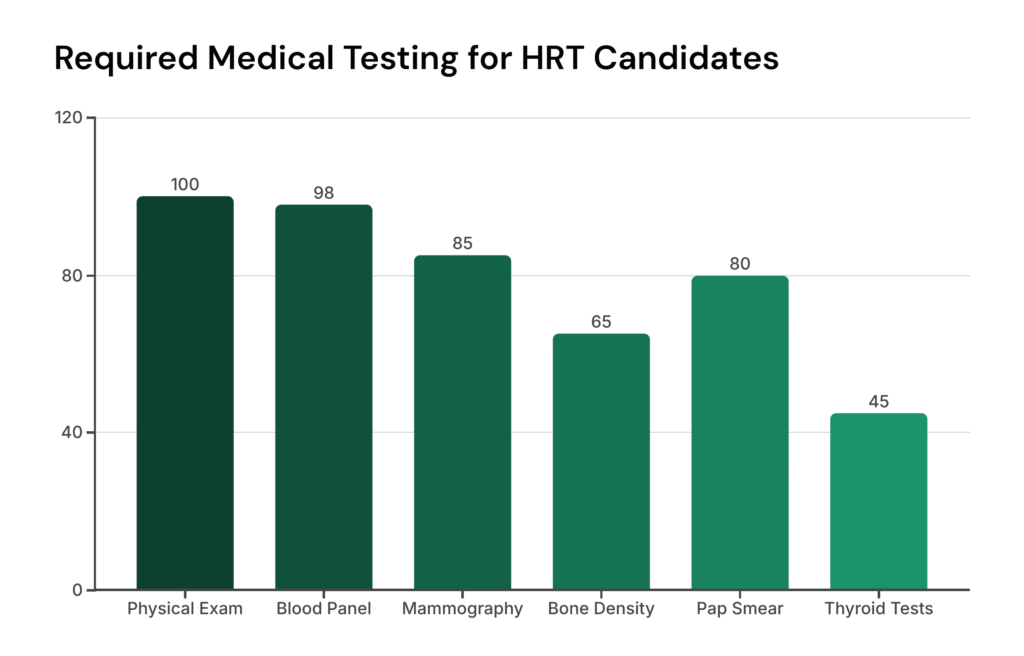
The comprehensive pre-HRT assessment typically includes a detailed medical history, physical examination, and various laboratory tests. Blood panels assess liver and kidney function, anemia markers, glucose levels, and lipid profiles. Age-appropriate cancer screenings like mammography and Pap smears are essential, while bone mineral density tests help establish baseline bone health.
Source: The 2020 Menopausal Hormone Therapy Guidelines (PMC), TransActual.org.uk
How These Tests Guide Hormone Replacement Therapy
Choosing the Right Hormone and Dose
Testing helps determine the precise formulation and dosage of HRT. For instance, someone with only slightly low estrogen might benefit from a lower dose, while others may require a more tailored regimen.
Monitoring and Adjustments Over Time
Initial test results serve as your baseline. Follow-up testing at regular intervals allows healthcare providers to track your progress and adjust your treatment accordingly. This helps optimize results and reduce risks.
Hormone replacement therapy is not something to rush into—it’s a medical treatment that should be guided by careful evaluation and ongoing monitoring. By conducting the necessary medical tests before beginning therapy, healthcare providers can better ensure that the approach is both safe and effective.
In regions like Cleveland, clinics such as Vitality Lounge Med Spa may incorporate comprehensive pre-treatment assessments into their care model. These evaluations are aligned with national clinical guidelines and provide a standardized approach to initiating hormone replacement therapy in Cleveland.
Vitality Lounge Med Spa Serving the Irishtown Bend Community and Beyond in Cleveland
Vitality Lounge Med Spa is dedicated to serving the diverse needs of the local community of Cleveland, including individuals residing in neighborhoods like Irishtown Bend. With its convenient location near landmarks such as the Cuyahoga River and major intersections like Columbus Rd and Center St (coordinates: Latitude: 41.4894445, Longitude: -81.7060573, we offer Hormone Replacement Therapy services.
Get Hormone Replacement Therapy Services at Irishtown Bend Now
Call Us (216) 202-4770
Navigate from Irishtown Bend to Vitality Lounge Med Spa Now
Testing not only helps identify whether HRT is right for you but also protects your long-term health. An informed beginning is always the best start.
FAQs
1. Why are medical tests necessary before starting hormone replacement therapy?
Tests help ensure the therapy is appropriate for your body’s needs and uncover any risks or contraindications that could make HRT unsafe.
2. Can I begin HRT without hormone level testing?
No. Hormone level testing is essential to verify deficiencies or imbalances. Therapy without data may do more harm than good.
3. What’s included in a typical HRT blood test panel?
Common panels include hormone levels (estrogen, progesterone, testosterone), thyroid function, liver/kidney function, CBC, and lipid profile.
4. How often are follow-up tests required during HRT?
Follow-up tests are usually done every 3 to 6 months in the first year to monitor your response and adjust dosage as needed.
5. Are these tests different for men and women?
Some tests are gender-specific (like mammograms or PSA), but most—like hormone panels and metabolic screenings—are shared across both groups.