
Low testosterone can be a real game-changer for men, affecting everything from energy levels to muscle mass, libido, and even mood. But here’s the thing: while medications and therapies help, exercise can act like a natural booster to complement your treatment. If you’re undergoing low testosterone treatment Cleveland, understanding the right routines can make all the difference. Let’s break down the science and practical strategies that can help.
Low Testosterone and Its Effects
What Low Testosterone Really Means
Low testosterone, or “low T,” isn’t just about feeling less manly—it’s a full-body experience. Testosterone is a critical hormone for men, influencing muscle growth, bone density, energy levels, and even cognitive function. When levels dip below the normal range, you might notice persistent fatigue, difficulty building muscle, or even a decline in mental sharpness.
Common Symptoms and Lifestyle Impacts
Symptoms can vary widely, but common signs include decreased stamina, weight gain (especially around the midsection), reduced libido, and mood swings. These changes can make staying active feel harder, creating a cycle where inactivity lowers testosterone even further. That’s why pairing treatment with exercise is so crucial—it interrupts the cycle.
The Role of Exercise in Hormonal Health
How Exercise Affects Testosterone Levels
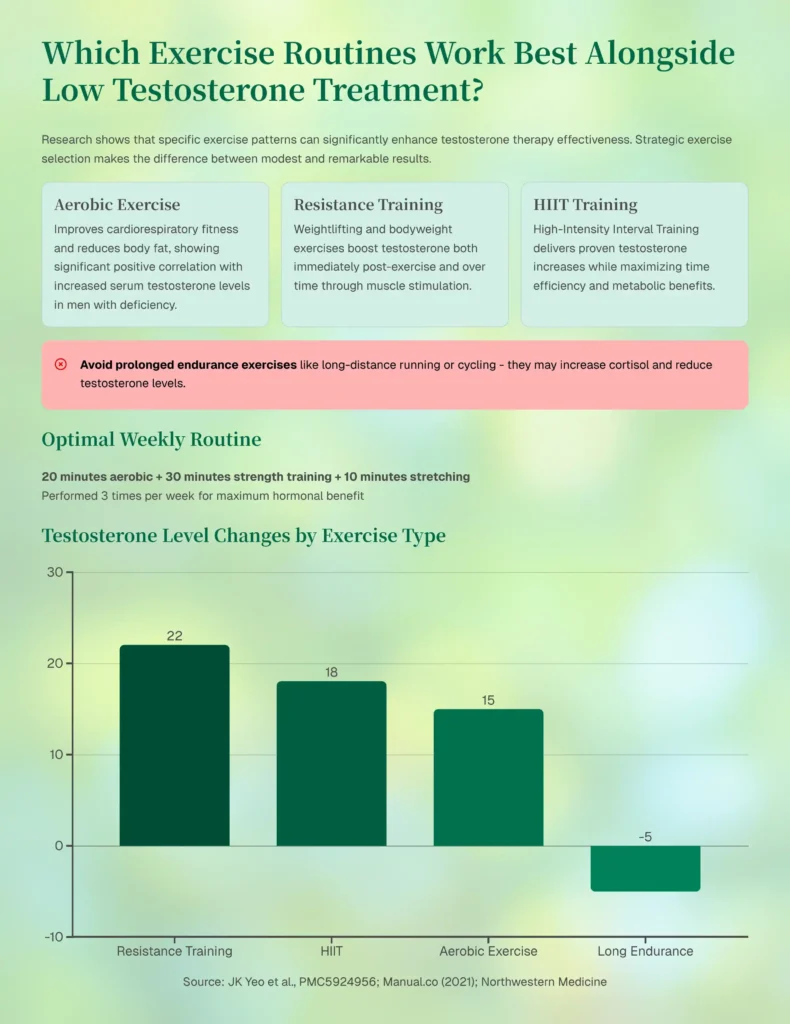
Exercise isn’t just for aesthetics; it’s a hormone modulator. Strength training, HIIT, and even moderate cardio can temporarily boost testosterone levels. Over time, consistent exercise can improve hormone receptor sensitivity, making the body more efficient at using the testosterone provided by treatment.
Benefits Beyond Testosterone: Mood, Energy, and Muscle Mass
Regular exercise also helps with sleep quality, mood stabilization, and metabolism. Men undergoing testosterone therapy often report better energy and improved mental clarity when paired with structured workouts.
Resistance Training: The Most Effective Approach
Compound Movements to Prioritize
When it comes to exercise alongside low testosterone treatment, resistance training leads the pack. But it’s not just about lifting weights—it’s about big, multi-joint movements that engage large muscle groups.
Squats and Deadlifts
Squats and deadlifts are king. They recruit multiple muscles at once, including legs, core, and back. This extensive recruitment triggers higher testosterone and growth hormone responses compared to isolation exercises like bicep curls.
Bench Press and Overhead Press
For upper body strength, focus on bench presses and overhead presses. These exercises stimulate chest, shoulders, and triceps, creating hormonal and muscular benefits across the body.
Training Frequency and Recovery Considerations
Aim for 3–4 resistance sessions per week, allowing 48 hours of recovery between major muscle group workouts. Remember, overtraining can spike cortisol, a hormone that can lower testosterone. Recovery is just as important as lifting.
High-Intensity Interval Training (HIIT)
Why HIIT Boosts Testosterone
HIIT workouts—short bursts of intense activity followed by rest—can boost testosterone and metabolic rate. Unlike long steady-state cardio, HIIT triggers hormonal responses that encourage muscle growth and fat loss simultaneously.
Sample HIIT Workouts for Beginners and Intermediate Levels
For beginners, start with 20-second sprints on a treadmill, followed by 40 seconds of walking for 8 rounds. Intermediate lifters can try 30-second sprints with 30-second rests, incorporating bodyweight exercises like jump squats and burpees.
Cardiovascular Exercise: Striking the Right Balance
Low vs. Moderate Intensity Cardio
Cardio is vital for heart health and blood flow, but moderation is key. Low to moderate intensity, such as brisk walking or cycling for 20–30 minutes a few times a week, is ideal. Long, exhaustive cardio sessions can actually lower testosterone if overdone.
Avoiding Overtraining That Lowers Testosterone
Balance is everything. Too much cardio without adequate recovery can elevate cortisol and reduce the benefits of low testosterone treatment Cleveland. Stick to 2–3 cardio sessions weekly and prioritize recovery days.
Flexibility and Mobility Work
Yoga and Stretching for Hormonal Balance
Stretching and yoga aren’t just for flexibility—they reduce stress, improve circulation, and may positively influence hormone levels. A 10–15 minute mobility routine post-workout can aid recovery and reduce injury risk.
Foam Rolling and Recovery Techniques
Foam rolling helps relax tight muscles, enhances blood flow, and supports joint health. Incorporating it into your weekly routine ensures your body can handle intense training while maximizing testosterone benefits.
Designing a Weekly Exercise Plan Alongside Low Testosterone Treatment
Balancing Strength, Cardio, and Recovery
An effective weekly plan might include:
- 3 days of resistance training: alternating upper and lower body
- 2 days of HIIT: 15–25 minutes per session
- 2 days of low-intensity cardio or active recovery: walking, cycling, or swimming
- Daily flexibility/mobility work: 10–15 minutes
Monitoring Progress Without Overexertion
Track your energy, mood, strength gains, and sleep quality. Adjust intensity if fatigue accumulates or testosterone therapy side effects change. Always listen to your body—progress isn’t about pushing harder every day.
Nutrition and Lifestyle Considerations to Complement Exercise
Macronutrient Choices for Testosterone Support
Protein is crucial for muscle repair—aim for 1.2–2.0 grams per kilogram of body weight daily. Healthy fats, especially omega-3s, support hormonal production. Carbs are important too, as they fuel high-intensity sessions without causing excessive cortisol spikes.
Sleep, Stress, and Other Recovery Factors
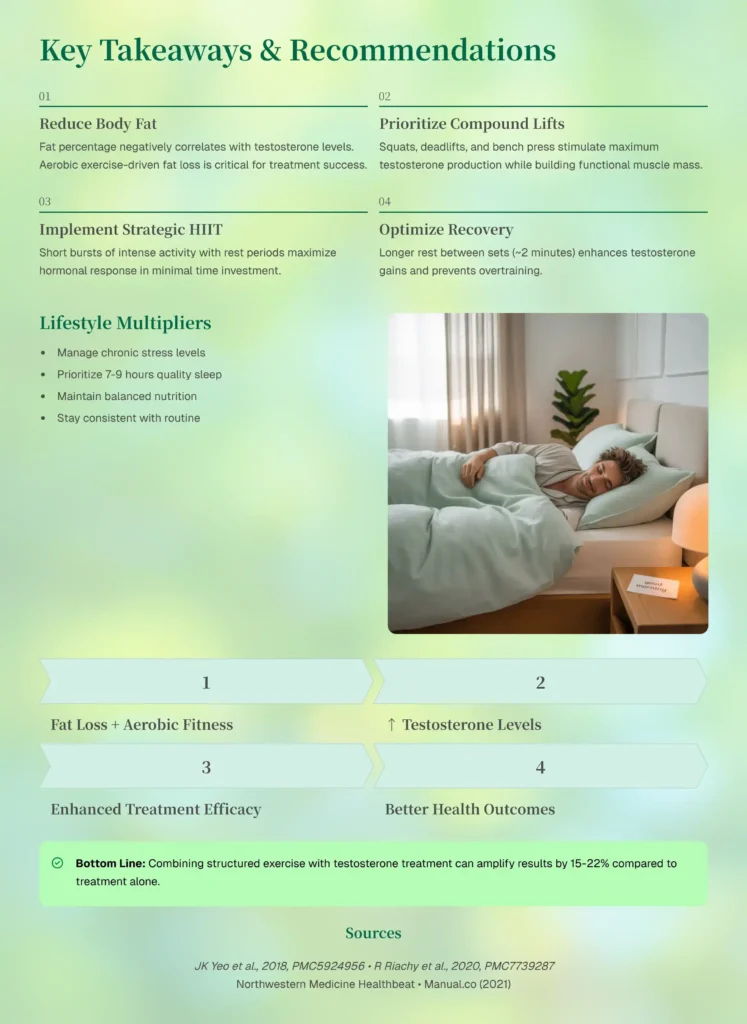
Sleep is the ultimate recovery tool. Even the best workout plan can fail without 7–9 hours of quality sleep. Chronic stress elevates cortisol, which counteracts testosterone. Techniques like meditation, deep breathing, and limiting screen time before bed can make a big difference.
Working Safely with Low Testosterone Treatment in Cleveland
Working Safely with Low Testosterone Treatment
Professional guidance is important when undergoing low testosterone treatment. Regular check-ups with a qualified healthcare provider can help monitor hormone levels, adjust treatment safely, and provide recommendations on exercise intensity. This approach ensures workouts complement therapy without risking overexertion or injury.
Monitoring Health and Adjusting Exercise Intensity
Regular check-ups and blood tests can help track progress during low testosterone treatment. If unusual fatigue, mood changes, or joint pain occur, adjusting exercise intensity or frequency may be necessary. Thoughtful planning ensures exercise supports therapy safely and effectively.
Common Mistakes to Avoid During Training
Overtraining and Hormonal Imbalance
One of the biggest mistakes men make is assuming more is better. Overtraining increases cortisol, reduces testosterone, and hinders recovery. Less can be more if done strategically.
Neglecting Recovery or Nutrition
Skipping meals, cutting calories excessively, or ignoring sleep undermines both testosterone treatment and exercise benefits. Nutrition and recovery are non-negotiable pillars of hormone health.
Realistic Expectations and Tracking Progress
Measuring Strength, Energy, and Mood Improvements
Rather than obsessing over the scale, track strength gains, stamina, energy, and mood improvements. These metrics are far more indicative of progress during low testosterone treatment.
Combining Exercise with Low Testosterone Treatment for Optimal Results
When done correctly, exercise and treatment work synergistically. Resistance training, HIIT, balanced cardio, flexibility work, proper nutrition, and adequate recovery can all amplify the effects of therapy, giving you a tangible boost in energy, mood, and overall well-being.
Vitality Lounge Med Spa Serving the The Flats Community and Beyond in Cleveland
Vitality Lounge Med Spa is dedicated to serving the diverse needs of the local community of Cleveland, including individuals residing in neighborhood like The Flats. With its convenient location near landmarks such as the West Bank Golf Club and major intersections like Winslow Ave and Center St (coordinates: Latitude: 41.4948734, Longitude: -81.7061015), we offer low testosterone treatment services.
Get low testosterone treatment Services at The Flats Now
Call Us or Contact Us (216) 202-4770
Navigate from The Flats to Vitality Lounge Med Spa Now
Exercise isn’t a magic bullet, but when combined with low testosterone treatment Cleveland, it becomes a powerful tool for restoring vitality, strength, and confidence. Resistance training, HIIT, balanced cardio, and flexibility work, alongside smart nutrition, recovery, and professional oversight, create a holistic approach to hormone health. By understanding your body, monitoring progress, and avoiding common mistakes, you can maximize the benefits of therapy and regain the energy and vitality that low testosterone may have taken away.
FAQs
1. Can I start resistance training if I’ve never lifted weights before?
Yes! Start with lighter weights, focus on proper form, and gradually increase intensity. Consulting a professional ensures safety and effectiveness.
2. How often should I do HIIT during testosterone treatment?
2–3 sessions per week, 15–25 minutes each, are usually sufficient to boost hormonal response without overtraining.
3. Will cardio lower my testosterone if I overdo it?
Excessive long-duration cardio can raise cortisol, which may counteract testosterone. Stick to moderate-intensity cardio and prioritize recovery.
4. Are supplements necessary alongside exercise and treatment?
Not always. Whole foods, proper nutrition, and adequate protein and healthy fats usually suffice. Supplements should be considered only after consulting a healthcare professional.
5. How long before I notice improvements from combining exercise with low testosterone treatment?
Some benefits, like improved energy and mood, can appear within weeks. Muscle mass and strength gains typically take 8–12 weeks of consistent training.