
You have tried different diets and exercise routines. Yet, the scale refuses to move. Maybe you’ve hit a plateau that just won’t budge. Weight loss injections are increasingly discussed as a solution. But are they right for you? This is not a quick fix. It is a medical tool for adults with specific health needs.
Weight loss injections are most effective when combined with lifestyle changes and medical supervision. They are not meant for cosmetic purposes but for people whose weight affects their health. A careful medical evaluation is essential to determine if this approach is appropriate.
Understanding the Clinical Need for Medical Weight Management
Weight loss is not just about calories in and out. The body resists significant changes in weight through metabolic adaptation. Restricting calories can slow metabolism, increase hunger hormones, and decrease satiety hormones, making long-term success difficult.
Medical weight management acknowledges these biological challenges. Prescription medications, such as GLP-1 receptor agonists, can help reset the system and make weight loss more achievable and sustainable.
What Happens When Diet and Exercise Are Not Enough?
Even strict diet and exercise plans sometimes fail to produce lasting results. Studies show that after losing weight, the body ramps up ghrelin, the hunger hormone, and lowers leptin, which signals fullness.
This biological push makes weight regain common. Weight loss injections act on these pathways, reducing appetite and slowing stomach emptying. They provide support that allows lifestyle changes to be more effective and sustainable.
The Mechanism: How Weight Loss Injections Actually Work
Medications like semaglutide (Wegovy) and liraglutide (Saxenda) mimic a naturally occurring hormone called GLP-1 (Glucagon-like peptide-1). GLP-1 is released in your gut after eating. It signals the brain that you are full and slows stomach emptying, keeping you satisfied longer.
By reducing appetite, these injections lower calorie consumption naturally, addressing biological barriers to weight loss. If you are searching for Weight Loss Injections Cleveland, these programs are medically supervised to ensure correct dosing, monitoring, and integration with lifestyle changes.
Criteria for Consideration: Is This Treatment Right for You?
Not everyone qualifies for weight loss injections. Physicians evaluate medical necessity and individual risk factors. These medications are targeted treatments intended for people with specific health needs, not for minor cosmetic weight loss.
BMI and Coexisting Health Conditions
A BMI of 30 or higher usually qualifies. A BMI of 27 may also qualify if there is a weight-related condition, such as:
- Type 2 diabetes
- High blood pressure (hypertension)
- High cholesterol (dyslipidemia)
- Sleep apnea
Weight loss injections support both weight reduction and management of related chronic conditions.
A History of Committed, Unsuccessful Attempts
Physicians often require proof of structured diet and exercise attempts that did not achieve long-term results. If behavioral changes alone were insufficient, biology may be the primary obstacle. Weight loss injections can provide the necessary medical support.
Other Health Considerations
Before starting injections, providers evaluate:
- Kidney and liver function
- Gastrointestinal history
- Thyroid health
- Medication interactions
Transparency about your medical history is critical for safety and effectiveness.
The Data: Facts on Weight Regain and Treatment Efficacy
Long-term weight management is notoriously difficult. Data from the National Institutes of Health show most people regain lost weight within five years due to the body’s counter-regulation mechanisms.
Clinical studies on GLP-1 receptor agonists demonstrate substantial improvements:
- 10–15% total body weight loss on average
- Improved blood sugar control in patients with diabetes
- Reduced blood pressure
- Positive effects on cholesterol levels
These results show that injections are a validated medical tool for chronic weight management.
Why Focus on Sustainable, Long-Term Results?
The goal is not rapid weight loss. Sustainable results depend on integrating medication with healthy lifestyle habits. Weight loss injections reduce appetite and support adherence to dietary plans.
Long-term maintenance requires:
- A balanced diet with protein, fiber, and healthy fats
- Regular physical activity
- Ongoing monitoring of weight and health markers
Real success is measured in years, not weeks. Many patients continue GLP-1 therapy long-term to maintain results.
The Vitality Lounge Med Spa Integrated Approach
At Vitality Lounge Med Spa, weight loss injections are part of a comprehensive program. Medication alone rarely achieves long-term results. Our integrated approach combines medical supervision with lifestyle support to ensure sustainable success.
For patients living in neighborhoods such as Clark–Fulton in Cleveland, our programs provide accessible guidance that integrates diet, exercise, and medication.
Our program includes:
- Ongoing dose management and monitoring
- Nutritional counseling tailored to individual needs
- Guidance on safe physical activity
- Behavioral coaching for habit formation
Choosing a supervised program ensures the medication works as part of a structured, safe, and sustainable lifestyle plan.
The Danger of Mismanaged Weight Loss Programs
Common mistakes include:
- Using injections without supervision
- Stopping medication abruptly
- Ignoring diet and exercise recommendations
These errors can result in rapid weight regain or side effects. Weight loss injections are tools, not a license to eat anything. Commitment to nutrient-dense foods and healthy habits remains essential.
The Reality of Potential Side Effects
GLP-1 receptor agonists are generally safe under supervision, but side effects can occur:
- Nausea
- Vomiting
- Constipation or diarrhoea
These side effects usually appear early and lessen over time. Gradual dose escalation allows the body to adjust. Providers at Vitality Lounge Med Spa monitor patients closely to manage and minimize side effects.
Starting the Process: The Necessary Medical Consultation
The first step is a detailed consultation. Your provider will:
- Review your complete medical history
- Assess for contraindications
- Conduct lab work for kidney and liver function
- Set realistic expectations for results
This ensures you are medically suitable and ready for the commitment required for long-term success.
What to Discuss with Your Healthcare Provider
Be transparent about:
- Previous weight loss attempts
- Daily dietary intake and activity levels
- Cost of medication and follow-up visits
- Timeline for expected results
- Thyroid or other health conditions
Open communication ensures the safest, most effective plan is developed.
Achieving Success with Weight Loss Injections
Success requires partnership. You provide commitment to lifestyle changes, and your provider ensures clinical oversight and medication optimization. Together, these create lasting weight loss, improved health markers, and better overall quality of life.
Long-Term Lifestyle Considerations
Weight loss injections give a window of opportunity. Long-term success requires:
- Consistent exercise routine
- A balanced diet that is maintainable
- Ongoing medical monitoring
- Behaviour modification support
For additional guidance on optimizing weight loss and exercise strategies, for more information, visit this blog.
When Should You Consider Weight Loss Injections for Sustainable Results?
- Usage Prevalence:
- 6% of U.S. adults (~15.5 million) have used injectable weight loss drugs (e.g., semaglutide, liraglutide).
- 3% currently use these injections specifically for weight loss.
- Effectiveness by Age:
- 73% of current users report injections as effective or extremely effective.
- Effectiveness perception: 70% (ages 18-49), 67% (50-64), drops to 48% (65+).
- User Profile:
- Current users are twice as likely to be obese (71%) compared to non-users (36%).
- Higher prevalence of related conditions: high blood pressure, cholesterol, diabetes.
- Clinical Weight Loss Outcomes (Semaglutide):
- Average weight loss: 5.9% body weight at 3 months, 10.9% at 6 months.
- 87% of patients lost ≥5% body weight by 6 months; 55% lost ≥10%.
- Patients without type 2 diabetes lose more weight than those with diabetes.
- Who Should Consider Injections?
- Adults with BMI ≥30, or BMI ≥27 with obesity-related conditions (e.g., diabetes, hypertension).
- Those who have struggled with sustainable weight loss through lifestyle changes alone.
- Individuals under medical supervision for tailored dosing and monitoring.
- Additional Notes:
- Consistent use and supportive lifestyle changes (nutrition, exercise) are critical for sustainable results.
- Older adults (65+) may experience lower effectiveness and should consult healthcare providers carefully.
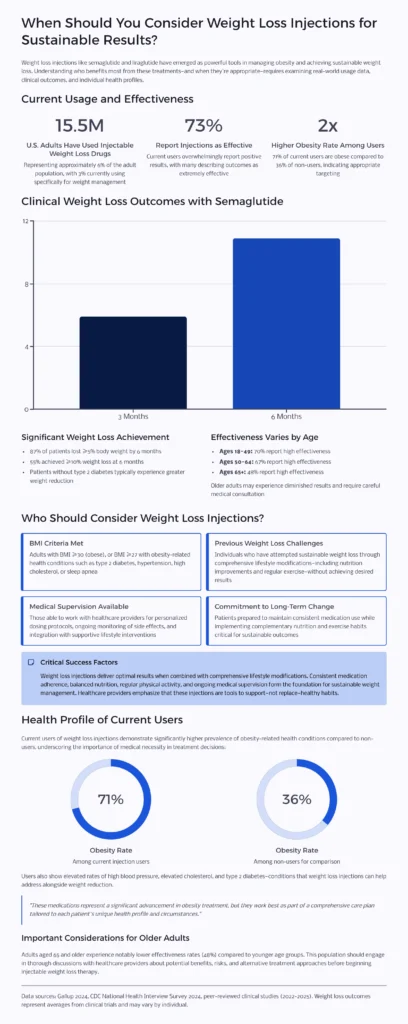
Data sources: Gallup 2024, CDC NHIS 2024, peer-reviewed clinical studies (2022-2025).
FAQ Section
1. What is the difference between semaglutide and liraglutide?
Semaglutide (Wegovy) is a once-weekly injection and often leads to higher average weight loss. Liraglutide (Saxenda) is daily. Providers guide which is appropriate.
2. Can I drink alcohol while on injections?
Limit alcohol. Slowed stomach emptying may alter blood alcohol levels and increase side effects.
3. How soon will appetite suppression occur?
Some notice changes within days; others may take weeks. Effects increase as the dose escalates.
4. Are compounded versions safe?
Compounded versions are not FDA approved. Safety, potency, and purity cannot be guaranteed.
5. Should I stop if I experience nausea?
Do not stop without guidance. Providers may adjust dose, timing, or recommend dietary changes.