
Your first Clinical Weight Loss Consultation is not about quick fixes. It is about understanding why your body holds onto weight and how to address it safely. Many people expect a pill or a single procedure. What they actually get is a detailed conversation.
At Vitality Lounge Med Spa, this initial meeting is a structured evaluation. It uncovers what is driving weight gain and what your body needs to change that. Think of it as a diagnostic visit. This is where your path to real, sustainable results begins.
The First Step is a Conversation, Not a Quick Fix
The consultation starts with questions, not prescriptions. The goal is to understand your health story, habits, and challenges.
Every metabolism works differently. Hormones, medications, stress, and sleep influence weight. The medical team at Vitality Lounge Med Spa listens carefully to your history. They identify factors that standard diets often overlook.
This is the foundation for a safe and effective plan. Clinical weight loss is a medical process. It relies on your labs, history, and body composition. The first consultation is the start of a structured, personalized journey.
What is the Actual Goal of This First Visit?
The goal is to determine if you are a good candidate for a medical weight loss program. The provider assesses your health, identifies underlying issues, and establishes a baseline.
You also get a chance to ask questions and decide if you feel comfortable with the team. Clinical programs like those at Vitality Lounge Med Spa rely on partnership. Your input shapes the plan.
Studies show that patients who receive structured medical weight loss support lose significantly more weight than those who try on their own. This consultation is your entry point into that support.
The Paperwork and Preliminary Steps
Before meeting the provider, you complete paperwork. These forms are not just bureaucracy. They give the team the first data points about your health.
The Medical History Deep Dive
You’ll provide a complete history of health conditions. Include thyroid disorders, diabetes, high blood pressure, heart disease, and past surgeries. Even conditions that seem unrelated may influence your weight. Accuracy matters.
The Medication and Supplement List
List all medications, including prescriptions, over-the-counter drugs, vitamins, and herbs. Some supplements can interact with weight loss treatments. The provider needs the full picture to ensure your safety.
The Weight History Timeline
Share your weight history. When did struggles begin? What diets have you tried? Which approaches worked temporarily, and which failed? This helps identify patterns and informs your personalized plan.
The Core Components of the Consultation Itself
After paperwork, you meet with a healthcare provider, often a doctor or nurse practitioner, for an in-depth discussion and examination.
The In-Depth Health Interview
The provider reviews your forms and asks follow-up questions. They focus on understanding the reasons behind your weight. Topics may include eating habits, sleep quality, stress, and activity levels. Honesty is crucial for accuracy.
The Physical Examination
The exam includes checking vital signs like blood pressure and heart rate. Your provider may listen to your heart and lungs. This ensures your body is healthy enough for the weight loss plan.
Body Composition Analysis
At Vitality Lounge Med Spa, a body composition scan is often performed. It measures fat mass, muscle mass, and water content using a low-level electrical current.
This gives a more complete picture than scale weight alone. Tracking these numbers helps measure real, meaningful progress over time.
The Diagnostic Tests and Labs
Weight gain can be caused by underlying conditions. Baseline diagnostic testing is common.
Baseline Blood Work
Blood tests check metabolic markers such as cholesterol, triglycerides, blood sugar, liver function, and thyroid hormone. These numbers help determine why weight loss has been difficult and guide treatment safely.
EKG or Electrocardiogram
For some patients, especially older adults or those with risk factors, an EKG is recommended. This quick, non-invasive test checks heart rhythm and ensures safety before starting certain medications or rapid weight loss programs.
Discussing the Science of Clinical Weight Loss
After assessment, the provider explains how your personalized plan works.
The Role of Metabolism
You’ll learn how your metabolism processes energy and what factors slow it down. This understanding helps you avoid plateaus. The provider explains practical strategies, not just calorie math.
The Truth About Prescription Medications
If medication is part of your plan, the provider explains how it works. Some medications mimic GLP-1, a hormone that signals fullness and slows digestion. They are tools to help support lifestyle changes, not magic solutions. Side effects and realistic expectations are reviewed thoroughly.
Co-Creating Your Initial Action Plan
Your plan combines lab results, health history, and personal goals into a structured program.
Setting Realistic, Measurable Goals
Instead of vague targets like “lose weight,” you’ll set specific goals. An initial aim might be 5 percent of total body weight over three months. These goals improve health markers and build momentum.
The First Phase Nutrition and Movement Guide
You’ll receive a structured nutrition plan tailored to your needs, preferences, and schedule. The movement plan begins at your current fitness level. The goal is sustainable habits, not extreme workouts.
Common Mistakes People Make During the Consultation
Knowing what to avoid can make the consultation more effective.
Minimizing Your Struggles
Do not downplay habits like snacking or sugary drinks. Providers have seen it all. Transparency ensures your plan addresses real challenges.
Withholding Medical Information
Every medication, supplement, or drink matters. Even minor items can affect safety and results. Provide full disclosure.
Expecting an Immediate Solution
You may not leave with a prescription immediately. Sometimes lab results or initial adjustments are needed. Patience ensures safety and long-term success.
For more information on related health improvements, you can visit What Long-Term Health Improvements Are Linked to Low Testosterone Treatment?.
What Happens If This Step is Rushed or Skipped?
Skipping a thorough consultation risks health and program effectiveness. Undiagnosed conditions may be missed, and generic plans often fail. The consultation calibrates the program to your unique body.
A plan without this step is just another generic diet. Clinical weight loss programs work because they start with a full understanding of your physiology.
The Financial and Logistical Conversation
Ask practical questions about costs, medication fees, insurance, and follow-up schedules. At Vitality Lounge Med Spa, patients from Downtown Cleveland and surrounding areas often ask about insurance coverage, program fees, and scheduling convenience. Transparent pricing ensures you know exactly what you are committing to before starting.
Incorporating Clinical Weight Loss Cleveland
For residents in Ohio seeking structured medical support, clinical weight loss Cleveland programs provide medical supervision, lab testing, and personalized planning. This program helps patients safely reach and maintain their weight goals while improving overall health markers.
What Comes After the Consultation?
After the first appointment, your plan begins. Follow-ups are scheduled every two to four weeks at first. These visits track progress, adjust medications, and update nutrition and activity plans.
Continuous support differentiates clinical programs from DIY dieting. It provides accountability, motivation, and safety.
Final Thoughts
The first clinical weight loss consultation at Vitality Lounge Med Spa is an in-depth medical evaluation. It combines conversation, examination, and planning.
Coming prepared, being honest, and asking questions set the stage for sustainable results. This is more than weight loss. It is about building a healthier relationship with your body and improving overall health.
What to Expect at Your First Clinical Weight Loss Consultation: Key Statistics & Insights
- Initial Assessments:
- Body Mass Index (BMI) calculation using height and weight to classify weight status (underweight, healthy, overweight, obese).
- Body composition analysis (e.g., bioelectrical impedance or DEXA) to differentiate fat vs muscle mass.
- Vital signs check: blood pressure, heart rate, and relevant labs if indicated.
- Counseling Focus Areas:
- Diet and nutrition guidance emphasizing balanced macronutrients (e.g., 40% carbs, 30% protein, 30% fat).
- Physical activity recommendations tailored to patient preferences and abilities.
- Behavioral strategies including motivational interviewing to set achievable goals.
- Weight Loss Goals & Outcomes:
- Clinically meaningful weight loss defined as 5-10% reduction from baseline weight.
- Evidence shows 5% weight loss improves blood sugar, blood pressure, cholesterol, and quality of life.
- Only ~10% of patients advised to lose weight seek professional help, highlighting the importance of clinical support.
- Weight management treatments (nutrition counseling, medications, surgery) increase likelihood of achieving ≥5% weight loss (nutrition counseling: 23%, bariatric surgery: 93%).
- Tracking Progress:
- Use of weight loss tracking charts combining numerical logs and graphical plots to visualize trends.
- Regular follow-ups to adjust plans based on progress and challenges.
Visual suggestion: Include a simple infographic showing BMI categories, a pie chart of macronutrient distribution, and a bar graph comparing 1-year probability of ≥5% weight loss by treatment type.
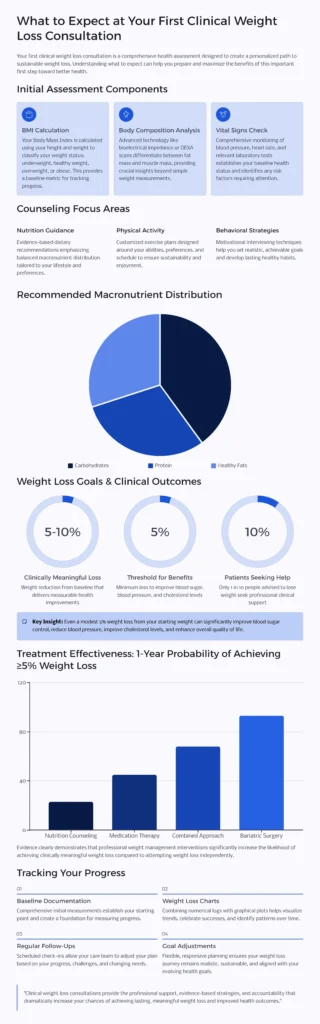
Sources: Florida Medical Clinic BMI Chart, AHRQ counseling documentation, NIH Obesity Guidelines, recent cohort studies on weight management outcomes.
Frequently Asked Questions
1. What should I bring to my first clinical weight loss consultation?
Bring your photo ID, insurance card, a full list of medications and supplements, any recent lab results, and your own questions.
2. How long does the first consultation take?
Plan for 60 to 90 minutes. This allows time for forms, discussions, and initial tests.
3. Will I get medication at the first visit?
Not always. Many patients start medication after lab results are reviewed. Safety and personalized care come first.
4. Is my information confidential?
Yes. Vitality Lounge Med Spa follows HIPAA regulations. Your personal and health information is private.
5. What if I have tried other diets and failed?
Your history helps the provider design a plan tailored to your needs. Clinical programs address root causes, not just calories or willpower.