

So, you’ve started—or are thinking about starting—testosterone therapy. Great. But here’s something you might not have considered: what’s on your plate might be just as important as what’s in that prescription vial. Yep, your diet could make or break your results.
Let’s dive into why nutrition plays a starring role in making testosterone replacement therapy (TRT) effective—especially for those exploring Testosterone Replacement Therapy in Cleveland.
The Diet–TRT Connection
TRT can bring big benefits when managed properly. But here’s the twist—without good nutrition, your body may not fully capitalize on those testosterone boosts. In simple terms: food fuels your hormones. And the right diet can amplify TRT’s benefits while the wrong one might hold you back.
Understanding Testosterone Replacement Therapy
What Is TRT and Why Is It Used?
TRT is a medical treatment for men with low testosterone (also called hypogonadism). It helps restore hormone levels to improve energy, mood, muscle mass, libido, and more. TRT can come in the form of injections, patches, gels, or pellets.
Overview of Testosterone Replacement Therapy Cleveland
In Cleveland, various healthcare providers offer Testosterone Replacement Therapy using evidence-based, individualized care approaches. Regardless of where treatment occurs, integrating supportive lifestyle factors—like diet—can be crucial for long-term effectiveness.
Why Nutrition Matters for Hormonal Health
Hormone Production and Nutrient Support
Your body needs certain vitamins and minerals to make testosterone in the first place. Think of your body as a factory. No raw materials? No product. Even with TRT, a nutrient-deficient body may not metabolize or respond to hormones properly.
The Gut-Hormone Connection
A healthy gut helps absorb nutrients that influence hormone balance. It also plays a role in inflammation—which, when unchecked, can reduce testosterone levels. Gut health is like the silent partner in hormone therapy.
Key Nutrients That Influence Testosterone Levels
Zinc
Zinc is one of testosterone’s best friends. It helps produce and regulate hormones. Deficiency is linked to lower T levels. Found in red meat, shellfish, nuts, and legumes.
Magnesium
Magnesium supports testosterone production and helps regulate stress hormones. You’ll find it in leafy greens, whole grains, and pumpkin seeds.
Vitamin D
Low levels of vitamin D are often linked to low testosterone. While sunlight is the best source, fatty fish and fortified foods also help.
Healthy Fats
Cholesterol is the building block of testosterone. That’s right—your body needs fat to make hormones. Avocados, olive oil, and omega-3-rich fish are key.
Protein Balance
Protein supports muscle growth, which is often a TRT goal. Too little or too much protein can affect hormone function, so finding balance matters.
Foods That Can Support TRT Success
Testosterone-Friendly Food Groups
Leafy Greens
Spinach, kale, and swiss chard provide magnesium and antioxidants that support hormonal health.
Oily Fish and Seafood
Salmon, mackerel, and sardines are loaded with omega-3s and vitamin D.
Eggs, Nuts, and Seeds
These foods offer a balance of healthy fats, zinc, and protein—all beneficial for testosterone metabolism.
Foods and Habits That Could Work Against TRT
High-Sugar Diets
Excess sugar can spike insulin and increase body fat—both of which suppress testosterone levels.
Excess Alcohol
Too much alcohol, especially beer, can reduce testosterone production and raise estrogen levels.
Ultra-Processed Foods
These are typically low in nutrients and high in inflammatory compounds, which may counteract TRT benefits.
Poor Meal Timing
Skipping meals or late-night binges can throw off insulin regulation and sleep cycles—two things closely tied to hormone balance.
Sample TRT-Friendly Daily Meal Plan
Breakfast
Scrambled eggs with spinach and feta
Whole grain toast
Green tea or black coffee
Lunch
Grilled salmon with quinoa and roasted vegetables
Mixed greens with olive oil dressing
Dinner
Grass-fed beef stir-fry with broccoli and bell peppers
Brown rice or cauliflower rice
Lifestyle Synergy: Diet, Exercise, and TRT
Muscle Growth and Recovery
Protein timing and nutrient intake affect how well your body builds and repairs muscle with TRT. Strength training + good nutrition = amplified results.
Weight Management and Hormonal Balance
Fat tissue can convert testosterone to estrogen. A clean diet helps maintain a healthy weight, which keeps testosterone levels in the optimal range.
Role of Diet in the Success of Testosterone Replacement Therapy in the US
- Nearly 14% of US men have used or are using TRT, with usage rising 120% among younger men (≤24 years) from 2018 to 2022. (Source: US Pharmacist, 2025)
- Diet quality significantly influences TRT effectiveness: balanced protein intake (1.2–2.2 g/kg/day), healthy fats (omega-3s), and micronutrients like zinc and vitamin D support testosterone synthesis and muscle gains. (Source: Dr. David Fein, 2025)
- Very high-protein diets (>3.4 g/kg/day) may reduce testosterone levels by ~5.23 nmol/L, while moderate to high protein intake supports hormonal balance. (Source: Whittaker & Harris meta-analysis, 2023)
- Combining TRT with a Mediterranean-style low-fat, high-protein diet improves body composition, reducing fat mass by up to 29% and increasing lean mass by 7%. (Source: PMC case study, 2019)
Diet is not just fuel but a critical partner in maximizing TRT benefits and minimizing side effects.
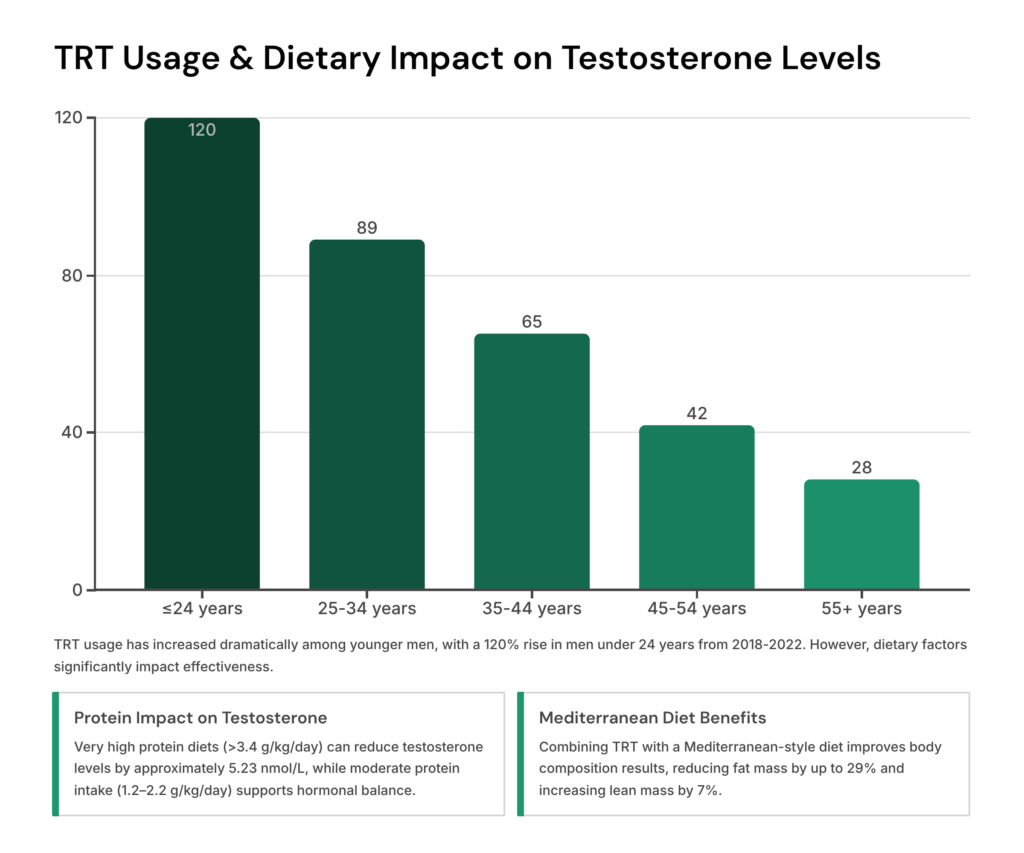
Sources: US Pharmacist (2025), Whittaker & Harris meta-analysis (2023), PMC case study (2019), Dr. David Fein (2025)
Monitoring Dietary Impact on TRT Effectiveness
Lab Monitoring and Nutritional Adjustments
Changes in diet can reflect in your bloodwork. Regular labs help determine if your diet is supporting hormone balance—or if something needs tweaking.
Consulting With a Registered Dietitian
Registered dietitians can help fine-tune your eating plan based on your lab results and hormone therapy goals.
Vitality Lounge Med Spa Serving the The Flats Community and Beyond in Cleveland
Vitality Lounge Med Spa is dedicated to serving the diverse needs of the local community of Cleveland, including individuals residing in neighborhoods like The Flats. With its convenient location near landmarks such as the Brite winter and major intersections like Main Ave and Sycamore St (coordinates: Latitude: 41.4966445, Longitude: -81.7060573, we offer Testosterone Replacement Therapy services.
Get Testosterone Replacement Therapy Services at The Flats Now
Call Us (216) 202-4770
Navigate from The Flats to Vitality Lounge Med Spa Now
TRT isn’t magic—it’s part of a bigger equation. Diet plays a huge role in how well therapy works. Eating the right foods fuels your progress, improves recovery, and supports long-term hormonal health. So, next time you think about optimizing your testosterone levels, start by looking at your plate.
FAQs
Q1: Can I just take supplements instead of adjusting my diet?
Supplements help, but they can’t replace a nutrient-rich, balanced diet.
Q2: How soon will dietary changes affect my TRT results?
Some changes, like better energy or digestion, may show up in weeks. Hormonal changes may take a bit longer.
Q3: Do cheat meals ruin TRT effectiveness?
Not necessarily, but consistency is key. Occasional indulgence won’t derail progress if your overall diet is solid.
Q4: Can a bad diet cause low testosterone even with TRT?
Yes. Poor nutrition can blunt the effects of therapy or create other hormonal imbalances.
Q5: Should I avoid fat if I want better hormone health?
No—your body needs healthy fats to make testosterone. Avoid trans fats, not natural ones.