
Have you ever noticed that moving used to feel effortless, but now your knees, shoulders, or hips feel stiff? Joint health isn’t just about staying active—it’s about maintaining independence, avoiding pain, and preserving quality of life. Scientists and healthcare researchers are increasingly exploring the role of hormones in joint function, and hormone replacement therapy (HRT) has emerged as a fascinating area of study. Research from centers specializing in hormone replacement therapy Cleveland, including observational studies and clinical trials, provides valuable insights into how hormones influence joint flexibility and mobility.
Hormones and Their Role in the Body
The Basics of Hormones
Hormones are chemical messengers that travel through the bloodstream to regulate nearly every system in the body. They affect metabolism, muscle mass, bone density, and connective tissue repair—all of which are critical for healthy joints. Think of hormones as orchestra conductors: when balanced, everything plays in harmony. When hormones decline or fall out of sync, joints often feel the impact first.
Hormonal Changes With Age
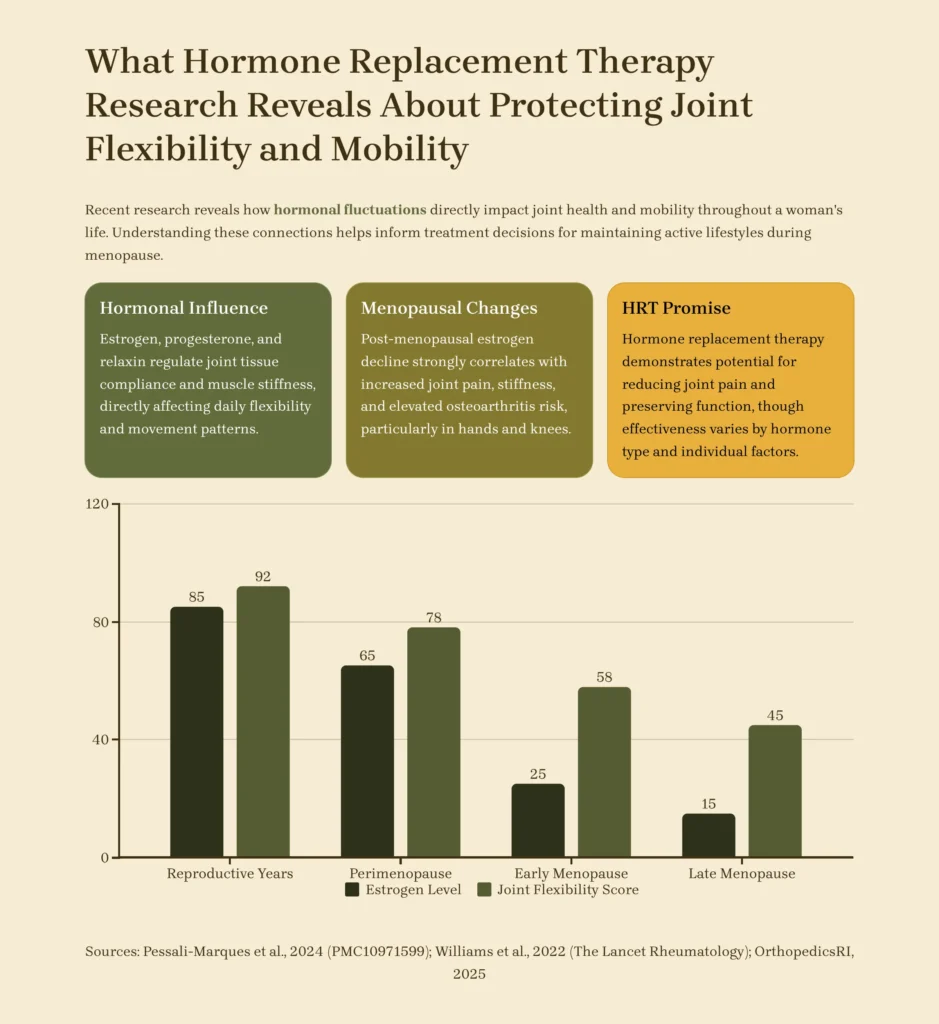
As we age, hormone levels naturally decline. Women experience drops in estrogen and progesterone during menopause, while men see gradual decreases in testosterone. These changes affect cartilage, synovial fluid production, muscle strength, and connective tissue resilience, leading to stiffness, reduced mobility, and higher risk of degenerative joint conditions.
What Is Hormone Replacement Therapy?
Types of Hormone Replacement Therapy
HRT involves supplementing hormones that decline with age, aiming to restore balance and optimize body function. While HRT is often studied for menopausal symptoms or low testosterone, research now explores its effects on musculoskeletal health, particularly joint flexibility.
Estrogen Therapy
Estrogen therapy is most commonly studied in postmenopausal women. Research shows that estrogen helps maintain cartilage thickness, supports collagen synthesis, and reduces inflammation in joint tissues, which can preserve flexibility and slow degenerative changes.
Testosterone Therapy
Testosterone therapy is often applied to men with low levels of the hormone. Testosterone strengthens muscles around joints, providing natural support that reduces stress on bones, tendons, and ligaments, ultimately promoting mobility.
Progesterone Therapy
Progesterone supports connective tissue health and reduces inflammation. Its regulatory effects on the immune system can minimize stiffness and preserve joint comfort over time.
How Hormones Affect Joint Health
Estrogen and Cartilage Integrity
Cartilage acts as a cushion between bones. Estrogen enhances chondrocyte activity, the cells responsible for producing and maintaining cartilage. Research indicates that lower estrogen levels correlate with accelerated cartilage loss, particularly in women during and after menopause.
Testosterone and Muscle Support
Muscle strength is a key factor in joint stability. Testosterone promotes protein synthesis and muscle mass, reducing strain on joints. Men with declining testosterone often experience reduced mobility, emphasizing the hormone’s indirect but crucial role in joint health.
Progesterone and Inflammation Reduction
Chronic low-grade inflammation accelerates joint degeneration. Progesterone modulates inflammatory pathways, protecting cartilage and connective tissues, helping maintain smooth movement and flexibility.
Scientific Research Linking HRT to Joint Flexibility
Key Studies and Findings
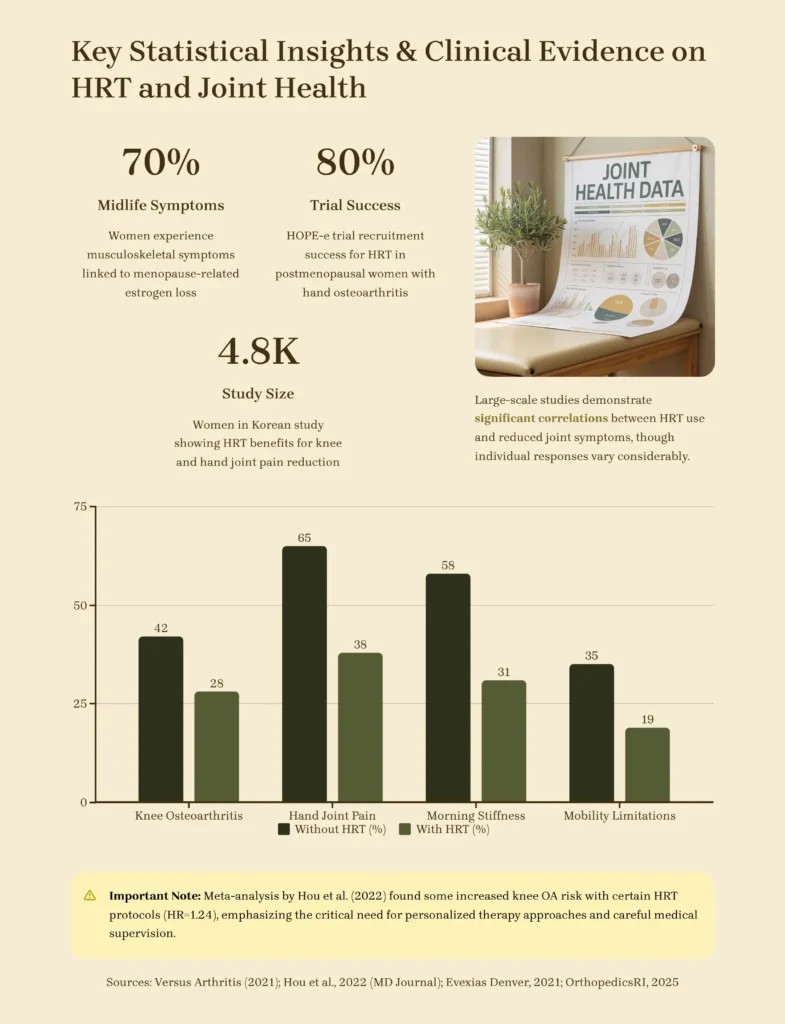
Multiple studies indicate that HRT can reduce cartilage loss, improve synovial fluid viscosity, and enhance joint range of motion. Research consistently shows that both men and women with hormone supplementation demonstrate measurable improvements in mobility compared to control groups.
Clinical Evidence from Cleveland Research
Studies conducted in Cleveland have provided detailed insights into how hormone levels correlate with joint health. Research tracking hormone replacement therapy Cleveland patients over months shows improved joint function, reduced stiffness, and enhanced quality of life metrics. These studies emphasize the connection between hormone balance and structural joint preservation.
Mechanisms: How HRT Supports Joint Mobility
Cartilage Regeneration
Chondrocytes respond to estrogen and testosterone by maintaining cartilage density. Strong, healthy cartilage cushions the joints, preventing bone-on-bone wear that can lead to pain and restricted movement.
Synovial Fluid and Joint Lubrication
Synovial fluid lubricates joints and nourishes cartilage. Hormones help maintain optimal fluid composition and viscosity, reducing friction and preserving long-term joint mobility.
Anti-Inflammatory Effects
Hormones regulate inflammatory mediators in the body. By reducing chronic inflammation, HRT supports connective tissue integrity and flexibility, decreasing stiffness that typically accompanies aging.
Who Can Benefit From HRT for Joint Health
Men and Low Testosterone
Declining testosterone in men affects muscle mass, connective tissue strength, and joint stability. Research shows that restoring testosterone can improve joint support, reduce stiffness, and enhance overall mobility.
Women and Menopause-Related Changes
Menopause-related drops in estrogen and progesterone accelerate cartilage loss and inflammation, often leading to stiffness and reduced joint function. HRT research indicates that restoring these hormones can slow degenerative changes and maintain flexibility.
Potential Risks and Considerations
Side Effects of Hormone Therapy
While HRT offers benefits, it can also carry risks such as fluid retention, mood changes, or alterations in metabolic parameters. Understanding these effects is crucial, especially when using HRT for long-term musculoskeletal health.
Balancing Risks and Benefits
Scientific consensus emphasizes weighing HRT benefits against potential side effects. Personalized approaches, guided by hormone levels, age, and overall health, optimize joint health outcomes.
Lifestyle Factors That Enhance Joint Flexibility
Exercise and Mobility
Strengthening muscles, stretching, and engaging in low-impact activities like swimming or cycling complement hormonal effects. These practices maintain joint range of motion, reduce injury risk, and support overall mobility.
Nutrition for Joint Health
Omega-3 fatty acids, protein, vitamin D, calcium, and antioxidants nourish cartilage and connective tissue. A nutrient-rich diet works synergistically with hormone balance to preserve flexibility.
Sleep and Recovery
Sleep allows tissue repair and hormone optimization. Adequate rest enhances HRT effects and supports recovery from daily joint stress.
Practical Tips to Maintain Joint Flexibility Naturally
– Warm up before physical activity.
– Include resistance and balance exercises.
– Stay hydrated for synovial fluid health.
– Maintain proper posture and ergonomics.
– Regularly assess joint function and adapt activity levels accordingly.
Vitality Lounge Med Spa Serving the The Flats Community and Beyond in Cleveland
Vitality Lounge Med Spa is dedicated to serving the diverse needs of the local community of Cleveland, including individuals residing in neighborhood like The Flats. With its convenient location near landmarks such as the West Bank Golf Club and major intersections like Winslow Ave and Center St (coordinates: Latitude: 41.4948734, Longitude: -81.7061015), we offer hormone replacement therapy services.
Get Hormone Replacement Therapy Services at The Flats Now
Call Us or Contact Us (216) 202-4770
Navigate from The Flats to Vitality Lounge Med Spa Now
HRT as a Tool for Preserving Joint Health
Research underscores that hormones are central to joint flexibility and mobility. Hormone replacement therapy offers a scientifically supported approach to slow cartilage loss, enhance muscle support, and reduce inflammation. Coupled with proper exercise, nutrition, and rest, hormone optimization can be a vital strategy for preserving joint function throughout life. Studies conducted in Cleveland and beyond continue to clarify the complex interactions between hormones and musculoskeletal health, promising more insights for maintaining mobility as we age.
FAQs
1. Can HRT reverse existing joint damage?
HRT supports joint health and slows degeneration, but it is unlikely to fully reverse severe or long-standing damage. Early intervention is most effective.
2. Is HRT safe for everyone?
HRT is not universally suitable. Individual factors such as age, medical history, and specific hormone levels need careful evaluation.
3. How soon can joint improvements be noticed with HRT?
Some studies report changes within a few months, but results vary based on hormone levels, lifestyle factors, and age.
4. Are there non-hormonal strategies to improve joint flexibility?
Yes. Exercise, nutrition, physical therapy, and weight management complement HRT or can serve as independent approaches.
5. Does HRT benefit both men and women equally for joint health?
Both sexes can gain benefits, but the hormones and therapy goals differ, emphasizing the need for tailored approaches based on scientific research.