
If you’ve ever Googled “Testosterone Replacement Therapy,” chances are you’ve run into a mix of hard facts, wild speculation, and flat-out myths. With all the noise out there, how can you know what’s real?
This article breaks down the most common myths about Testosterone Replacement Therapy (TRT), especially those that often surface in local discussions around Testosterone Replacement Therapy in Cleveland. Let’s sort out the fiction from the facts and help you understand what TRT really is—and what it absolutely isn’t.
Understanding Testosterone Replacement Therapy
What Is Testosterone?
Testosterone is more than just a “male hormone.” It’s crucial for muscle development, bone density, mood regulation, red blood cell production, and yes, even sexual health. While women also produce testosterone, men typically have much higher levels.
Why Do Testosterone Levels Decline?
Aging is the big culprit, but it’s not the only one. Stress, poor diet, lack of sleep, chronic illness, or even exposure to environmental toxins can lead to low testosterone levels—also known as “Low T.”
What Is Testosterone Replacement Therapy (TRT)?
TRT is a medical treatment designed to restore testosterone to healthy levels in individuals who are deficient. It can be administered via injections, patches, gels, or pellets, depending on what works best for the individual.
Why TRT Is Often Misunderstood
Cultural Misconceptions Around Hormones
For decades, hormones—especially testosterone—have been portrayed in black-and-white terms. Think macho aggression, bodybuilders, and midlife crises. These stereotypes have shaped public opinion in all the wrong ways.
Influence of Media and Misinformation
From tabloid stories to Hollywood plotlines, testosterone has often been sensationalized. Unfortunately, sensationalism isn’t the same as science.
Common Myths About Testosterone Replacement Therapy
Let’s tackle the big ones—one myth at a time.
Myth #1: TRT Is Only for Bodybuilders
This might be the most persistent myth of all.
The Truth About TRT and Muscle Building
Sure, testosterone does support muscle growth, but TRT isn’t some secret sauce for overnight gains. Medical TRT is about restoring balance, not turning someone into the Hulk. For patients in Cleveland visiting clinics like Vitality Lounge Med Spa, the goal is health—not vanity.
Myth #2: TRT Causes Aggressive Behavior
Ah yes, the infamous “roid rage” stereotype.
Examining the ‘Roid Rage’ Stereotype
When TRT is medically supervised, there’s no solid evidence linking it to increased aggression. In fact, many men report feeling calmer and more emotionally balanced after starting therapy.
Myth #3: TRT Completely Stops Natural Testosterone Production
Understanding Hormonal Feedback Loops
Yes, when you introduce external testosterone, your body might reduce its own production. But that doesn’t mean the system is ruined forever. In some cases, natural production can resume if therapy is paused or adjusted—with proper guidance.
Myth #4: You’ll Become Dependent on TRT Forever
Is It a Life Sentence? Not Always
This depends on why TRT was started in the first place. If low T is due to aging or chronic conditions, long-term treatment may be beneficial. But if it’s caused by temporary issues like stress or poor lifestyle, TRT might not be permanent.
Myth #5: TRT Increases Risk of Heart Attacks and Strokes
What Research Really Says About Cardiovascular Risks
Early studies raised concerns, but more recent research paints a more nuanced picture. Some studies even suggest TRT may reduce the risk of heart issues in men with low testosterone—especially when monitored properly.
Myth #6: TRT Is Only for Older Men
Younger Men Can Suffer from Low T, Too
While it’s more common as men age, low T can affect younger guys as well. Hormonal imbalances don’t wait for your 50th birthday to show up.
Myth #7: Natural Supplements Work Just as Well as TRT
Comparing Efficacy: Supplements vs. Medical Therapy
There’s a big difference between boosting testosterone naturally and actually replacing what’s missing. Most supplements may support hormone health, but they won’t significantly raise T levels in men with true clinical deficiency.
Testosterone Replacement Therapy: Benefits, Risks, and Clinical Insights in 2025
Testosterone Replacement Therapy (TRT) is a medical intervention for men diagnosed with hypogonadism, aiming to restore testosterone levels and alleviate associated symptoms. This document outlines the clinical insights surrounding TRT in 2025, detailing its benefits, potential risks, and the importance of comprehensive patient management and monitoring. It emphasizes that TRT is a targeted therapy, not a general anti-aging solution, and requires careful consideration and ongoing medical supervision.
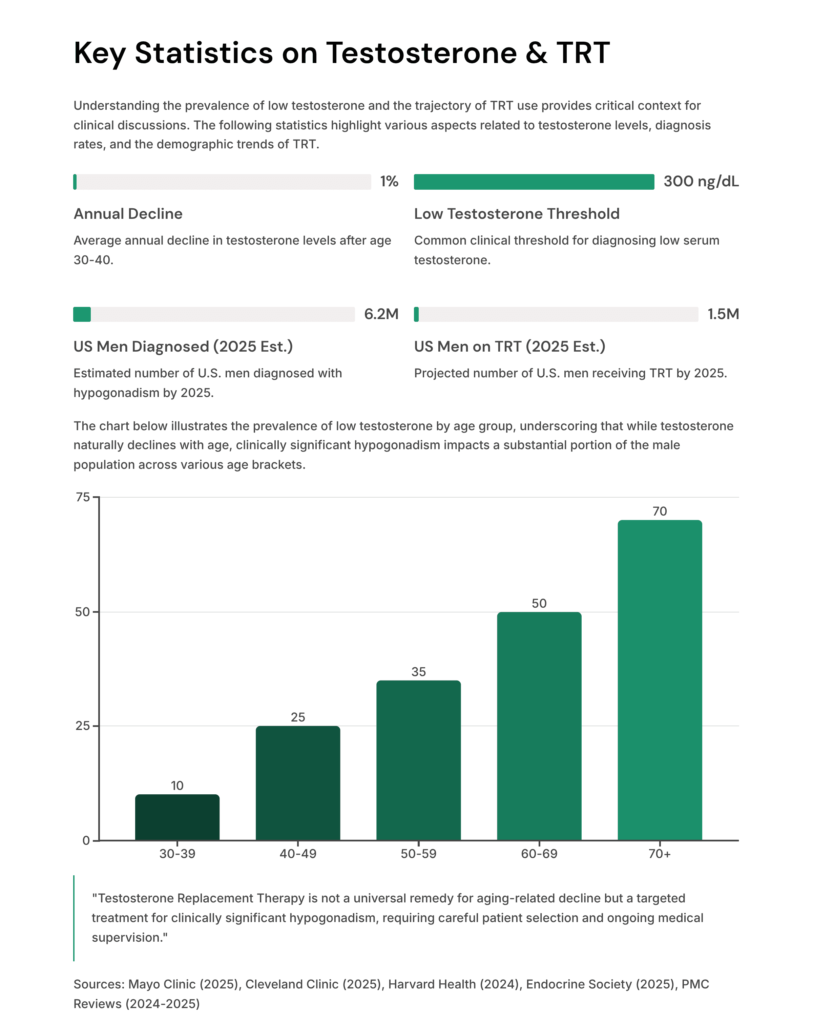
Testosterone Replacement Therapy is not a universal remedy for aging-related decline but a targeted treatment for clinically significant hypogonadism, requiring careful patient selection and ongoing medical supervision.
Sources: Mayo Clinic (2025), Cleveland Clinic (2025), Harvard Health (2024), Endocrine Society (2025), PMC Reviews (2024-2025)
Testosterone Replacement Therapy in Cleveland: Facts vs. Fiction
Local Perspective: What Residents Should Know
In Cleveland, there’s growing awareness around TRT—but also lingering skepticism. This is why understanding the facts becomes so critical. Word-of-mouth myths spread fast, especially in tight-knit communities.
Role of Clinics Like Vitality Lounge Med Spa
Clinics such as Vitality Lounge Med Spa are at the forefront of evidence-based hormone therapy, helping educate patients on realistic outcomes and guiding them through personalized treatment options—all rooted in science, not hype.
Vitality Lounge Med Spa Serving the Irishtown Bend Community and Beyond in Cleveland
Vitality Lounge Med Spa is dedicated to serving the diverse needs of the local community of Cleveland, including individuals residing in neighborhoods like Irishtown Bend. With its convenient location near landmarks such as the Stonebridge Waterfront and major intersections like Washington Ave and W 24th ST (coordinates: Latitude: 41.4930445, Longitude: -81.7060573, we offer Testosterone Replacement Therapy services.
Get Testosterone Replacement Therapy Services at Irishtown Bend Now
Call Us (216) 202-4770
Navigate from Irishtown Bend to Vitality Lounge Med Spa Now
How to Separate Myths from Facts About TRT
Trusting Science and Evidence-Based Medicine
Peer-reviewed studies, clinical guidelines, and physician advice should always outweigh what you heard at the gym or saw on social media.
Asking the Right Questions
Instead of asking “Is TRT bad?” consider asking:
- Do I have symptoms of low testosterone?
- Have I been tested properly?
- What does science say about long-term outcomes?
Testosterone Replacement Therapy isn’t a magic bullet, nor is it the villain it’s sometimes made out to be. The reality is somewhere in between. When managed responsibly—under the guidance of medical professionals—TRT can significantly improve quality of life for men dealing with low testosterone.
Especially in cities like Cleveland, where resources like Vitality Lounge Med Spa offer localized expertise, separating fact from fiction can help individuals make informed, confident decisions about their health.
FAQs
Q1: Can testosterone replacement therapy reverse all symptoms of aging?
Not quite. While TRT can improve energy, libido, and mood, it isn’t a cure-all for aging. Think of it as a helpful tool, not a fountain of youth.
Q2: Is it safe to take TRT without a prescription?
Absolutely not. Unregulated testosterone use can cause serious side effects. Always consult a licensed medical provider.
Q3: Can women take testosterone replacement therapy?
Yes, but in much smaller doses. It’s sometimes used to treat sexual dysfunction or fatigue in women—but always under medical supervision.
Q4: How long before you see results with TRT?
Some changes like energy and mood may improve within weeks. Muscle strength and fat loss might take a few months.
Q5: Is TRT legal in sports?
TRT is generally banned in professional sports unless there’s a therapeutic use exemption. Always check with your sport’s governing body.