

When most people hear “testosterone,” they think of physical traits like muscle mass and body hair. But here’s the kicker—this powerful hormone also plays a massive role in how we think and feel. Mood swings, brain fog, forgetfulness? Yep, testosterone levels could be behind those too.
This post explores how TRT Cleveland (Testosterone Replacement Therapy) may influence mood, focus, and mental clarity, backed by research and real-world insights—not marketing fluff. Let’s dig into how your brain and hormones really interact.
Introduction: Mind and Hormones—What’s the Link?
Your brain is like the command center of a spaceship—and hormones like testosterone are some of its most critical communication signals. When those signals weaken or go haywire, things like attention, motivation, or emotional stability can feel out of whack.
Understanding Testosterone’s Role in the Brain
Neurological Impact of Testosterone
Testosterone interacts with brain structures like the hippocampus (linked to memory) and amygdala (linked to emotion). It helps regulate how neurons talk to each other, affecting cognition and emotional responses.
Hormone Receptors and Mental Function
The brain has specific receptors for testosterone. When testosterone binds to these receptors, it influences everything from confidence and drive to spatial reasoning and memory. If levels drop, those mental faculties may falter.
Common Symptoms of Low Testosterone
Mood Swings and Irritability
Some men report becoming uncharacteristically impatient, snappy, or even sad when their testosterone dips. These mood disturbances often feel sudden and unexplainable.
Difficulty Concentrating
Struggling to follow through on tasks or feeling mentally scattered? This could be due to reduced dopamine activity associated with low testosterone.
Fatigue and Mental Fog
Mental fog isn’t just about being tired. It’s that sluggish, fuzzy-headed feeling where everything seems harder than it should be.
How TRT Works to Rebalance Brain Chemistry
Restoring Hormonal Equilibrium
TRT helps restore testosterone to healthy levels, which can lead to more stable moods and sharper thinking. It doesn’t create superpowers—it simply brings your chemistry back to where it functions best.
Neurotransmitters and Emotional Stability
Testosterone plays a role in regulating dopamine and serotonin—neurotransmitters that control motivation, reward, and happiness. Rebalancing testosterone can indirectly lift your mental state by supporting these brain chemicals.
Mood Improvements with TRT
Reduction in Anxiety and Depression
Studies suggest that men on TRT often experience reduced symptoms of anxiety and mild depression, especially when these issues were hormone-related.
Enhanced Emotional Regulation
Once testosterone stabilizes, so can emotional responses. Many patients report being less reactive, more patient, and more in control of their feelings.
Focus and Cognitive Function on TRT
Improvements in Attention Span
Staying on task becomes easier with balanced hormones. TRT may boost alertness and reduce distractions.
Working Memory and Processing Speed
Need to remember things on the fly? TRT has been shown in some research to improve short-term memory and quick thinking.
Clarity and Mental Sharpness
Brain Fog: Causes and Resolutions
Brain fog can stem from multiple sources, but in hormone-related cases, TRT may clear the haze. Patients often describe it as “waking up from a nap you didn’t know you were taking.”
Energy Levels and Alertness
Energy fuels clarity. When testosterone levels rise to normal, you might feel more awake and mentally engaged—even if your physical activity remains the same.
Clinical Evidence and Real-Life Results
Psychological Assessments and TRT Outcomes
Tools like the Beck Depression Inventory and cognitive performance tests have shown improvement in men undergoing TRT.
What Research Says About Cognitive Gains
Clinical trials suggest improvements in spatial ability, verbal memory, and executive function with TRT, especially in older adults.
Lifestyle Factors That Enhance TRT’s Cognitive Effects
Sleep, Stress, and Brain Health
TRT can help, but it works best when paired with solid sleep, stress management, and mental downtime.
Nutrition and Supplementation
Omega-3s, vitamin D, magnesium—all these support hormone production and cognitive function. Food and lifestyle choices enhance TRT outcomes.
How TRT Can Affect Mood, Focus, and Mental Clarity in the US
- A 2016 placebo-controlled study of 106 men with low testosterone showed TRT significantly improved depression scores (Beck Depression Inventory) and cognitive function after 8 months.
- TRT patients had increased serum testosterone and erectile function, with decreased aging symptoms and depression; cognitive improvements were strongest in men with baseline impairment.
- Meta-analysis of 27 clinical trials (1890 men) found testosterone treatment significantly reduces depressive symptoms, especially with higher dosages.
- Testosterone acts as an anxiolytic and antidepressant, improving spatial abilities, focus, and decision-making speed.
- Approximately 20% of men under 50 and 50% over 80 in the US have low testosterone, making TRT a relevant intervention for mood and cognitive symptoms.
Sources:
- Jung & Shin, World J Mens Health, 2016
- JAMA Psychiatry Meta-analysis, 2019
- PMC Article on TRT cognitive effects, 2017
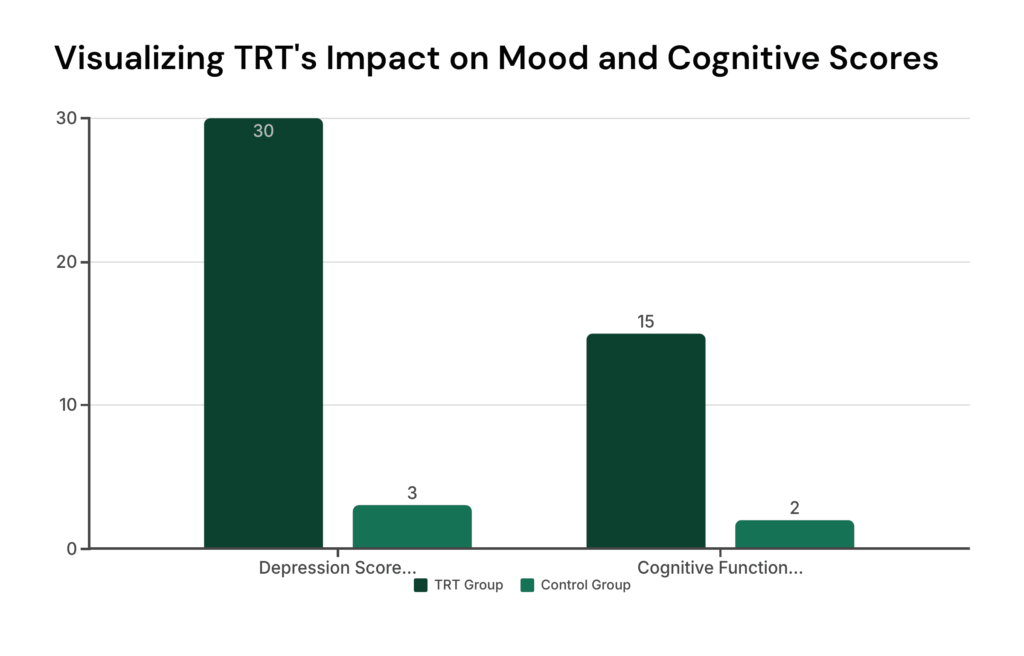
A 2016 placebo-controlled study of 106 men with low testosterone demonstrated significant improvements after 8 months of TRT. Participants receiving treatment showed approximately 30% reduction in depression scores (measured by the Beck Depression Inventory) and 15% improvement in cognitive function tests compared to minimal changes in the control group.
These findings are further supported by a comprehensive meta-analysis of 27 clinical trials involving 1,890 men, which confirmed testosterone treatment significantly reduces depressive symptoms, particularly at higher dosages.
Sources: Jung & Shin, World J Mens Health (2016); JAMA Psychiatry Meta-analysis (2019)
When Mental Benefits Plateau or Decline
Adjusting Dosage and Expectations
Not all brain-related issues vanish with TRT. Sometimes the dose may need tweaking. Other times, the root problem isn’t hormonal at all.
Psychological vs Hormonal Root Causes
It’s important to distinguish between hormone-related symptoms and those rooted in trauma, anxiety disorders, or life stressors. TRT isn’t a substitute for therapy.
Safety Considerations and Ethical Perspectives
Monitoring Mental Health During TRT
Mental health tracking is just as important as hormone tracking. Regular check-ins can ensure both mind and body benefit from therapy.
Avoiding Cognitive Overreliance on Hormones
TRT is a tool, not a fix-all. Building healthy habits alongside treatment ensures lasting mental clarity, not short-term boosts.
Vitality Lounge Med Spa Serving the The Flats Community and Beyond in Cleveland
Vitality Lounge Med Spa is dedicated to serving the diverse needs of the local community of Cleveland, including individuals residing in neighborhoods like The Flats. With its convenient location near landmarks such as the Lakeview Terrace Head Start and major intersections like Loop Road and Division Ave (coordinates: Latitude: 41.4930445, Longitude: -81.7084604, we offer TRT services.
Get TRT Services at The Flats Now
Call Us (216) 202-4770
Navigate from The Flats to Vitality Lounge Med Spa Now
TRT can offer meaningful improvements in mood, focus, and mental clarity—especially for those whose symptoms stem from low testosterone. But it’s not magic. At Vitality Lounge Med Spa, the emphasis is on balance, education, and responsible wellness.
Understanding how your hormones affect your brain can be a game-changer. If you’re feeling foggy, moody, or mentally checked out, hormone health might be a missing piece of the puzzle.
FAQs
Q1: Can TRT treat clinical depression?
TRT may help with mild depression linked to low testosterone, but it’s not a replacement for mental health treatment.
Q2: How soon do mental improvements show up with TRT?
Some people notice better focus or mood within a few weeks, while for others, it may take months.
Q3: Will TRT make me smarter?
Not exactly. It may restore mental function to your personal best, but it won’t boost IQ.
Q4: Is it normal to feel emotional during TRT adjustment periods?
Yes, early hormone shifts can temporarily heighten emotions. These usually stabilize with time.
Q5: Can women benefit from TRT for mood and focus too?
In specific cases, yes—under medical supervision. But dosing and goals differ from men’s protocols.