
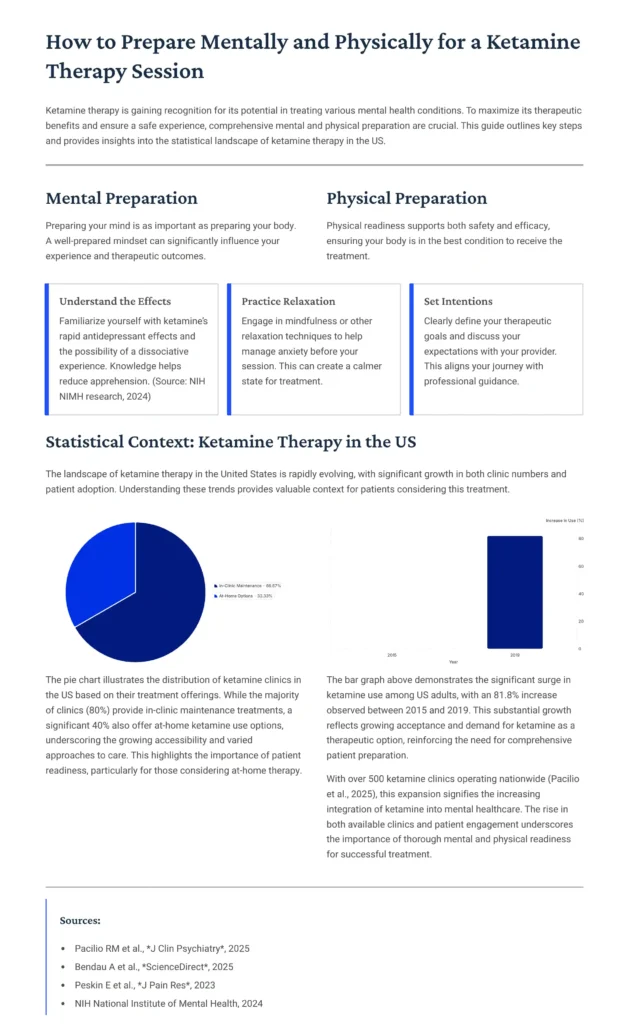
Preparing for a ketamine therapy session is not just about showing up. It is about arriving mentally steady, physically ready, and emotionally open. If you are exploring options such as Ketamine Therapy cleveland, one of the most important questions you can ask is not what will happen during the session, but how you can prepare beforehand.
Preparation matters. Your mindset influences how your brain interprets altered perception. Your physical state affects how your body metabolizes medication. Your expectations shape your emotional response.
Think of it like planting a seed. The medication may be the seed, but your preparation is the soil. Healthy soil leads to stronger growth.
Let us break down how to prepare step by step, from the inside out.
Understanding the Purpose of Preparation
Why Mental State Influences Therapeutic Outcomes
The brain is not passive. It responds to context, emotion, and belief. When entering a therapeutic session with heightened anxiety, the nervous system activates stress pathways. Elevated cortisol can influence perception and amplify fear.
On the other hand, calm expectation supports parasympathetic regulation. When your body feels safe, your brain is more receptive to neuroplastic change.
Preparation reduces uncertainty. Reduced uncertainty lowers stress. Lower stress improves adaptability.
The Brain and Expectation Effects
Expectation is powerful. In neuroscience, this is sometimes referred to as predictive coding. The brain constantly predicts what will happen next.
If you expect chaos, you may interpret mild sensory changes as threatening. If you expect exploration, you may experience curiosity instead of fear.
Understanding this helps you frame the session realistically rather than catastrophically.
Learning How Ketamine Affects the Brain
Glutamate and Neuroplasticity
Ketamine works primarily through the glutamate system. Glutamate is the brain’s main excitatory neurotransmitter. It plays a key role in learning and memory.
By modulating NMDA receptors, ketamine triggers a cascade that increases synaptic connectivity. In simpler terms, it helps the brain form new communication pathways. Knowing this shifts focus from the experience itself to the biological purpose behind it.
The increase in synaptic connectivity is not just a temporary chemical reaction. It represents the brain’s ability to reorganize and adapt. This adaptive capacity plays a central role in emotional regulation and long-term mood stability. If you would like to explore this mechanism in greater depth, read How Ketamine Therapy Supports Neuroplasticity and Mood Regulation, which explains how these biological changes contribute to sustained therapeutic outcomes.
Temporary Changes in Perception
You may notice shifts in time perception, visual imagery, or bodily sensation. These changes are temporary and dose dependent.
Understanding that altered perception does not equal danger reduces anticipatory anxiety.
Why Preparation Reduces Anxiety
When the unknown becomes known, fear decreases. Education transforms mystery into process.
Many clinics, including Vitality Lounge Med Spa, emphasize education when discussing Ketamine Therapy so patients understand the science before the session begins. This knowledge alone can significantly lower anxiety.
Mental Preparation Strategies
Clarifying Intentions Before the Session
Ask yourself a simple question. Why am I doing this?
You do not need a perfect answer. But having a general intention helps anchor your experience.
Intentions are not rigid goals. They are gentle guideposts. For example, you might focus on emotional healing, clarity, or relief from persistent negative thoughts.
A clear intention gives your mind direction without forcing outcome.
Letting Go of Control
This is often the hardest step.
Ketamine may alter your usual sense of control. Trying to resist every shift can increase tension.
Instead, approach the session with curiosity. Think of it as observing a landscape rather than steering a vehicle.
You are not losing yourself. You are temporarily exploring different neural pathways.
Addressing Fear of the Unknown
Fear thrives in silence. Speak it out loud. Write it down. Share it with your provider.
Once fears are named, they lose some power.
Common fears include losing consciousness, saying something embarrassing, or feeling disconnected. These concerns are normal and can be addressed before the session begins.
Emotional Readiness
Identifying Current Stressors
If you are experiencing acute stress, it is helpful to acknowledge it.
High emotional intensity may color your session. That does not mean you must eliminate stress entirely. It simply means being aware of it.
Awareness creates mental flexibility.
Practicing Self Compassion
Therapy is not about perfection. It is about healing.
If you feel nervous, that is human. Instead of judging yourself for anxiety, treat yourself gently.
Self compassion activates brain regions linked to emotional regulation. It literally calms neural circuitry.
Physical Preparation Guidelines
Sleep and Rest
Adequate sleep supports cognitive stability. Sleep deprivation can heighten emotional reactivity and intensify perceptual shifts.
Aim for consistent rest the night before your session.
Your brain performs maintenance tasks during sleep. Arriving rested improves resilience.
Nutrition and Hydration
Most providers recommend avoiding heavy meals several hours before treatment. However, extreme fasting is not ideal unless specifically directed.
Stable blood sugar reduces dizziness and nausea.
Hydration supports circulation and medication distribution. Drink water throughout the day, but avoid excessive intake immediately before the session.
Medication and Health Disclosure
Full transparency about medications and supplements is essential.
Certain medications may interact with ketamine’s mechanism of action. Honest communication ensures safety.
Physical health conditions such as cardiovascular issues should also be discussed beforehand.
Preparation is partly about information sharing.
Creating a Supportive Environment
Comfortable Clothing and Sensory Considerations
Wear loose, comfortable clothing. Avoid restrictive fabrics.
Bring items that create calm if allowed, such as an eye mask or relaxing music.
Comfort reduces physical distraction and allows mental focus.
Planning Transportation and Aftercare
You will likely not drive immediately after treatment. Arrange transportation in advance. Also consider your schedule. Avoid high stress commitments afterward. Your brain may feel reflective or slightly fatigued. Allow time to rest.
What to Expect During the Session
Shifts in Awareness
You may feel lightness, warmth, or altered spatial awareness. Some describe a dreamlike state. Others feel introspective. These effects peak and then gradually subside. Knowing this timeline reduces fear during the experience.
Monitoring and Supervision
Vital signs are monitored. Professionals remain present.
You are not alone during the process.
Medical supervision ensures that shifts in awareness remain within safe parameters.
Integrating the Experience Afterward
Journaling and Reflection
After the session, writing down thoughts can help consolidate insights. Memory reconsolidation occurs when experiences are reflected upon. Even fragmented impressions may carry emotional meaning.
Rest and Cognitive Recovery
Your brain has undergone temporary neurochemical shifts. Rest supports recovery. Avoid overstimulation such as intense screen time or stressful conversations immediately afterward.
Integration is as important as preparation.
Common Mistakes to Avoid Before a Session
Over researching Catastrophic Scenarios
Reading alarming stories without context can increase anxiety. Seek credible medical information rather than anecdotal extremes. Balanced knowledge supports calm.
Skipping Meals Improperly
Avoiding food entirely without guidance can cause weakness.
Follow provider instructions carefully rather than self adjusting dramatically.
Long Term Mindset for Ongoing Therapy
Building Consistency
If undergoing multiple sessions, consistency matters.
Prepare similarly each time. Establish routine.
The brain responds well to predictable patterns.
Patience With Neuroplastic Change
Neuroplasticity takes time.
While some effects may appear quickly, deeper restructuring unfolds gradually.
Approach the process with patience rather than urgency.
Vitality Lounge Med Spa Serving the Irishtown Bend Community and Beyond in Cleveland
Vitality Lounge Med Spa is dedicated to serving the diverse needs of the local community of Cleveland, including individuals residing in neighborhood like Irishtown Bend. With its convenient location near landmarks such as the Cuyahoga River and major intersections like Carnagie Ave and Canal Rd (coordinates: Latitude: 41.4930734, Longitude: -81.694086), we offer ketamine therapy services.
Get ketamine therapy services at Irishtown Bend Now
Call Us or Contact Us (216) 202-4770
Navigate from Irishtown Bend to Vitality Lounge Med Spa Now
Preparing for ketamine therapy is not complicated, but it is meaningful. Mental clarity, emotional honesty, and physical readiness shape the overall experience.
When exploring Ketamine Therapy Cleveland, understanding how to prepare helps reduce fear and increase therapeutic openness. Education about glutamate pathways and neuroplasticity shifts focus from sensation to science. Structured preparation transforms uncertainty into grounded expectation.
Clinics such as Vitality Lounge Med Spa often emphasize readiness because preparation enhances safety and effectiveness. Not through hype or promise, but through physiology and psychology working together.
Think of preparation as tuning an instrument before a performance. The music may still surprise you, but the foundation will be steady.
Arrive rested. Arrive informed. Arrive open.
That is how you prepare both mind and body for the journey ahead.
FAQs
1. Should I fast completely before ketamine therapy?
Follow provider guidelines. Usually light fasting is recommended, but complete deprivation without instruction is not advised.
2. Can anxiety before the session affect my experience?
Yes. Elevated stress can heighten perception. Preparation and relaxation techniques help reduce this effect.
3. Is it normal to feel nervous beforehand?
Absolutely. Nervousness is common and does not predict a negative outcome.
4. How long should I rest after a session?
Many people benefit from several hours of rest and minimal stimulation after treatment.
5. Does preparation really change results?
Preparation influences mindset, stress levels, and physiological stability, all of which shape how the brain responds during therapy.