

Depression is often described as persistent sadness or lack of motivation, but for some, it is much more complex. Treatment-resistant depression refers to cases where traditional therapies, such as antidepressants or psychotherapy, fail to provide meaningful relief. People experiencing this condition may struggle for years with limited improvement. For these individuals, emerging therapies like ketamine infusions offer new hope for faster, measurable symptom relief. At Vitality Lounge Med Spa in Cleveland, medical teams utilize carefully administered ketamine infusions to target neurological pathways linked to depression.
What Makes Depression “Treatment-Resistant”?
Definition and Clinical Criteria
Treatment-resistant depression is typically defined as a major depressive disorder that does not respond to at least two different antidepressant treatments at adequate doses for a sufficient duration. Clinicians look for persistent symptoms that impact daily functioning, even after multiple attempts at traditional therapies.
Common Causes of Treatment Resistance
Several factors can contribute to treatment resistance. These include genetic predispositions, long-term stress exposure, co-occurring mental health conditions, chronic inflammation, and structural or chemical changes in the brain. Understanding these underlying causes is critical to tailoring effective interventions, such as ketamine infusions.
The Science Behind Ketamine Infusion
How Ketamine Interacts with the Brain
Ketamine works differently than conventional antidepressants. It targets NMDA receptors, which are part of the glutamate neurotransmission system. This action triggers a cascade of neural events that help the brain adapt more quickly to new patterns of communication.
NMDA Receptor Modulation
NMDA receptors play a role in excitatory neurotransmission. Ketamine temporarily blocks these receptors, which paradoxically stimulates glutamate release in other regions of the brain. This creates opportunities for the formation of new synaptic connections.
Glutamate and Synaptic Connectivity
Glutamate is crucial for learning, memory, and mood regulation. By enhancing glutamate signaling, ketamine encourages rapid synaptogenesis, allowing neurons to connect in healthier, more flexible ways.
Neuroplasticity and Rapid Synaptic Formation
One of ketamine’s most remarkable effects is its ability to enhance neuroplasticity. Neural networks that were previously rigid can reorganize, making it easier for the brain to break free from entrenched negative thought patterns and emotional loops. This underlies the rapid symptom relief seen in many patients.
Why Traditional Antidepressants Can Be Slow
Mechanisms of Conventional Medications
Traditional antidepressants, such as SSRIs, primarily increase serotonin levels gradually over weeks or months. While effective for some, these medications often do not directly address neural connectivity issues or synaptic deficits.
Limitations in Speed and Effectiveness
Because conventional antidepressants rely on slow chemical modulation, patients with treatment-resistant depression may see limited improvement. Emotional and cognitive patterns can remain fixed, leaving the individual trapped in cycles of negative thinking.
Rapid Relief with Ketamine Infusions
Onset of Symptom Improvement
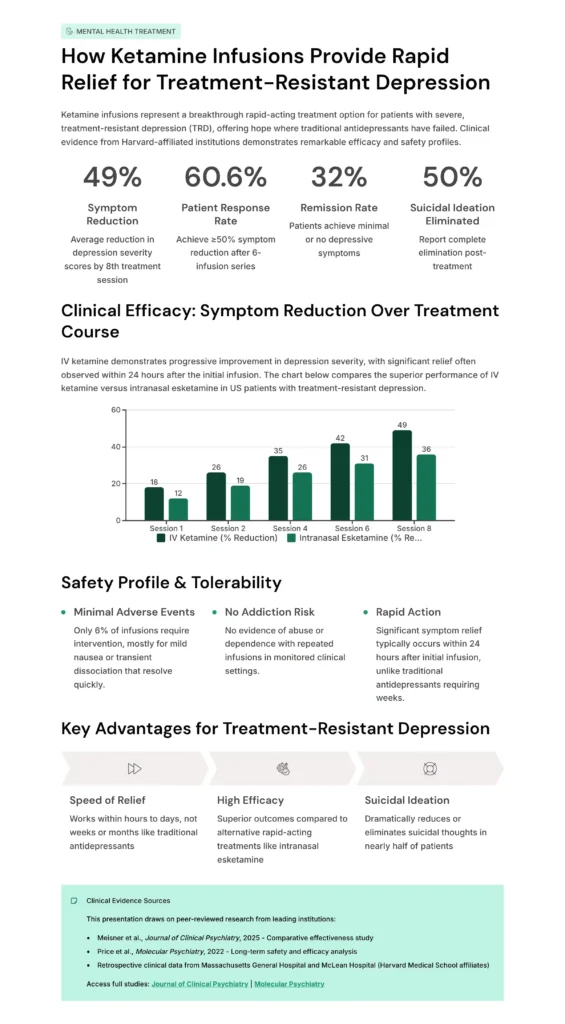
Unlike standard antidepressants, ketamine infusions can produce noticeable improvements within hours or days. Patients frequently report reduced feelings of hopelessness, decreased anxiety, and improved mood shortly after treatment.
How Neural Pathways are Recalibrated
Ketamine promotes the formation of new synapses in key brain regions, such as the prefrontal cortex and hippocampus. This rewiring supports adaptive responses to stress and emotional stimuli, helping break persistent depressive patterns.
The Role of Brain-Derived Neurotrophic Factor (BDNF)
Enhancing Emotional Resilience
BDNF is a protein that supports neuron growth and survival. Ketamine infusions increase BDNF levels, which strengthens the brain’s capacity to regulate emotions and recover from stress.
Supporting Cognitive Flexibility
By enhancing synaptic plasticity, BDNF helps the brain adjust to new experiences, improving problem-solving, decision-making, and the ability to respond flexibly to challenges.
Psychological and Physiological Benefits
Reducing Anxiety and Stress Symptoms
Ketamine’s impact on neural connectivity helps dampen overactive stress circuits, particularly in the amygdala. Patients often experience less anxiety, a calmer mind, and reduced reactivity to stress triggers.
Improving Sleep and Daily Functioning
By balancing mood and regulating stress responses, ketamine can improve sleep quality. Better sleep supports cognitive performance, emotional stability, and overall day-to-day functioning.
Observations from Vitality Lounge Med Spa
Patient Response Trends
Clinical observations at Vitality Lounge Med Spa show consistent patterns of rapid mood improvement. While individual responses vary, many patients experience noticeable relief after their first infusion session.
Clinical Environment and Safety Measures
Controlled, calming environments are essential to support the neuroplastic effects of ketamine. Patients receive therapy in private infusion suites, monitored by trained clinicians to ensure safety and optimize physiological and emotional responses.
Integration with Psychotherapy and Lifestyle
Cognitive Behavioral Therapy Support
Ketamine therapy is most effective when combined with psychotherapy, particularly cognitive behavioral techniques. Therapy helps patients process new emotional insights and reinforces healthier thought patterns.
Lifestyle Factors That Enhance Effectiveness
Regular exercise, balanced nutrition, and mindfulness practices complement ketamine infusions by supporting synaptic health and BDNF activity, leading to more durable outcomes.
Managing Expectations and Monitoring Outcomes
Tracking Progress Across Sessions
Clinicians monitor mood scales, stress levels, and cognitive performance to track progress. Adjustments to infusion frequency or supportive therapies are made based on objective outcomes.
Individual Variability in Response
Not every patient responds the same way. Factors such as severity of depression, co-occurring conditions, and lifestyle influences all impact the rate and degree of improvement.
Potential Risks and Safety Considerations
Common Side Effects
Some patients may experience temporary dissociation, mild dizziness, or nausea during or shortly after infusion. These effects are typically short-lived and monitored closely.
Ensuring Safe Administration
Ketamine infusions are delivered by licensed professionals in controlled environments. Vitality Lounge Med Spa in Cleveland ensures continuous monitoring of vital signs to minimize risks and provide a safe therapeutic experience.
Future Directions in Ketamine Research
Understanding Long-Term Effects
Research continues to explore the duration of ketamine’s effects on neuroplasticity and emotional balance. Long-term studies aim to determine optimal protocols for sustained relief.
Optimizing Infusion Protocols
Ongoing studies are evaluating dosing schedules, combination therapies, and individual patient factors to maximize the effectiveness of ketamine infusions for treatment-resistant depression.
Vitality Lounge Med Spa Serving the Irishtown Bend Community and Beyond in Cleveland
Vitality Lounge Med Spa is dedicated to serving the diverse needs of the local community of Cleveland, including individuals residing in neighborhood like Irishtown Bend. With its convenient location near landmarks such as the Cuyahoga RIver and major intersections like Division Ave and Center Ave (coordinates: Latitude: 41.4912734, Longitude: -81.7061015), we offer Ketamine Infusion services.
Get Ketamine Infusion Services at Irishtown Bend Now
Call Us or Contact Us (216) 202-4770
Navigate from Irishtown Bend to Vitality Lounge Med Spa Now
Ketamine infusion Cleveland provide a transformative approach to treatment-resistant depression by targeting neural circuits, enhancing neuroplasticity, and promoting rapid symptom relief. Vitality Lounge Med Spa in Cleveland offers a controlled, supportive setting where patients can safely experience these effects. Through careful monitoring, integration with therapy, and attention to lifestyle factors, ketamine infusions can help restore emotional balance and improve quality of life for those who have struggled with conventional treatments.
FAQs
- How quickly can ketamine infusions relieve depressive symptoms?
Most patients experience improvements within hours to a few days, though multiple sessions enhance long-term stability. - Are ketamine infusions safe for everyone with depression?
Patients are carefully screened for medical and psychiatric conditions to ensure suitability for therapy. - Can ketamine infusions be combined with therapy?
Yes, pairing ketamine with psychotherapy, particularly cognitive behavioral approaches, often improves outcomes. - Do the effects of ketamine infusions last?
Duration varies by individual. Follow-up sessions and supportive practices help maintain benefits. - How does ketamine differ from traditional antidepressants?
Unlike traditional antidepressants, ketamine acts rapidly on neural connectivity and neuroplasticity, producing faster symptom relief.