

Testosterone plays a central role in muscle growth, energy regulation, and recovery. For individuals undergoing testosterone replacement therapy (TRT), questions often arise about how exercise—particularly weight training—fits into the bigger picture. This article explores how TRT interacts with physical training, drawing from research, physiology, and educational discussions. Throughout, the focus remains on purely informational insights, referencing examples such as testosterone replacement therapy Cleveland and clinical settings like Vitality Lounge Med Spa only in an educational context.
Testosterone Replacement Therapy
What Is TRT?
Testosterone replacement therapy (TRT) is a medical approach designed to restore hormone levels in people with clinically diagnosed low testosterone. It can involve injections, patches, gels, or pellets, each working to maintain consistent hormone balance.
Why It’s Prescribed
Doctors prescribe TRT for individuals with symptoms like fatigue, muscle weakness, mood changes, or reduced libido, especially when confirmed by blood tests.
TRT and Hormone Balance
The goal of TRT isn’t to push testosterone above natural levels but to bring it back into a healthy range. Balanced hormones create conditions where the body responds more effectively to exercise and recovery.
The Role of Testosterone in the Body
Testosterone and Muscle Development
Testosterone signals muscle fibers to grow and repair, supporting strength gains.
Testosterone and Recovery
It reduces muscle breakdown and speeds up tissue repair, helping individuals bounce back faster after workouts.
Metabolic and Energy Functions
Adequate testosterone supports red blood cell production and energy metabolism, both crucial for exercise performance.
Exercise as a Natural Testosterone Booster
Strength Training Benefits
Heavy resistance training naturally stimulates testosterone release. Squats, deadlifts, and bench presses are particularly effective.
High-Intensity Interval Training (HIIT)
Short bursts of high effort followed by rest can also elevate natural testosterone levels temporarily.
Lifestyle Factors That Complement Exercise
Good sleep, stress management, and balanced nutrition amplify the effects of both exercise and TRT.
How TRT Interacts With Exercise
Enhanced Muscle Protein Synthesis
TRT enhances the body’s ability to use protein for muscle repair, allowing weight training to be more effective.
Improved Energy and Endurance
Many people on TRT report improved stamina, which helps them maintain consistent workout routines.
Faster Recovery Times
Because TRT reduces muscle breakdown, soreness and fatigue often diminish, supporting more frequent training.
Weight Training and TRT: A Closer Look
Progressive Overload and Hormonal Support
Progressive overload—the gradual increase of weight and intensity—becomes even more effective when testosterone levels are balanced.
Strength Gains vs. Lean Mass Gains
TRT often enhances lean muscle mass more than sheer strength, though both benefits are possible with consistent weight training.
Importance of Consistency
The combination of TRT and training works best when workouts are steady and long-term.
Potential Risks of Combining TRT and Training
Overtraining Concerns
Feeling energized on TRT may tempt people to train too hard. Overtraining can harm progress and recovery.
Cardiovascular Considerations
Both testosterone and intense training influence the heart and blood vessels. That’s why regular health monitoring is essential.
Hormonal Imbalance Risks
Excessive or improperly managed TRT may disrupt hormone balance, making clinical supervision necessary.
Monitoring TRT Alongside Training
Clinical Oversight
Medical supervision ensures testosterone stays within safe levels while adapting exercise accordingly.
Examples from Educational Case Studies
Research and case discussions highlight the importance of regular bloodwork, lifestyle monitoring, and gradual exercise progression.
Role of Facilities Like Vitality Lounge Med Spa
In informational discussions, references to settings such as Vitality Lounge Med Spa in Cleveland are often used to illustrate how structured monitoring and patient education can be incorporated into TRT programs.
Nutrition’s Role in Maximizing TRT and Training
Protein for Muscle Growth
Adequate protein intake supports the anabolic effects of both TRT and strength training.
Micronutrients Supporting Hormone Health
Zinc, vitamin D, and magnesium play roles in hormone production and overall performance.
Hydration and Recovery
Water is vital for muscle function, joint health, and nutrient transport.
Mental Health and Motivation Factors
Psychological Impact of TRT
Restoring testosterone levels may reduce fatigue, depression, or lack of motivation.
Exercise and Mental Well-being
Exercise itself enhances mood, providing a dual benefit when combined with TRT.
Building Long-Term Healthy Habits
Routine, accountability, and goal-setting sustain results over time.
Evidence from Research Studies
Findings on Muscle Growth
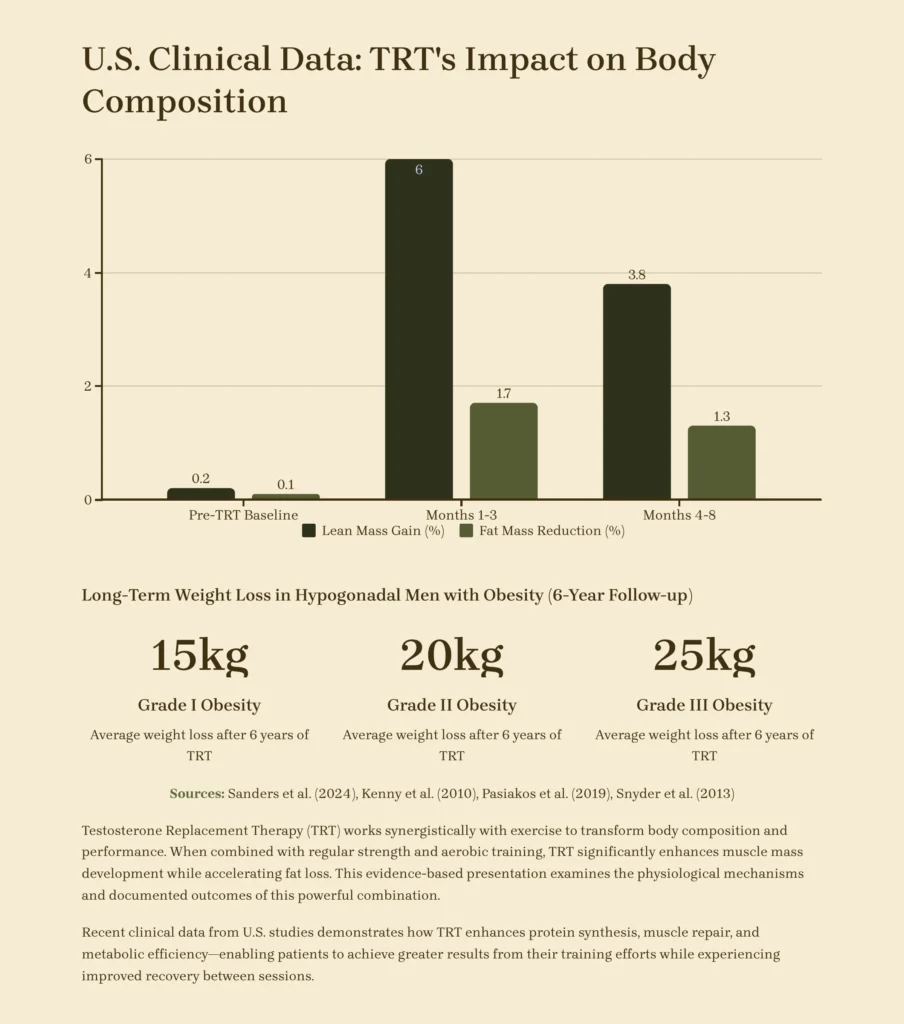
Studies often show that TRT combined with resistance training enhances lean muscle gains.
Findings on Fat Reduction
TRT and exercise together can reduce visceral fat, which improves overall health markers.
Findings on Cardiovascular Impact
Evidence remains mixed, emphasizing the need for ongoing monitoring.
TRT, Age, and Exercise Considerations
Younger vs. Older Adults
Younger individuals with medical needs for TRT may experience different outcomes compared to older adults.
Gender Perspectives
Although commonly associated with men, TRT can also play a role in specific female hormone-related conditions.
Individualized Approaches
Responses to TRT and training vary greatly; personalization is key.
How Location-Based Research Adds Value
Why Studies in Cleveland Are Referenced
Cleveland is often mentioned in educational materials due to its medical research background in hormone therapy.
Informational Mentions of Vitality Lounge Med Spa
References to places like Vitality Lounge Med Spa are used as examples of how clinical supervision and structured approaches are studied and discussed in the context of testosterone replacement therapy Cleveland.
Best Practices for Those on TRT and Training
Setting Realistic Expectations
Progress is gradual, even with TRT, and should be viewed as a long-term process.
Balancing Intensity and Recovery
Adequate rest and recovery days are just as important as training itself.
Ongoing Monitoring
Blood tests, medical checkups, and training logs provide valuable feedback.
Vitality Lounge Med Spa Serving the Irishtown Bend Community and Beyond in Cleveland
Vitality Lounge Med Spa is dedicated to serving the diverse needs of the local community of Cleveland, including individuals residing in neighborhood like Irishtown Bend. With its convenient location near landmarks such as the Cuyahoga River and major intersections like Superior Viaduct and W 24th St (coordinates: Latitude: 41.4930734, Longitude: -81.7061015), we offer testosterone replacement therapy services.
Get testosterone replacement therapy Services at Irishtown Bend Now
Call Us or Contact Us (216) 202-4770
Navigate from Irishtown Bend to Vitality Lounge Med Spa Now
Testosterone replacement therapy interacts with exercise and weight training in ways that enhance muscle growth, recovery, and overall energy. However, the combination requires careful balance, ongoing monitoring, and informed choices. References to testosterone replacement therapy Cleveland and educational mentions of facilities like Vitality Lounge Med Spa help illustrate structured approaches to understanding how TRT works alongside exercise. The most effective strategy combines medical oversight, consistent training, balanced nutrition, and attention to mental health.
FAQs
1. Can exercise alone improve low testosterone without TRT?
Yes, in some cases. Exercise, especially resistance training, can naturally boost testosterone levels, though not always enough for clinically low levels.
2. Does TRT guarantee faster muscle growth?
Not a guarantee—results depend on training consistency, nutrition, and genetics, though TRT may enhance the body’s ability to build lean muscle.
3. What kind of workouts are best with TRT?
Compound lifts (like squats and deadlifts), HIIT, and consistent progressive overload often yield the best results.
4. Are there risks of combining TRT and heavy weightlifting?
Yes, overtraining, cardiovascular strain, and hormonal imbalance risks exist, which is why clinical monitoring is emphasized.
5. Why is Cleveland often mentioned in TRT discussions?
Cleveland is home to a strong medical research community. References, including those to Vitality Lounge Med Spa, are used purely for educational purposes in exploring how TRT is managed in clinical discussions.