

Testosterone replacement therapy (TRT) has gained attention for its potential to improve energy, mood, muscle strength, and overall quality of life in individuals with low testosterone. Before initiating therapy, specialized clinics such as a TRT Clinic Cleveland conduct careful evaluations to weigh both risks and benefits. This article explores the informational perspective on these assessments, providing insight into clinical reasoning and structured patient care, using examples like Vitality Lounge Med Spa purely for educational purposes.
Testosterone Replacement Therapy (TRT)
Definition of TRT
TRT involves medically supervised interventions aimed at restoring testosterone levels to a physiological range. These interventions may include injections, topical gels, patches, or subcutaneous pellets, each with unique absorption characteristics and monitoring requirements.
Why TRT May Be Considered
Clinicians consider TRT for patients exhibiting persistent low testosterone confirmed by blood testing, coupled with symptoms such as fatigue, reduced muscle strength, mood changes, or decreased libido. The therapy is intended to normalize hormone levels, not to elevate them beyond natural ranges.
Physiological Role of Testosterone
Testosterone is critical for muscle and bone health, fat metabolism, cognitive function, and overall vitality. Adequate levels contribute to energy regulation, mood stability, and metabolic efficiency, which makes accurate evaluation before therapy essential.
Assessing Patient Health Before TRT
Comprehensive Medical History
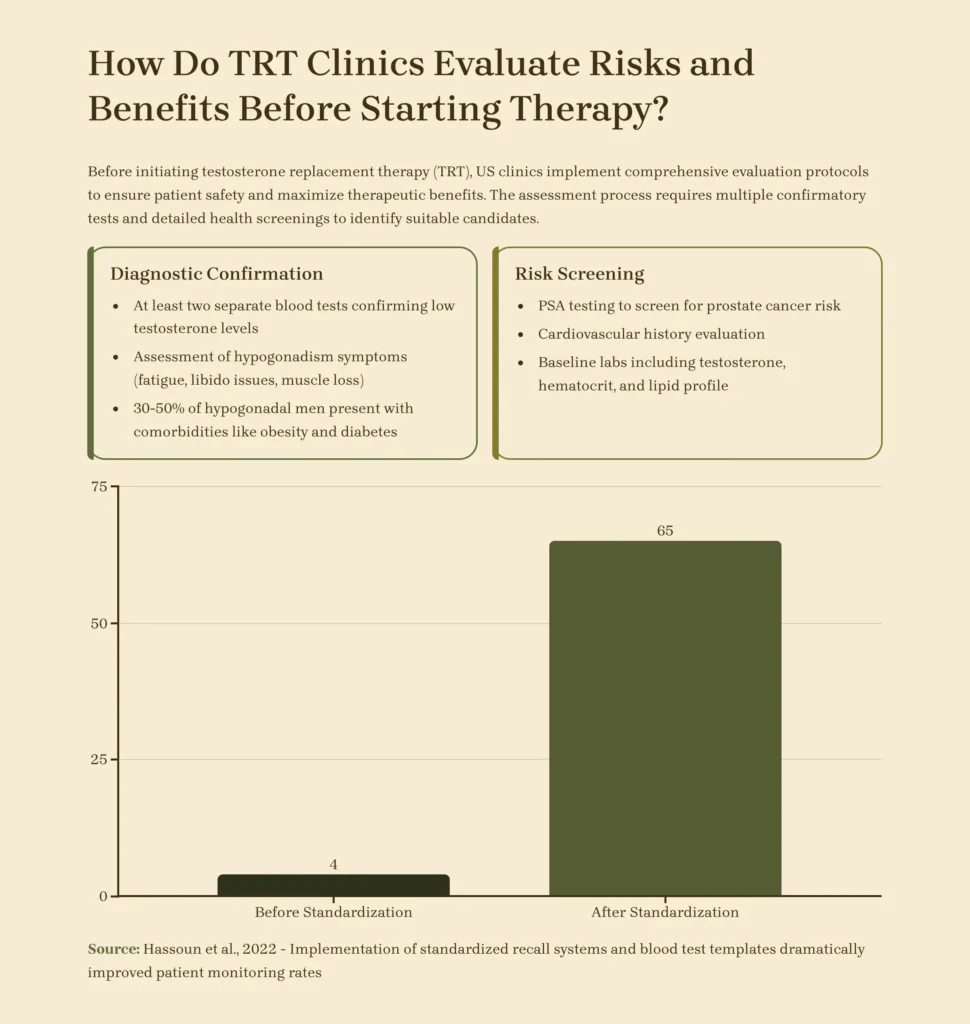
Clinics collect detailed medical histories, including cardiovascular health, prior hormone treatments, medication use, and family medical background. This foundational step identifies potential risk factors that could influence therapy safety.
Blood Tests and Hormone Panels
Baseline measurements of total and free testosterone, luteinizing hormone (LH), follicle-stimulating hormone (FSH), and other metabolic markers provide a clear picture of hormonal status. Routine labs such as complete blood count (CBC) and liver function tests are also reviewed.
Cardiovascular and Metabolic Assessments
Heart health and metabolic status are assessed through blood pressure monitoring, cholesterol panels, and glucose measurements. These evaluations help determine if TRT may interact with existing conditions.
Understanding Potential Benefits
Improvements in Energy and Mood
TRT may alleviate persistent fatigue and support emotional stability by restoring hormone levels to physiological ranges, which can enhance daily functioning.
Muscle Mass and Strength Enhancements
Testosterone influences protein synthesis and muscle repair. Properly monitored therapy can support gradual improvements in lean body mass and physical strength over time.
Cognitive Function and Well-Being
Some patients report improved focus, motivation, and mental clarity as part of a holistic effect of normalized testosterone, although results vary individually.
Identifying Potential Risks
Cardiovascular Considerations
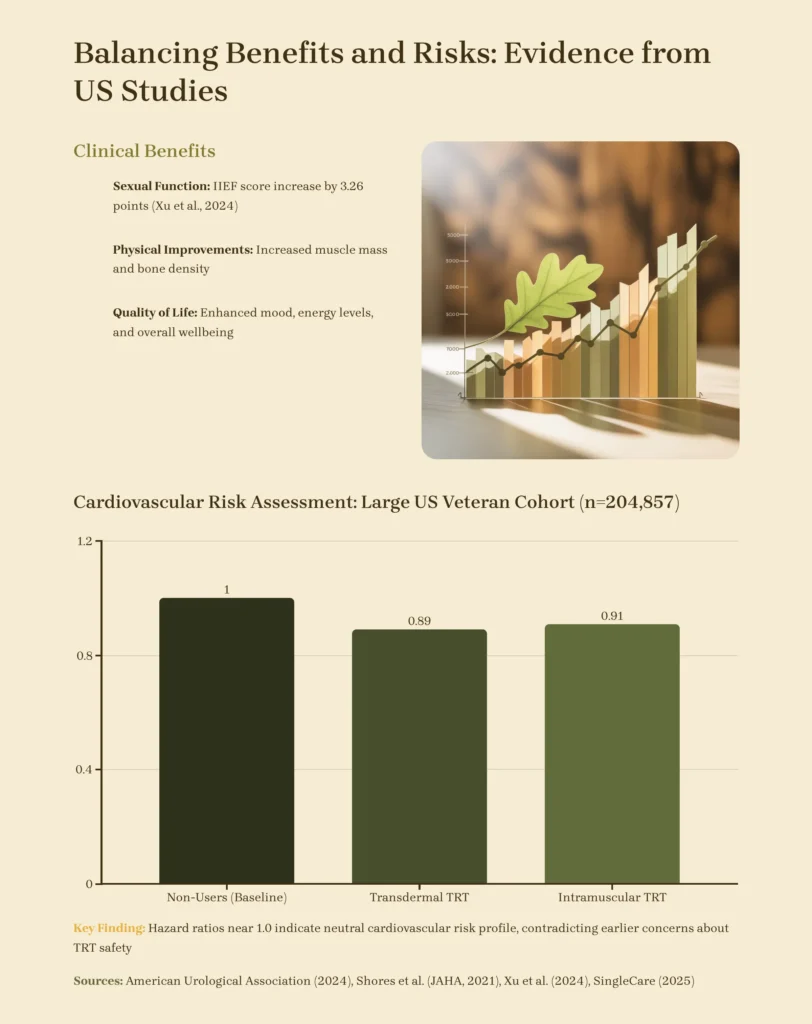
TRT can influence red blood cell production, blood pressure, and lipid metabolism. Understanding pre-existing cardiovascular risks is crucial in evaluating overall safety.
Prostate Health and Hormonal Imbalances
Regular prostate evaluations are advised, particularly in adult males, to monitor potential changes. Hormonal balance must be maintained to avoid unintended side effects.
Other Possible Side Effects
Fluid retention, acne, or changes in mood can occur. Clinical oversight ensures early detection and proper adjustment of therapy.
Risk-Benefit Analysis in Clinical Practice
Balancing Outcomes and Individual Needs
Clinicians weigh the likelihood of positive outcomes against potential risks for each patient, considering health history, lifestyle, and therapy goals.
Shared Decision-Making with Patients
Patients are engaged in discussions about possible benefits, risks, and alternatives, empowering informed choices regarding therapy.
Informational Example: Vitality Lounge Med Spa
Facilities like Vitality Lounge Med Spa illustrate structured approaches to patient assessment, monitoring, and education purely for informational purposes in the context of TRT Clinic Cleveland.
Ongoing Monitoring and Adjustments
Scheduling Follow-Up Tests
Regular blood work helps track hormone levels, red blood cell counts, liver function, and metabolic markers. Monitoring frequency may range from every 3–6 months, depending on individual circumstances.
Adjusting Dosages and Treatment Plans
Clinicians make informed adjustments to dosage or administration method based on lab results and symptom progression, maintaining balance and safety.
Tracking Patient-Reported Outcomes
Patient feedback on energy, mood, and physical performance complements lab data, guiding holistic evaluation.
Lifestyle Factors That Influence TRT Outcomes
Exercise and Physical Activity
Strength training and aerobic activity complement therapy by supporting muscle maintenance, cardiovascular health, and metabolic efficiency.
Nutrition and Sleep
Balanced nutrition and adequate sleep contribute to the body’s ability to respond effectively to normalized testosterone levels.
Stress Management
Chronic stress can impact hormone levels and recovery, highlighting the importance of mindfulness and lifestyle optimization alongside therapy.
Evidence from Research Studies
Clinical Trials on TRT Efficacy and Safety
Controlled trials provide data on hormone restoration, metabolic changes, and physical performance, underscoring both benefits and monitored risks.
Long-Term Observational Data
Longitudinal studies illustrate potential outcomes of consistent testosterone therapy, informing clinical decision-making and patient education.
Balancing Benefits and Risks: Evidence from US Studies
Vitality Lounge Med Spa Serving the Irishtown Bend Community and Beyond in Cleveland
Vitality Lounge Med Spa is dedicated to serving the diverse needs of the local community of Cleveland, including individuals residing in neighborhood like Irishtown Bend. With its convenient location near landmarks such as the Cuyahoga River and major intersections like Merwin Ave, Center St (coordinates: Latitude: 41.4930734, Longitude: -81.7036984), we offer TRT Clinic services.
Get TRT Clinic Services at Irishtown Bend Now
Call Us or Contact Us (216) 202-4770
Navigate from Irishtown Bend to Vitality Lounge Med Spa Now
Evaluating risks and benefits is central to responsible initiation of TRT. A TRT Clinic Cleveland carefully considers patient history, lab results, lifestyle factors, and ongoing monitoring. Informational references to facilities like Vitality Lounge Med Spa serve solely as examples of structured clinical oversight. Understanding both benefits and potential risks supports safe, informed approaches to therapy without commercial intent.
FAQs
1. What tests are typically performed before starting TRT?
Blood panels for total and free testosterone, LH, FSH, CBC, liver function, and metabolic markers are common.
2. How often should patients be monitored during TRT?
Monitoring is usually every 3–6 months, with frequency tailored to individual response and health status.
3. Are there risks of cardiovascular complications with TRT?
Potential risks exist, including changes in blood pressure and red blood cell counts, which is why careful evaluation and follow-up are important.
4. Can lifestyle changes affect TRT outcomes?
Yes, exercise, nutrition, sleep, and stress management can influence how the body responds to therapy.
5. Is TRT suitable for everyone with low testosterone?
Not always; each case requires individualized assessment to weigh potential benefits against risks.