

Fatigue is one of those things almost everyone has felt at some point—whether after a long day of work, a sleepless night, or a stressful week. But what happens when that exhaustion isn’t occasional, but constant? For many men, persistent fatigue has less to do with poor sleep or overwork and more to do with hormone imbalance. Specifically, low testosterone can quietly drain energy day after day. Understanding how low testosterone treatment works—and how it might restore energy—can shed light on this frustrating issue.
Low Testosterone
What Is Testosterone and Why Does It Matter?
Testosterone is often linked to masculinity, but its role goes far beyond that stereotype. This hormone regulates everything from red blood cell production to mood, muscle strength, and yes—energy. When levels dip below normal, the body’s internal systems start to feel the strain.
Common Causes of Low Testosterone
Low testosterone can develop for different reasons:
- Age-related decline – Levels naturally drop about 1% per year after age 30.
- Medical conditions – Diabetes, obesity, thyroid disorders, or chronic illness.
- Lifestyle factors – Poor diet, lack of sleep, excessive alcohol, or stress.
- Injury or surgery – Trauma to the testicles or pituitary gland dysfunction.
Symptoms of Low Testosterone Beyond Fatigue
While energy loss is one of the most obvious symptoms, men may also experience:
- Reduced libido
- Difficulty concentrating
- Irritability or depression
- Muscle weakness
- Increased body fat
Fatigue and Energy Loss Explained
The Difference Between Normal Tiredness and Clinical Fatigue
It’s normal to feel tired after running errands or working late. But clinical fatigue feels different—it lingers, doesn’t go away with rest, and impacts daily functioning.
How Hormones Influence Daily Energy Levels
Hormones like testosterone regulate metabolism, red blood cell counts, and neurotransmitters. When testosterone levels drop, the body struggles to maintain balance, leading to feelings of constant low energy.
The Link Between Low Testosterone and Fatigue
Why Low T Leads to Constant Tiredness
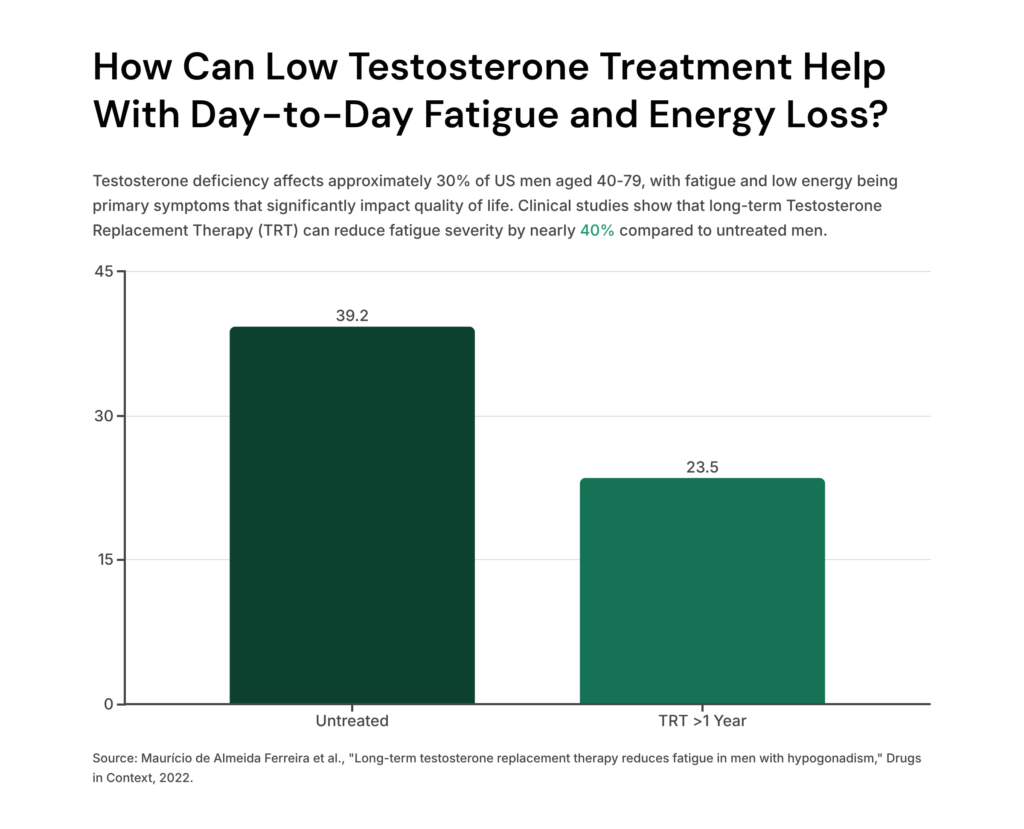
Testosterone supports oxygen delivery in the body through red blood cell production. Without enough, the body becomes less efficient at carrying oxygen, resulting in chronic tiredness.
The Role of Sleep Disturbances
Low T is often associated with insomnia or disrupted sleep cycles, which only compounds fatigue. Many men find they wake up still exhausted, regardless of how many hours they sleep.
Mood, Motivation, and Energy Depletion
Energy isn’t just physical—it’s also mental. Low testosterone is linked with mood swings and depression, which can sap motivation and make even small tasks feel overwhelming.
How Low Testosterone Treatment Works
Medical Approaches to Testosterone Therapy
Testosterone Replacement Therapy (TRT)
The most common approach, TRT involves supplementing testosterone through injections, gels, or patches to bring levels back to normal.
Injections, Gels, and Patches
Each method delivers testosterone differently:
- Injections – Periodic boosts given under medical supervision.
- Gels – Applied daily to the skin for steady absorption.
- Patches – Provide consistent release over 24 hours.
Lifestyle Adjustments as Supportive Treatment
Treatment works best when paired with healthier habits like improved diet, strength training, and better sleep hygiene.
Monitoring and Safe Practice
Regular bloodwork ensures safe hormone levels and reduces risks like blood thickening or imbalances.
Benefits of Low Testosterone Treatment for Daily Fatigue
Improved Energy Levels
Many men report noticeable boosts in daily stamina within weeks of beginning treatment.
Better Sleep Quality
With hormone balance restored, sleep cycles often normalize, reducing morning grogginess.
Enhanced Cognitive Function
Brain fog and concentration issues often improve as testosterone levels stabilize.
More Consistent Moods
By supporting neurotransmitter function, treatment helps level out mood swings that drain energy.
Case Example: Low Testosterone Treatment Cleveland
The Role of Clinics Like Vitality Lounge Med Spa
In Cleveland, clinics such as Vitality Lounge Med Spa specialize in tailored approaches to hormone health. While fatigue might have many causes, they ensure patients receive thorough testing and evidence-based care.
Why Localized Expertise Matters
Every city has unique health challenges—from lifestyle patterns to environmental factors. That’s why low testosterone treatment Cleveland providers focus on community-specific needs.
Additional Health Benefits Beyond Energy
Muscle Strength and Endurance
Restored testosterone helps rebuild muscle mass, making physical activity less draining.
Cardiovascular Health Support
Balanced testosterone may reduce risks of certain heart conditions, indirectly boosting stamina.
Bone Density and Long-Term Wellness
Treatment supports stronger bones, reducing risk of fractures and supporting mobility.
Misconceptions About Testosterone Treatment
Is It Just for Athletes or Bodybuilders?
Not at all. It’s a legitimate medical treatment for men with clinically low levels.
Does Treatment Cause Aggression?
The idea of “roid rage” comes from steroid abuse, not medically supervised therapy. In fact, most men report improved mood stability.
Is Fatigue Always Caused by Low Testosterone?
No—fatigue can come from many sources like thyroid issues or sleep apnea. That’s why proper diagnosis is crucial.
Risks and Considerations
Who Should Avoid Treatment
Men with certain cancers, untreated sleep apnea, or severe heart issues may not be candidates.
The Importance of Medical Supervision
Self-medicating with testosterone is risky. Professional oversight ensures dosage is safe and effective.
Key US Statistics & Clinical Insights on Testosterone and Fatigue
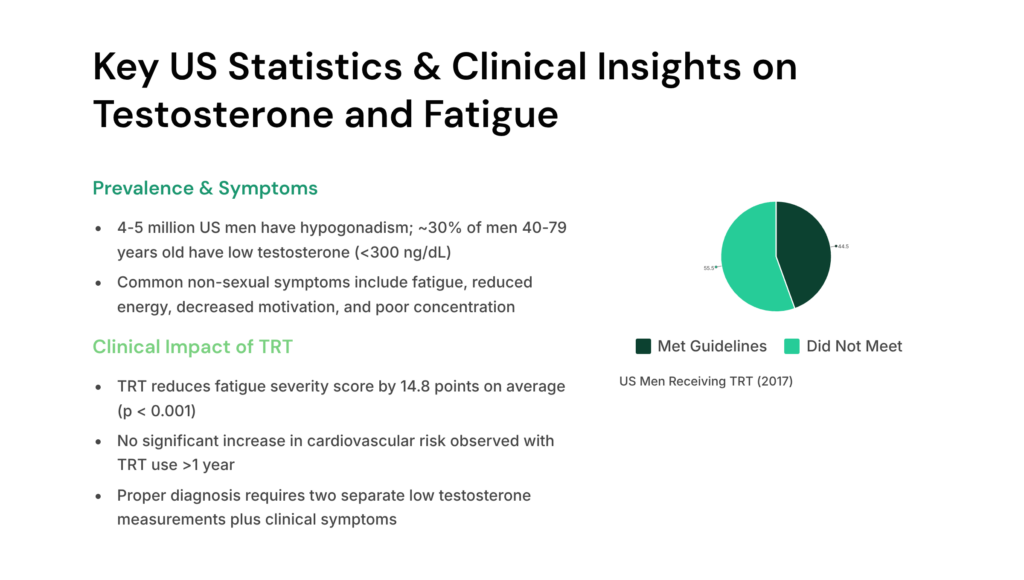
Sources: American Urological Association Testosterone Deficiency Guideline (2024), US Military Health System Testosterone Replacement Therapy Fact Sheet (2019), Ferreira et al. (2022)
The Long-Term Perspective
Building Sustainable Energy Habits
Hormone therapy alone isn’t a silver bullet. Pairing it with healthy eating, regular movement, and stress management makes results last.
Combining Treatment With Healthy Lifestyle Choices
Think of TRT as the foundation; lifestyle changes are the structure built on top. Together, they create long-term energy resilience.
Vitality Lounge Med Spa Serving the Irishtown Bend Community and Beyond in Cleveland
Vitality Lounge Med Spa is dedicated to serving the diverse needs of the local community of Cleveland, including individuals residing in neighborhood like Irishtown Bend. With its convenient location near landmarks such as the Cuyahoga River and major intersections like Columbus Rd and Leonard St (coordinates: Latitude: 41.4912734, Longitude: -81.7012953), we offer low testosterone treatment services.
Get low testosterone treatment Services at Irishtown Bend Now
Call Us or Contact Us (216) 202-4770
Navigate from Irishtown Bend to Vitality Lounge Med Spa Now
Low testosterone doesn’t just lower hormone levels—it lowers quality of life. From daily fatigue to mood struggles, the impact is wide-ranging. Fortunately, low testosterone treatment, when approached with careful medical supervision, can restore energy, focus, and motivation. Clinics like Vitality Lounge Med Spa highlight how low testosterone treatment Cleveland is helping men get back to their energetic selves, showing that managing hormones can be the first step toward reclaiming vitality.
FAQs
Q1: How quickly can low testosterone treatment improve fatigue?
Most men notice improvements within a few weeks, though full benefits may take several months.
Q2: Can lifestyle changes alone fix low testosterone?
Sometimes mild cases improve with weight loss, diet, or better sleep, but clinical cases usually require medical treatment.
Q3: Is testosterone therapy safe for long-term use?
Yes—when monitored by healthcare professionals, long-term therapy can be safe and effective.
Q4: What’s the difference between TRT and steroids?
TRT restores normal hormone levels, while steroids involve artificially high doses for muscle gain.
Q5: Do women ever receive testosterone treatment?
Yes, though in much smaller doses, usually for specific medical conditions like low libido or certain hormonal imbalances.