

Post-traumatic stress disorder and anxiety disorders can feel overwhelming, unpredictable, and exhausting. They affect thoughts, emotions, and the body’s stress response. Understanding the mechanisms behind these conditions helps explain why innovative treatments like ketamine infusions can offer relief when conventional methods are insufficient.
Understanding PTSD and Anxiety Disorders
What is PTSD?
PTSD often develops after exposure to a traumatic event, such as an accident, assault, or combat. It manifests as flashbacks, intrusive memories, hypervigilance, and emotional numbness. People with PTSD may feel trapped in a cycle of fear and avoidance, struggling to regain a sense of safety in daily life.
What is Anxiety Disorder?
Anxiety disorders involve persistent and excessive worry, often accompanied by physical symptoms like increased heart rate, tension, and gastrointestinal distress. Generalized anxiety disorder, panic disorder, and social anxiety are common examples. Overactive stress circuits in the brain reinforce feelings of worry and fear, making normal functioning challenging.
Traditional Treatments and Their Limitations
Historically, PTSD and anxiety have been treated using a combination of psychotherapy and medications. While effective for some, these treatments are not universally successful.
Psychotherapy Approaches
Cognitive-behavioral therapy, exposure therapy, and EMDR are widely used for PTSD and anxiety. They aim to reframe thought patterns, process traumatic memories, and reduce avoidance behaviors. While helpful, progress can be slow, and some patients plateau without significant improvement.
Pharmacological Interventions
SSRIs, SNRIs, and benzodiazepines are commonly prescribed for PTSD and anxiety. These medications regulate neurotransmitters to stabilize mood and reduce symptoms. However, side effects, delayed onset, and incomplete responses can limit effectiveness, especially for treatment-resistant cases.
Challenges in Treatment-Resistant Cases
For individuals who do not respond adequately to conventional therapy, symptoms may persist for years, affecting quality of life. Treatment-resistant PTSD and anxiety require alternative approaches that directly target neural circuitry and promote rapid adaptive changes.
The Science Behind Ketamine Infusions
Ketamine infusions represent a unique class of intervention. Unlike traditional medications, ketamine acts on glutamate neurotransmission, directly influencing neuroplasticity and emotional regulation.
How Ketamine Works in the Brain
NMDA Receptor Modulation
Ketamine blocks NMDA receptors, which temporarily reduces excitatory neural activity in targeted circuits. This paradoxically triggers compensatory glutamate release in other regions, promoting neural rewiring.
Glutamate System and Synaptic Plasticity
Glutamate is essential for learning, memory, and mood regulation. Enhanced glutamate signaling stimulates synaptogenesis the formation of new connections between neurons—helping the brain reset maladaptive patterns associated with PTSD and anxiety.
Rapid Neuroplasticity and Emotional Regulation
Ketamine’s effect on synaptic plasticity allows the brain to reorganize more quickly than with traditional treatments. This supports emotional flexibility, improves stress resilience, and reduces the intensity of hyperactive fear circuits.
Ketamine Infusions for PTSD
How Ketamine Helps Reduce Flashbacks and Hyperarousal
By modulating stress-sensitive circuits, ketamine can reduce the frequency and intensity of intrusive memories and hyperarousal. Patients often report feeling calmer and more able to engage with daily activities after infusion sessions.
Supporting Emotional Processing of Trauma
Enhanced neuroplasticity allows the brain to process trauma more effectively. Patients may experience a shift in emotional perspective, enabling safer confrontation of memories without overwhelming anxiety.
Ketamine Infusions for Anxiety Disorders
Dampening Overactive Stress Responses
Ketamine helps balance hyperactive limbic activity, reducing physical symptoms of anxiety such as rapid heartbeat, muscle tension, and gastrointestinal upset.
Promoting Calm and Cognitive Flexibility
Patients frequently report increased cognitive clarity and emotional balance, which aids in rational problem-solving and adaptive coping strategies. Neuroplastic changes allow for more flexible responses to stressors.
Clinical Protocols at Vitality Lounge Med Spa
Screening and Assessment
Each patient undergoes comprehensive evaluation to determine suitability for ketamine infusions. This includes psychiatric assessment, medical history review, and discussion of prior treatments.
Infusion Procedure and Monitoring
Infusions are administered intravenously under continuous monitoring of vital signs. Private, calming environments support physiological and emotional stability during the session.
Safety and Side Effects
Temporary dissociation, mild dizziness, or nausea may occur. Licensed clinicians monitor all responses, ensuring safety and providing reassurance without influencing the neuroplastic effects of ketamine.
Integration with Therapy and Support Practices
Complementary Psychotherapy
Therapeutic support enhances the benefits of ketamine infusions. Cognitive-behavioral therapy, mindfulness-based practices, or trauma-informed counseling help consolidate new neural patterns and emotional insights.
Lifestyle and Mindfulness Approaches
Exercise, meditation, and adequate sleep complement ketamine’s neuroplastic effects. These practices reinforce mood regulation and stress resilience.
Observations and Research Outcomes
Short-Term Benefits
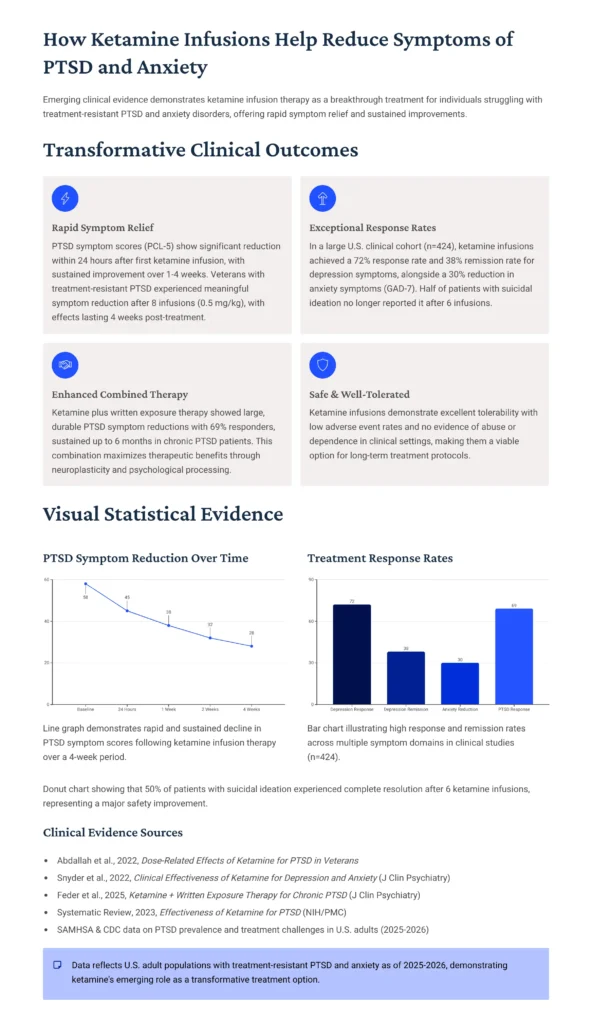
Rapid relief of hyperarousal, intrusive thoughts, and heightened anxiety is commonly observed after initial infusions. Patients often experience improved mood and clearer thinking within hours to days.
Long-Term Effects and Maintenance
Repeated infusions combined with therapy and lifestyle support help maintain symptom reduction. Neuroplastic changes persist, allowing for sustainable emotional and cognitive improvements.
Ethical and Safety Considerations
Patient Autonomy and Informed Consent
Patients are informed about potential effects, benefits, and risks. Informed consent ensures autonomy and engagement in the treatment process.
Monitoring and Risk Management
Continuous monitoring during infusions minimizes risks and ensures that interventions support, rather than interfere with, mental health recovery.
Vitality Lounge Med Spa Serving the The Flats Community and Beyond in Cleveland
Vitality Lounge Med Spa is dedicated to serving the diverse needs of the local community of Cleveland, including individuals residing in neighborhood like The Flats. With its convenient location near landmarks such as the Old RIver and major intersections like Division Ave and Center Ave (coordinates: Latitude: 41.4930734, Longitude: -81.718117), we offer Ketamine Infusion services.
Get Ketamine Infusion Services at The Flats Now
Call Us or Contact Us (216) 202-4770
Navigate from The Flats to Vitality Lounge Med Spa Now
Ketamine infusions Cleveland provide a scientifically grounded approach to reducing symptoms of PTSD and anxiety by promoting neuroplasticity, emotional regulation, and cognitive flexibility. Vitality Lounge Med Spa in Cleveland offers carefully monitored treatment in a safe, supportive environment. When integrated with therapy and lifestyle interventions, ketamine infusions can help individuals regain control over their emotional health and reduce the impact of persistent trauma or anxiety.
FAQs
- How quickly can ketamine infusions reduce PTSD or anxiety symptoms?
Most patients notice improvements within hours to a few days, although multiple sessions provide more lasting effects. - Are ketamine infusions safe for everyone with PTSD or anxiety?
Patients undergo thorough screening to ensure suitability and minimize risk. Certain medical or psychiatric conditions may require special consideration. - Can ketamine infusions be combined with therapy?
Yes. Pairing ketamine with psychotherapy helps reinforce adaptive emotional and cognitive patterns. - Do the benefits of ketamine infusions last?
Duration varies individually. Repeated infusions and supportive practices help maintain long-term improvements. - How does ketamine differ from conventional PTSD or anxiety treatments?
Unlike traditional medications, ketamine works rapidly on neural circuits and promotes neuroplasticity, offering faster symptom relief for treatment-resistant cases.