

Managing emotions and reducing stress are fundamental to mental well-being. Our brains are constantly processing experiences, interpreting threats, and regulating emotional responses. Yet, when stress becomes chronic or emotions are out of balance, the nervous system can get “stuck,” making it difficult to maintain mental clarity or peace. This is where Ketamine Therapy Cleveland at Vitality Lounge Med Spa comes in, offering insight into how neurobiology and therapy intersect to restore balance and resilience.
What Emotional Balance Really Means
The Science of Emotions and Brain Chemistry
Emotions are more than fleeting feelings. They’re complex physiological and neural processes. Key neurotransmitters like serotonin, dopamine, and glutamate play a critical role in regulating mood, while brain regions like the prefrontal cortex and amygdala work together to evaluate stimuli and generate appropriate emotional responses. When these systems are out of sync, emotional reactions can become exaggerated or blunted.
How Imbalanced Emotions Affect Daily Life
Persistent irritability, anxiety, or sadness can interfere with relationships, work performance, and overall quality of life. Individuals with emotional imbalance may experience difficulty managing stress, solving problems, or maintaining perspective during challenging situations.
The Role of Stress in Mental Health
Acute vs Chronic Stress
Stress is not inherently harmful. Short-term, or acute, stress can heighten focus and improve problem-solving. Chronic stress, however, floods the brain with cortisol and other stress hormones over time, which can impair neural flexibility and emotional regulation.
How Stress Alters Brain Function
Long-term stress affects neural circuits responsible for mood, cognition, and emotional resilience. The amygdala becomes overactive, signaling threat excessively, while prefrontal cortical regions that normally regulate responses weaken. This imbalance makes it harder to control reactions, increasing susceptibility to anxiety, depression, and emotional dysregulation.
Neurobiology Behind Emotional Regulation
Brain Regions Involved in Mood and Stress
The limbic system, including the amygdala, hippocampus, and nucleus accumbens, orchestrates emotional responses. The prefrontal cortex evaluates situations and applies rational judgment. Efficient communication between these regions supports emotional stability.
Neurotransmitters and Hormones That Influence Emotions
Chemical messengers such as serotonin, dopamine, norepinephrine, and glutamate modulate mood, motivation, and stress response. Hormones like cortisol and oxytocin influence how we perceive threats and rewards. An imbalance in these chemicals can lead to heightened stress sensitivity and emotional volatility.
How Ketamine Therapy Interacts with the Brain
NMDA Receptors and Glutamate Modulation
Ketamine primarily targets NMDA receptors, influencing glutamate activity. This modulation improves synaptic plasticity, allowing neurons to communicate more efficiently and adaptively, which is key for emotional regulation.
Rapid Synaptic Growth and Neural Flexibility
Ketamine stimulates synaptogenesis, the formation of new connections between neurons. This rapid structural change creates more flexible neural networks, enabling the brain to “reorganize” in response to new experiences or therapeutic interventions.
The Role of BDNF in Stress Resilience
Brain-Derived Neurotrophic Factor, or BDNF, supports neuron growth and survival. Ketamine increases BDNF expression, enhancing resilience to stress and improving the brain’s capacity to manage emotions effectively.
Mechanisms of Stress Reduction During Ketamine Therapy
Disrupting Negative Thought Loops
Ketamine helps interrupt entrenched patterns of negative thinking. By enhancing neuroplasticity, it allows previously fixed neural pathways associated with rumination to be rewired, enabling a more adaptive response to stressors.
Resetting Emotional Response Patterns
Emotional reactions that once seemed automatic can be recalibrated. Ketamine provides a “window” for the brain to relearn healthier emotional responses without becoming overwhelmed by habitual patterns.
Enhancing Cognitive Flexibility
With improved synaptic connections, the brain can consider multiple perspectives, evaluate situations more objectively, and make balanced decisions rather than reacting impulsively.
Clinical Observations at Vitality Lounge Med Spa
Safe, Structured Treatment Environments
Vitality Lounge Med Spa ensures that patients receive therapy in controlled settings that minimize stress and external influences. Calming environments allow neuroplastic changes to occur without distraction or emotional interference.
Monitoring Emotional and Physiological Responses
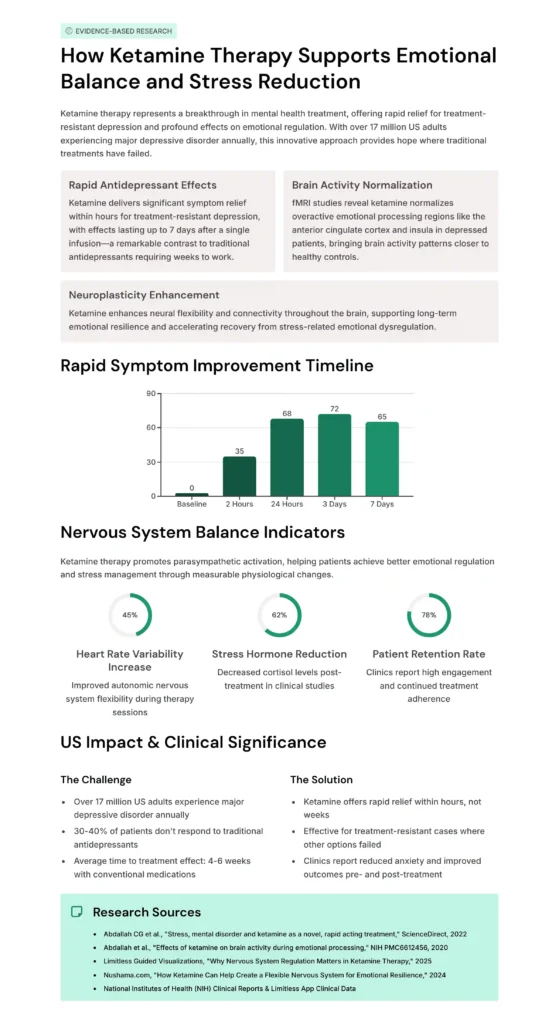
Clinicians observe heart rate variability, breathing patterns, and emotional shifts to study how ketamine-induced neuroplasticity translates to emotional balance. This careful monitoring supports better understanding of stress regulation mechanisms in real time.
Integrating Lifestyle Practices to Maximize Benefits
Mindfulness and Meditation
Practices like mindfulness meditation complement ketamine therapy by reinforcing new neural pathways, improving attention, and enhancing emotional self-awareness.
Sleep, Nutrition, and Exercise
Adequate rest, nutrient-rich diets, and physical activity support BDNF production and synaptic health. These lifestyle factors reinforce the structural changes induced by ketamine, strengthening emotional resilience over time.
Long-Term Effects on Emotional Stability
Sustained Mood Regulation
Repeated ketamine therapy sessions can lead to durable improvements in mood. By restructuring neural networks, individuals gain a more consistent ability to manage stress and regulate emotions.
Building Resilience to Future Stressors
Enhanced neuroplasticity provides the brain with tools to respond adaptively to new challenges. Individuals may experience reduced susceptibility to anxiety, improved coping strategies, and a more balanced emotional baseline.
Research and Future Directions in Ketamine Therapy
Ongoing Studies on Emotional Balance
Scientists are investigating how long ketamine-induced changes persist, how they interact with psychotherapy, and the optimal session frequency to maximize emotional stability.
Combining Ketamine with Therapy for Maximum Effect
Integrating ketamine therapy with cognitive behavioral therapy, mindfulness, or stress-management programs appears to reinforce neuroplastic changes, leading to more sustained emotional and psychological benefits.
Vitality Lounge Med Spa Serving the Irishtown Bend Community and Beyond in Cleveland
Vitality Lounge Med Spa is dedicated to serving the diverse needs of the local community of Cleveland, including individuals residing in neighborhood like Irishtown Bend. With its convenient location near landmarks such as the Old River and major intersections like Division Ave and W 45th St (coordinates: Latitude: 41.4930734, Longitude: -81.718117), we offer Ketamine Therapy services.
Get Ketamine Therapy Services at Irishtown Bend Now
Call Us or Contact Us (216) 202-4770
Navigate from Irishtown Bend to Vitality Lounge Med Spa Now
Ketamine therapy cleveland represents a novel approach to emotional balance and stress reduction. By enhancing neuroplasticity, modulating neurotransmitters, and promoting new synaptic connections, the brain can recalibrate how it responds to stress and emotions. Vitality Lounge Med Spa in Cleveland provides a controlled, supportive environment where these processes can occur safely, helping individuals achieve greater resilience, emotional stability, and overall well-being.
FAQs
- How quickly can ketamine therapy improve emotional balance?
Rapid changes in neural connectivity can occur within hours, though multiple sessions and reinforcement help sustain benefits. - Is ketamine therapy effective for all types of stress-related conditions?
It is particularly beneficial for treatment-resistant depression, anxiety disorders, and PTSD, though ongoing research explores broader applications. - Can lifestyle practices influence the effectiveness of ketamine therapy?
Yes. Practices like mindfulness, proper sleep, exercise, and nutrition enhance neuroplasticity and reinforce therapy benefits. - Are the emotional effects of ketamine permanent?
Long-term stability varies; combining therapy sessions with reflective practices and lifestyle support helps maintain results. - How does ketamine therapy differ from traditional antidepressants regarding stress management?
Unlike traditional antidepressants, ketamine promotes rapid structural and functional changes in the brain, improving adaptability and emotional regulation more quickly.