
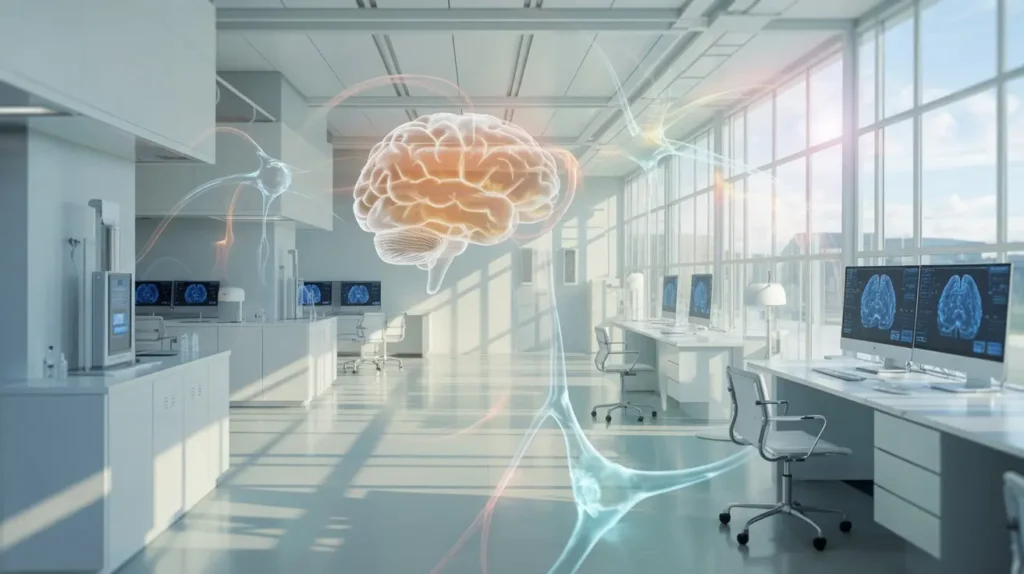
Ketamine therapy has emerged as one of the most fascinating approaches in modern neuroscience. Unlike traditional treatments that often rely on gradual chemical adjustments, ketamine acts directly on the structural and functional aspects of the brain. At Vitality Lounge Med Spa in Cleveland, researchers and clinicians are observing how ketamine promotes neuroplasticity, reshaping the brain’s ability to adapt and regulate mood. But what does this actually mean for the brain, and why does it matter for mental health?
The Science of Neuroplasticity
What Neuroplasticity Means for the Brain
Neuroplasticity refers to the brain’s ability to change, adapt, and reorganize itself throughout life. Think of it as the brain’s “flexibility muscle.” Just as your muscles grow stronger and more efficient with exercise, your neural pathways can strengthen or weaken based on experience, thought patterns, and even emotional responses. Neuroplasticity is central to learning, memory, and emotional resilience.
Neurons, Synapses, and Neural Pathways Explained
Neurons communicate through specialized connections called synapses. These tiny junctions allow the electrical and chemical signals that constitute thought and emotion to travel across networks. When neural pathways are used frequently, they strengthen; pathways that aren’t used weaken over time. In depression or chronic stress, the brain can become “stuck” in certain negative patterns, limiting adaptability.
Why Neuroplasticity Matters for Mood Regulation
Mood is not just a fleeting feeling. It’s a reflection of underlying neural circuitry. Flexible neural pathways enable us to respond to changing environments, regulate emotions effectively, and recover from stress. Enhancing neuroplasticity allows the brain to form new connections, which can interrupt cycles of rumination and depressive thought.
How Depression and Anxiety Affect Brain Flexibility
Patterns of Negative Thinking and Neural Rigidity
When someone experiences prolonged depression or anxiety, certain neural circuits become overly dominant. These circuits reinforce negative thought loops, making it increasingly difficult to “think differently” or experience positive emotions. The brain essentially becomes wired to expect distress.
The Role of Chronic Stress on Neural Adaptation
Chronic stress amplifies this rigidity. The brain prioritizes threat detection and survival, strengthening pathways related to fear and worry while weakening adaptive, flexible circuits. This imbalance reduces neuroplasticity, impairing the brain’s natural ability to reset emotional and cognitive patterns.
Ketamine Therapy and Its Mechanism in the Brain
NMDA Receptor Modulation and Glutamate Signaling
Ketamine primarily interacts with NMDA receptors in the brain, modulating glutamate. A key neurotransmitter for learning, memory, and mood regulation. By temporarily altering NMDA activity, ketamine triggers a cascade of neural responses that promote rapid synaptic formation and enhance communication between neurons.
Rapid Synaptogenesis and Structural Neural Changes
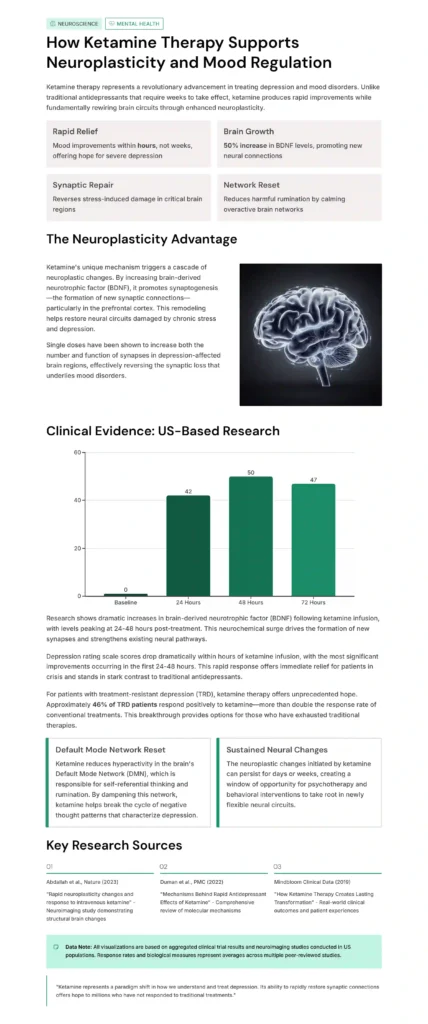
Unlike conventional antidepressants, ketamine can stimulate the creation of new synaptic connections within hours. This rapid synaptogenesis is akin to opening new roads in a city that was previously congested. The brain can now route signals through healthier, more flexible pathways, improving emotional regulation and cognitive function.
Brain-Derived Neurotrophic Factor (BDNF) and Its Importance
BDNF is a protein that supports neuron survival, growth, and plasticity. Ketamine has been shown to increase BDNF activity, reinforcing synaptic growth and contributing to improved mood and resilience. Higher BDNF levels are strongly associated with emotional flexibility and adaptive thought processing.
Ketamine Therapy’s Impact on Mood Regulation
Resetting Emotional Patterns
With enhanced neuroplasticity, the brain can “reset” entrenched emotional responses. Feelings of sadness, anxiety, or fear are no longer locked into fixed neural loops. Instead, the brain learns new ways to process and respond to emotional stimuli.
Improving Cognitive Flexibility and Thought Processing
Ketamine therapy supports the brain in differentiating between fleeting thoughts and core identity. Patients often report clearer thinking and a reduction in obsessive or ruminative thought patterns, reflecting improved cognitive flexibility.
Reducing Rumination and Anxiety Loops
Negative mental loops can prolong emotional pain. By increasing synaptic connectivity, ketamine provides the neural scaffolding to interrupt these cycles, allowing mood to stabilize more quickly after stressful events.
Clinical Observations at Vitality Lounge Med Spa in Cleveland
Safe and Controlled Treatment Environments
At Vitality Lounge Med Spa, all ketamine therapy sessions are conducted in structured, calming environments. These settings minimize stress and sensory overload, allowing neuroplastic processes to unfold without external interference.
Observation of Mood and Emotional Changes
Clinicians monitor physiological and emotional indicators, such as heart rate variability and mood shifts, to study how neuroplastic changes correlate with behavioral and emotional outcomes.
The Role of Therapy and Lifestyle in Enhancing Neuroplasticity
Integration of Reflection, Journaling, and Mindfulness
Ketamine therapy alone promotes neural flexibility, but combining it with mindfulness, journaling, or cognitive exercises amplifies these effects. Reflection helps solidify new pathways, reinforcing healthier emotional and cognitive patterns.
Nutrition, Exercise, and Sleep in Supporting Brain Plasticity
Lifestyle factors also play a role. Adequate sleep, nutrient-rich diets, and physical activity enhance BDNF production and support ongoing neural adaptation, complementing the structural changes induced by ketamine.
Long-Term Neuroplastic Benefits of Ketamine Therapy
Sustained Mood Improvement and Emotional Stability
Neural rewiring can lead to longer-lasting improvements in mood regulation. Over repeated sessions, emotional responses become more balanced, and depressive or anxious tendencies can diminish.
Cognitive Resilience Over Time
Improved synaptic connectivity supports better decision-making, flexible thinking, and adaptive coping strategies. Patients often experience increased mental clarity and resilience in the face of daily stressors.
Current Research and Future Directions
Understanding Duration and Persistence of Neural Changes
Research is ongoing to determine how long ketamine-induced neuroplastic changes persist and how they interact with therapy, lifestyle, and other interventions.
Combining Ketamine Therapy with Psychotherapy for Best Outcomes
Studies suggest that integrating ketamine therapy with cognitive behavioral therapy or mindfulness practices can help solidify neuroplastic changes, ensuring that improvements in mood and cognition are maintained over the long term.
The Transformative Potential of Ketamine Therapy
Ketamine therapy Cleveland represents a paradigm shift in mental health care. By directly enhancing neuroplasticity, it enables the brain to rewire maladaptive patterns, regulate mood more effectively, and recover from the long-term effects of stress and depression. At Vitality Lounge Med Spa in Cleveland, clinicians continue to explore how these mechanisms translate into meaningful, sustainable improvements in emotional and cognitive health.
Vitality Lounge Med Spa Serving the The Flats Community and Beyond in Cleveland
Vitality Lounge Med Spa is dedicated to serving the diverse needs of the local community of Cleveland, including individuals residing in neighborhood like The Flats. With its convenient location near landmarks such as the Old River and major intersections like Washington Ave and W 24th St (coordinates: Latitude: 41.4930734, Longitude: -81.7061015), we offer Ketamine Therapy services.
Get Ketamine Therapy Services at The Flats Now
Call Us or Contact Us (216) 202-4770
Navigate from The Flats to Vitality Lounge Med Spa Now
Before starting therapy, clinics carefully review patients’ health conditions. See our guide on Which Medical Conditions are Most Commonly Evaluated at a Ketamine Clinic for more details.
FAQs
- How quickly can neuroplastic changes occur during ketamine therapy?
Rapid synaptic changes have been observed within hours of infusion, with further reinforcement occurring over subsequent sessions. - Does ketamine therapy work for all types of depression?
It is most effective for treatment-resistant depression, though ongoing research is exploring broader applications. - Can lifestyle habits enhance the effects of ketamine therapy?
Yes, proper sleep, exercise, nutrition, and mindfulness practices can support neuroplasticity and improve outcomes. - Is mood improvement permanent after ketamine therapy?
Results vary; repeated sessions and integration with therapy help maintain long-term benefits. - How does ketamine differ from traditional antidepressants in terms of brain function?
Ketamine works on the structural and functional level, promoting rapid synaptogenesis and neural flexibility, whereas traditional antidepressants act primarily through gradual chemical modulation.