

Ketamine treatment exists at the intersection of neuroscience, psychology, and clinical precision. While much attention is given to how ketamine works in the brain, far less discussion centers on how patient comfort is managed without compromising the integrity of treatment itself. Comfort matters, but so does neutrality. The challenge for any ketamine clinic is to support the human experience without influencing neurological outcomes.
This article explores how ketamine clinics manage patient comfort carefully and deliberately, ensuring that comfort supports rather than interferes with treatment integrity. The focus remains purely informational, grounded in observed clinical practices and neurological principles.
Understanding the Balance Between Comfort and Clinical Precision
Comfort and precision may seem like competing priorities, but in clinical neuroscience, they are closely connected. The brain responds not only to medication but also to environmental and physiological conditions.
Why Comfort Matters in Neurological Treatments
The human nervous system is highly sensitive to stress. Physical discomfort or psychological unease can activate stress responses that alter heart rate, breathing patterns, and neural signaling. These changes can influence how the brain responds during treatment. Comfort helps stabilize the nervous system, allowing neurological processes to occur without unnecessary disruption.
Why Treatment Integrity Must Remain Untouched
While comfort is important, excessive environmental influence can unintentionally shape perception or emotional response. Treatment integrity depends on controlled conditions, standardized protocols, and neutral observation. Comfort must never introduce variables that alter expectation, mood, or interpretation of experience.
Defining Patient Comfort in a Clinical Context
In a ketamine clinic, comfort does not mean indulgence or distraction. Instead, it refers to creating conditions that reduce stress without shaping experience.
Physical Comfort Versus Psychological Comfort
Physical comfort includes posture support, temperature regulation, and reduction of physical strain. Psychological comfort relates to emotional safety, predictability, and clarity. These forms of comfort are addressed differently to avoid influencing treatment response.
Environmental Factors That Influence Comfort
Lighting, ambient sound, and room layout affect sensory processing. Clinical environments aim for calm, neutral settings that avoid overstimulation or emotional cues.
The Science Behind Ketamine Treatment Environments
The brain continuously interprets sensory input, even during altered states of consciousness. This makes the treatment environment especially important.
How Sensory Input Affects Neurological Response
Visual and auditory stimuli can influence neural activation patterns. During ketamine treatment, excessive or emotionally charged sensory input could interfere with how emotions and thoughts are processed.
Maintaining emotional neutrality is critical, as environmental factors can subtly influence how ketamine treatment for depression influences emotional processing and mood regulation during clinical sessions.
Light, Sound, and Spatial Awareness
Soft, consistent lighting helps prevent sensory stress. Minimal sound reduces cognitive distraction. Simple spatial arrangements allow the brain to remain focused internally without confusion or overload.
Clinical Protocols That Preserve Treatment Integrity
Neurological treatments rely on consistency. Small variations can influence how outcomes are interpreted.
Standardization of Dosage and Monitoring
Treatment integrity depends on precise dosing and continuous monitoring of physiological signals. Comfort measures are only applied when they do not interfere with observation or data collection.
Why Consistency Is Critical in Ketamine Administration
Consistency allows clinicians and researchers to distinguish between medication effects and external influences. Stable conditions help ensure that observed changes reflect neurological response rather than environmental variation.
Managing Anxiety Without Altering Neurochemical Effects
Anxiety is addressed through information rather than emotional framing.
Pre Treatment Education as a Comfort Tool
Clear explanations about the process help reduce uncertainty. When people understand what will happen, anxiety often decreases without altering emotional expectations.
Reducing Fear Through Understanding
Fear is commonly rooted in the unknown. Education helps calm the nervous system, reducing stress responses that could influence treatment effects.
The Role of Clinical Staff in Maintaining Comfort
Clinical staff play a supportive but neutral role.
Observation Without Interference
Staff monitor safety and physiological responses while avoiding emotional reinforcement or suggestion. Their presence is designed to support stability, not influence experience.
Communication Timing and Its Neurological Importance
Communication is usually limited during active treatment phases. Speaking can engage cognitive and emotional networks that may alter how the brain responds to ketamine.
Physical Positioning and Its Impact on Treatment Accuracy
Body positioning affects both comfort and physiology.
Why Body Alignment Matters During Ketamine Sessions
Proper alignment supports circulation and reduces muscle tension. Consistent positioning also helps maintain similar physiological conditions across sessions, supporting reliable observation.
Psychological Safety and Emotional Neutrality
Psychological safety does not require emotional engagement or reassurance.
Avoiding Suggestion and Expectation Bias
Even subtle language can influence perception. Clinics avoid framing experiences in emotional or outcome focused terms to preserve neutrality.
Monitoring Comfort While Preserving Objectivity
Comfort is assessed through observable, measurable indicators.
Physiological Feedback Versus Subjective Experience
Heart rate, breathing patterns, and muscle tension provide objective indicators of comfort. These signals are prioritized over subjective emotional descriptions.
Ketamine Clinic Cleveland Context
Regional clinical observations contribute to broader understanding.
Regional Observational Standards and Practices
Insights from ketamine clinic Cleveland environments help researchers understand how standardized comfort practices perform across different populations while maintaining treatment integrity.
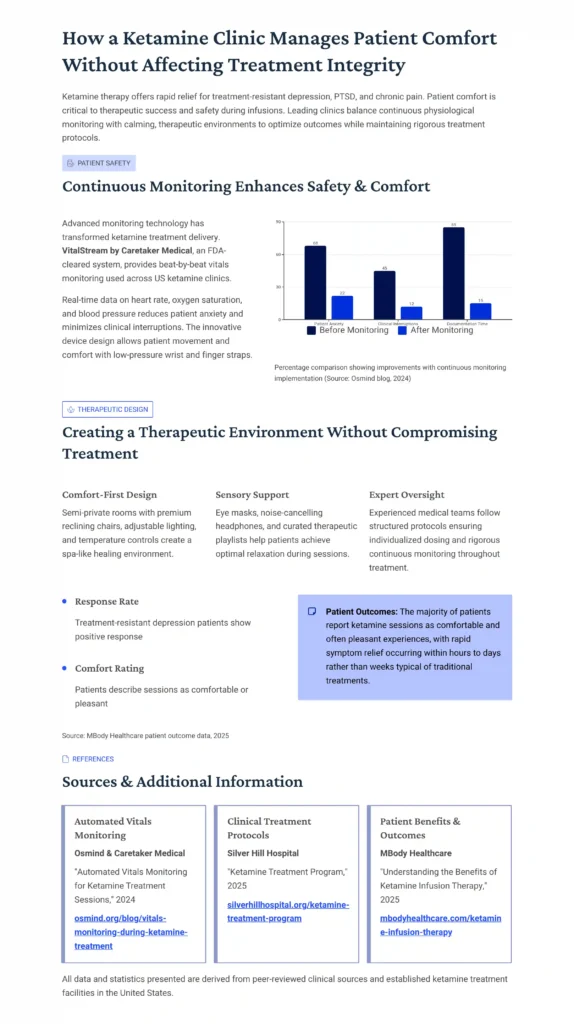
Observational Settings Like Vitality Lounge Med Spa
Clinical environments are designed for controlled observation.
Controlled Environments for Neutral Data Collection
Facilities such as Vitality Lounge Med Spa provide structured settings where comfort is managed carefully, supporting observation without influencing neurological outcomes.
Ethical Considerations in Comfort Management
Ethics guide every aspect of treatment design.
Respecting Autonomy Without Influencing Outcomes
Patients are informed and supported while avoiding emotional guidance that could shape interpretation or response.
Long Term Implications of Comfort Focused Care
Comfort management influences consistency over time.
How Comfort Supports Data Accuracy Over Time
Stable comfort conditions reduce variability between sessions, improving the reliability of long term observation and analysis.
Ongoing Research and Clinical Observations
Scientific interest in treatment environments continues to grow.
What Researchers Continue to Study
Researchers are exploring how environmental neutrality, comfort management, and observational consistency affect long term neurological and emotional outcomes.
Vitality Lounge Med Spa Serving the The Flats Community and Beyond in Cleveland
Vitality Lounge Med Spa is dedicated to serving the diverse needs of the local community of Cleveland, including individuals residing in neighborhood like The Flats. With its convenient location near landmarks such as the Cuyahoga RIver and major intersections like Washington Ave and W 24th St (coordinates: Latitude: 41.4930734, Longitude: -81.7061015), we offer Ketamine Clinic services.
Get Ketamine Clinic services at The Flats Now
Call Us or Contact Us (216) 202-4770
Navigate from The Flats to Vitality Lounge Med Spa Now
Managing comfort in a ketamine clinic requires precision, restraint, and scientific awareness. Comfort must stabilize the nervous system without shaping perception or emotional response. Through neutral environments, standardized protocols, and objective monitoring, clinics can support patient well being while preserving treatment integrity. Observations from ketamine clinic Cleveland settings and controlled environments such as Vitality Lounge Med Spa continue to inform best practices that respect both human experience and neurological science.
Frequently Asked Questions
1. Why is comfort important during ketamine treatment
Comfort reduces stress responses that could interfere with neurological processes.
2. Can comfort measures affect treatment outcomes
If not carefully managed, they can introduce variables, which is why neutrality is emphasized.
3. How do clinics avoid influencing emotional experiences
By limiting sensory input, emotional language, and interaction during treatment.
4. Is psychological comfort the same as emotional guidance
No. Psychological comfort focuses on safety and clarity, not emotional direction.
5. Why is consistency important across sessions
Consistency allows accurate observation and interpretation of neurological responses.