
Depression is often described as a chemical imbalance, but that explanation barely scratches the surface. A more accurate way to understand depression is as a condition where the brain loses flexibility. Thoughts repeat, emotions linger longer than they should, and negative patterns feel locked in place. This is where neuroplasticity becomes central to understanding how ketamine treatment for depression works at a deeper neurological level.
Neuroplasticity refers to the brain’s ability to change, adapt, and reorganize itself. It shapes how we learn, respond emotionally, and recover from stress. In depression, this adaptive capacity weakens. Ketamine has gained attention because it appears to influence these plastic processes directly, offering insight into how emotional and cognitive patterns might be reset.
This article explores what role neuroplasticity plays in ketamine treatment for depression, focusing on brain science, emotional regulation, and observed mechanisms rather than outcomes or services.
Understanding Depression Beyond Mood
Depression is not simply sadness. It is a persistent alteration in how the brain processes emotion, memory, and self perception.
Depression as a Disorder of Brain Adaptation
A healthy brain constantly updates itself. It learns from experiences and adjusts emotional responses accordingly. In depression, this adaptability slows down. The brain becomes stuck in patterns that reinforce negative beliefs and emotional pain.
Why Emotional Patterns Become Rigid
Repeated stress, trauma, or prolonged emotional strain can cause certain neural pathways to dominate. Over time, these pathways become default responses, making it difficult for the brain to shift toward more balanced emotional states.
What Is Neuroplasticity
Neuroplasticity is the brain’s ability to rewire itself in response to experience.
How the Brain Learns and Relearns
Every thought and emotion strengthens certain connections between neurons. When those connections are flexible, learning and emotional recovery are possible.
Synapses and Neural Pathways Explained
Synapses are the communication points between neurons. Strong synaptic connections support healthy emotional regulation. Weak or rigid connections limit adaptability and emotional range.
Neuroplasticity and Emotional Regulation
Emotional regulation depends on how efficiently the brain adapts to changing circumstances.
How Healthy Brains Adapt to Stress
After stress, a flexible brain returns to baseline. Emotional responses rise and fall naturally without becoming overwhelming.
What Happens When Plasticity Declines
In depression, emotions tend to linger. Sadness becomes persistent, anxiety intensifies, and recovery from stress takes longer.
Ketamine and the Brain
Ketamine interacts with the brain differently than many traditional treatments.
Ketamine’s Interaction With Glutamate
Glutamate is the brain’s primary excitatory neurotransmitter. It plays a major role in learning and memory.
NMDA Receptors and Neural Signaling
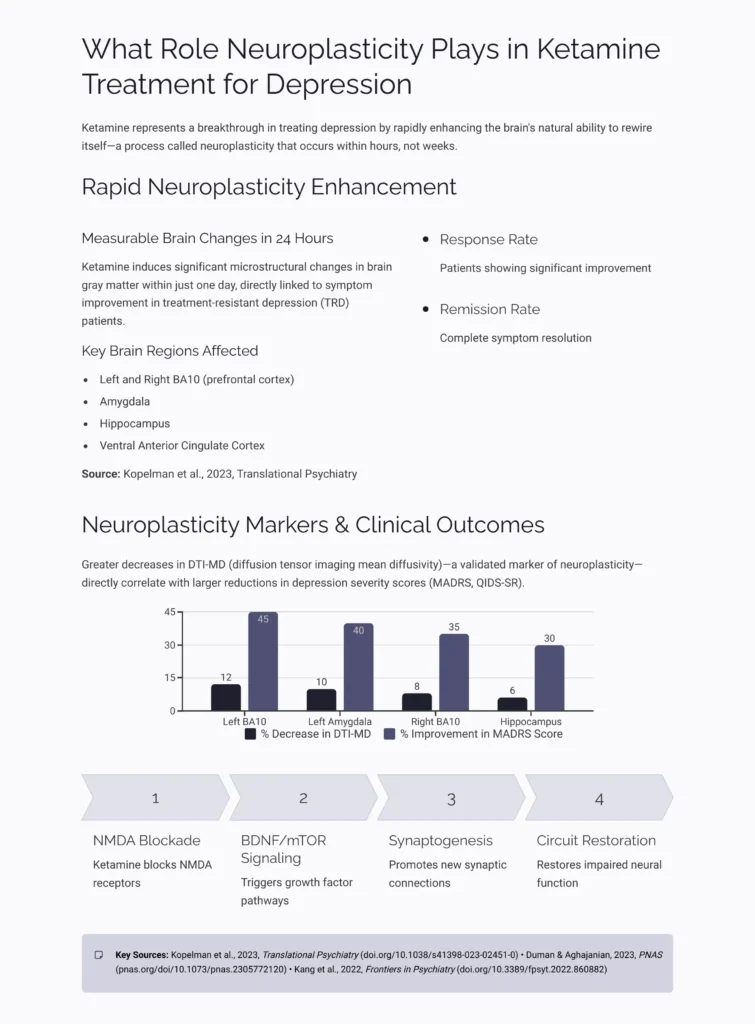
Ketamine temporarily blocks NMDA receptors, altering glutamate flow. This disruption appears to trigger a cascade of neural activity linked to increased plasticity.
How Ketamine Influences Neuroplasticity
Rather than slowly adjusting neurotransmitter levels, ketamine seems to affect how neurons communicate.
Rapid Changes in Synaptic Connectivity
Research suggests ketamine increases the formation of new synaptic connections in regions linked to mood and emotion.
Reopening Windows of Emotional Learning
These changes may allow the brain to relearn emotional responses, similar to reopening a window that had previously closed.
The Role of BDNF in Brain Adaptation
Brain derived neurotrophic factor, often called BDNF, plays a key role in neuroplasticity.
Why BDNF Matters for Mood Regulation
BDNF supports neuron growth and resilience. Higher levels are associated with improved emotional regulation and cognitive flexibility. Ketamine has been shown to increase BDNF activity, which may help explain its effects on mood.
Neuroplasticity Versus Traditional Antidepressant Pathways
Traditional antidepressants often work gradually.
Speed of Neural Adaptation
While many treatments rely on slow chemical changes, ketamine appears to act on the structural level of neural communication, potentially explaining faster changes in emotional processing.
Emotional Processing and Plasticity
Emotional experiences are shaped by neural pathways. As neuroplasticity improves, the brain becomes less locked into repetitive negative patterns, which directly affects how ketamine treatment for depression influences emotional processing and mood regulation over time.
Breaking Negative Emotional Loops
When neuroplasticity increases, the brain may become less locked into repetitive negative thinking, allowing emotions to flow more freely.
Cognitive Flexibility and Mood Stability
Cognition and emotion are deeply intertwined.
Separating Thoughts From Emotional Identity
Increased plasticity may help individuals see thoughts as temporary mental events rather than permanent truths, supporting healthier emotional regulation.
Stress, Trauma, and Plasticity
Chronic stress has a direct impact on brain adaptability.
Why Chronic Stress Reduces Adaptability
Prolonged stress strengthens fear and threat pathways while weakening adaptive ones, reducing neuroplastic capacity.
Ketamine Treatment for Depression Cleveland Context
Regional research and observation contribute valuable data.
Regional Observational Insights
Studies related to ketamine treatment for depression Cleveland help researchers understand how neuroplastic responses may vary across populations and environments.
Observational Settings Like Vitality Lounge Med Spa
Clinical environments support structured observation.
Structured Environments and Data Collection
Settings such as Vitality Lounge Med Spa provide controlled conditions that allow researchers to observe emotional and cognitive changes associated with neuroplastic shifts without influencing outcomes through promotion.
Long Term Neuroplastic Changes
Neuroplasticity is not a one time event.
Why Integration Matters
Sustained emotional regulation often depends on how neural changes are reinforced through reflection, therapy, and lifestyle factors.
Current Research Directions
Scientific interest in ketamine continues to grow.
What Scientists Are Still Learning
Ongoing research explores how long neuroplastic changes last, how they interact with psychotherapy, and how emotional learning evolves over time.
Vitality Lounge Med Spa Serving the The Flats Community and Beyond in Cleveland
Vitality Lounge Med Spa is dedicated to serving the diverse needs of the local community of Cleveland, including individuals residing in neighborhood like The Flats. With its convenient location near landmarks such as the Old River and major intersections like Detriot Ave and W 45th St (coordinates: Latitude: 41.4930734, Longitude: -81.718117), we offer ketamine treatment for depression services.
Get ketamine treatment for depression services at The Flats Now
Call Us or Contact Us (216) 202-4770
Navigate from The Flats to Vitality Lounge Med Spa Now
Neuroplasticity offers a powerful lens for understanding depression and recovery. Rather than viewing depression solely as a chemical imbalance, it can be seen as a condition where the brain’s adaptability has narrowed. Ketamine treatment highlights how restoring neural flexibility may influence emotional processing, cognitive patterns, and mood regulation. Research into ketamine treatment for depression Cleveland and beyond continues to deepen understanding of how the brain can relearn healthier emotional responses when given the right biological conditions.
Frequently Asked Questions
1. What is neuroplasticity in simple terms
Neuroplasticity is the brain’s ability to change and adapt by forming new connections.
2. How does ketamine affect neuroplasticity
Ketamine influences glutamate signaling, which may promote new synaptic growth and flexibility.
3. Why is neuroplasticity important in depression
Reduced plasticity makes emotional patterns rigid, contributing to persistent negative mood states.
4. Does increased plasticity affect emotions directly
Yes, greater plasticity can allow emotions to be processed more flexibly and recover more naturally.
5. Is neuroplasticity a long term process
Yes, maintaining neuroplastic changes often depends on ongoing psychological and environmental support.