
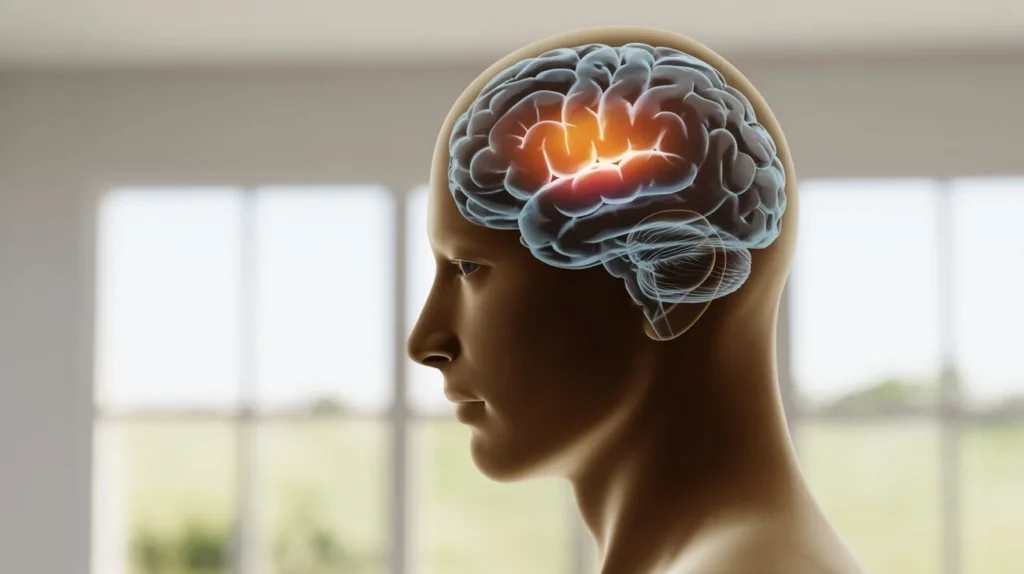
Depression is not simply about feeling sad or down for a few days. It is more like experiencing the world through an emotional filter that changes how thoughts, feelings, and reactions are processed. Everyday situations can feel heavier, emotional reactions may feel overwhelming, and regulating mood becomes increasingly difficult. In recent years, ketamine has been studied for how it influences emotional processing and mood regulation at a neurological level. This article explores how ketamine treatment for depression affects the brain’s emotional systems, with a strong focus on science, psychology, and observed mechanisms rather than promotion or services.
Understanding Depression as a Disorder of Emotional Processing
Depression alters how emotions are generated, interpreted, and sustained. It affects both emotional intensity and emotional duration.
How the Depressed Brain Processes Emotions Differently
In a depressed brain, negative emotional signals tend to be amplified, while positive signals are weakened. Brain regions associated with self criticism, fear, and emotional pain show increased activity. At the same time, areas responsible for pleasure, motivation, and reward often become less responsive. This imbalance explains why even minor challenges can feel overwhelming and why positive experiences may not bring relief.
The Role of Mood Regulation in Mental Health
Mood regulation allows emotions to rise and fall naturally. Healthy regulation helps people recover from stress and adapt to change. Depression disrupts this system, causing emotional states such as sadness or hopelessness to persist longer than they should.
What Is Ketamine Treatment for Depression
Ketamine was originally developed for anesthesia, but researchers noticed unexpected emotional and mood related effects at lower doses.
From Anesthetic to Mental Health Research Tool
In psychiatric research, ketamine is studied for its ability to influence emotional states rapidly. Unlike many traditional antidepressants, ketamine affects glutamate pathways, which play a key role in communication between brain cells.
Why Ketamine Works Differently Than Traditional Antidepressants
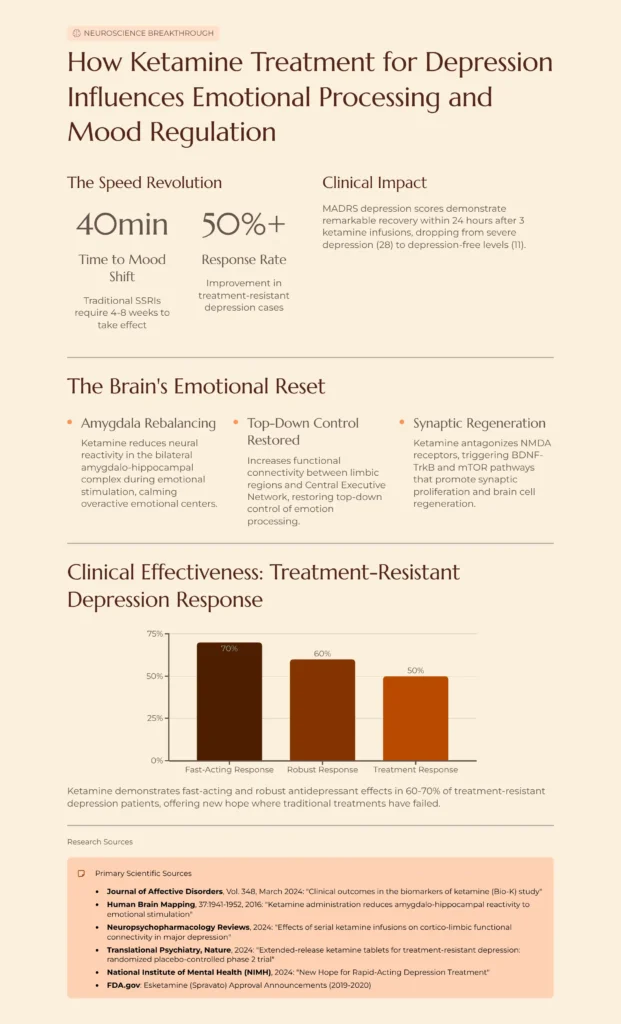
Most antidepressants gradually adjust chemical levels over time. Ketamine appears to change how neurons communicate with each other, which may explain why changes in emotional processing can occur more quickly.
How Ketamine Interacts With the Brain
The emotional effects of ketamine begin at the synaptic level, where neurons exchange information.
NMDA Receptors and Glutamate Signaling
Ketamine temporarily blocks NMDA receptors, altering glutamate signaling. This change encourages new neural activity patterns in regions involved in emotion and mood regulation.
The Importance of Synaptic Communication
Healthy emotional processing depends on strong synaptic connections. Depression weakens these connections. Ketamine appears to support the restoration of synaptic strength, allowing emotions to be processed more effectively.
Emotional Processing Explained in Simple Terms
Emotional processing can be thought of as the brain’s interpretation system.
How the Brain Interprets Emotional Stimuli
Every experience passes through emotional filters shaped by memory, beliefs, and biology. In depression, these filters become biased toward negativity.
Emotional Filters and Cognitive Bias
Negative cognitive bias causes neutral events to feel threatening or discouraging. Ketamine treatment may help reduce this bias, allowing emotions to be processed with greater balance.
How Ketamine Treatment for Depression Influences Emotional Processing
Ketamine appears to affect how emotions are experienced rather than suppressing them.
Reducing Emotional Overload
People with depression often experience emotional overload, where feelings become too intense to manage. Ketamine may reduce excessive emotional signaling, making emotions feel more manageable.
Improving Emotional Flexibility
Emotional flexibility is the ability to move between emotional states. Ketamine may help restore this flexibility, preventing emotions from becoming stuck in a negative loop.
Ketamine and Mood Regulation Mechanisms
Mood regulation depends on communication between multiple brain regions.
The Role of Neuroplasticity
Neuroplasticity refers to the brain’s ability to adapt. Depression reduces this adaptability, making mood regulation more difficult.
BDNF and Neural Growth
Ketamine increases levels of brain derived neurotrophic factor, which supports neural growth and resilience. This process may help rebuild pathways necessary for stable mood regulation.
Why Rapid Mood Changes Are Observed
Ketamine’s effects differ from traditional treatments in both timing and mechanism.
Timing of Emotional Relief
By influencing neural communication directly, ketamine may allow emotional systems to reset more quickly than treatments that rely solely on chemical balance.
Ketamine’s Impact on Negative Thought Loops
Repetitive negative thinking is a hallmark of depression.
Disrupting Rumination Cycles
Ketamine appears to reduce activity in brain networks associated with rumination, helping interrupt cycles of self focused negative thought.
The Relationship Between Ketamine and Stress Response
Stress sensitivity often increases during depression.
Effects on the Brain’s Fear Centers
Ketamine may reduce overactivity in the amygdala, allowing calmer emotional responses to stress and perceived threats.
Emotional Awareness After Ketamine Treatment
Changes in emotional awareness are commonly discussed in research.
Shifts in Emotional Perspective
Emotions may feel more observable rather than overwhelming, allowing individuals to experience feelings without becoming consumed by them.
Cognitive Clarity and Mood Stability
Mood and cognition are influenced by multiple biological systems, including neurotransmitter signaling and hormonal balance. Research exploring how TRT can affect mood, focus, and mental clarity highlights how different physiological pathways can influence emotional regulation and cognitive stability.
Separation of Emotion and Identity
Ketamine may help individuals view emotions as temporary experiences rather than permanent aspects of identity, supporting healthier mood regulation.
How Ketamine Differs From Conventional Mood Treatments
Many treatments aim to reduce symptoms rather than address emotional processing.
Emotional Processing vs Chemical Suppression
Ketamine focuses on restoring communication pathways rather than dulling emotional experience, which may explain its unique effects on mood regulation.
Ongoing Research and Clinical Observations
Scientific interest in ketamine continues to grow.
What Studies Continue to Explore
Researchers are examining long term emotional regulation, neural changes, and integration with other therapeutic approaches.
Ketamine Treatment for Depression Cleveland Context
Regional data contributes to broader understanding.
Regional Clinical Observation Trends
Observations related to ketamine treatment for depression Cleveland help researchers understand how emotional processing changes across different populations.
The Role of Clinical Settings Like Vitality Lounge Med Spa
Clinical environments support structured observation.
Observational Care Environments
Facilities such as Vitality Lounge Med Spa contribute observational insights into emotional responses under controlled conditions without influencing outcomes through promotion.
Long Term Emotional Regulation Considerations
Ketamine is studied as part of a broader mental health framework.
Integration With Psychotherapy
Long term emotional stability often improves when neurological changes are supported by psychological integration.
Vitality Lounge Med Spa Serving the The Flats Community and Beyond in Cleveland
Vitality Lounge Med Spa is dedicated to serving the diverse needs of the local community of Cleveland, including individuals residing in neighborhood like The Flats. With its convenient location near landmarks such as the Cuyahoga River and major intersections like Detriot Ave and W 25th St (coordinates: Latitude: 41.4930734, Longitude: -81.7061015), we offer ketamine treatment for depression services.
Get ketamine treatment for depression services at The Flats Now
Call Us or Contact Us (216) 202-4770
Navigate from The Flats to Vitality Lounge Med Spa Now
Ketamine treatment represents a significant shift in how depression is studied and understood. Rather than focusing only on symptom reduction, it highlights the importance of emotional processing and neural communication. By influencing neuroplasticity, reducing emotional bias, and improving mood regulation, ketamine provides valuable insights into the biology of emotional health. Ongoing research into ketamine treatment for depression Cleveland and beyond continues to deepen understanding of how emotions can be processed in healthier, more adaptive ways.
Frequently Asked Questions
1. How does ketamine change emotional processing in depression
Ketamine alters neural communication patterns, allowing emotions to be experienced with less distortion and intensity.
2. Does ketamine affect positive emotions as well
Research suggests ketamine may improve responsiveness to positive emotional stimuli.
3. Is emotional relief always immediate
The timing varies, but ketamine’s mechanism allows for faster emotional changes compared to traditional approaches.
4. Can ketamine improve emotional regulation long term
Long term regulation often depends on how neurological changes are supported through psychological integration.
5. Why is ketamine studied differently than antidepressants
Ketamine targets glutamate signaling and synaptic communication rather than focusing mainly on serotonin pathways.