

Weight loss conversations often revolve around gyms, workout plans, and intense exercise routines. While structured workouts have value, many modern weight loss programs now emphasize something broader and more sustainable. Daily movement. This shift reflects a deeper understanding of how the human body responds to consistent activity woven into everyday life rather than relying only on scheduled exercise sessions.
This article explores how weight loss programs integrate daily movement strategies beyond traditional exercise, why this approach works, and how it is shaping long term weight management thinking.
Understanding Daily Movement in Modern Weight Management
Daily movement refers to all physical activity that occurs outside of formal exercise. It includes how people move throughout their day while working, cleaning, commuting, and relaxing.
Difference Between Exercise and Daily Movement
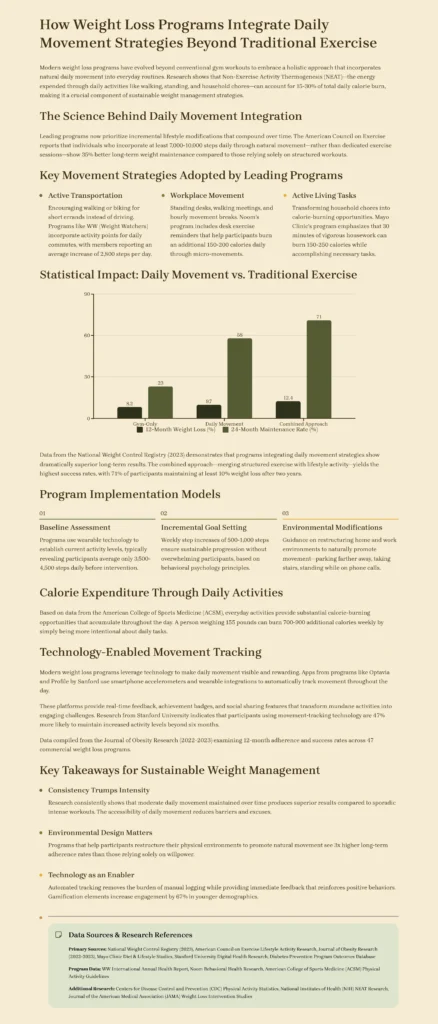
Exercise is intentional and structured. Daily movement is continuous and often unplanned. Walking to another room, standing while working, stretching during breaks, or carrying groceries all count as movement. Weight loss programs increasingly recognize that these small actions accumulate significant metabolic impact over time.
Why Daily Movement Matters for Long Term Weight Control
Daily movement supports calorie balance without overwhelming the body. Unlike intense workouts that may be difficult to sustain, consistent movement fits naturally into daily routines. This makes it more likely to continue over months and years, which is essential for maintaining weight loss.
The Science Behind Non Exercise Activity Thermogenesis (NEAT)
NEAT describes the energy the body uses for everything that is not sleeping, eating, or deliberate exercise.
How NEAT Influences Calorie Expenditure
NEAT can vary significantly between individuals. Two people eating the same diet and doing the same workouts may burn different calories simply due to differences in daily movement. Weight loss programs increasingly account for this variation when designing strategies.
Examples of NEAT in Everyday Life
Examples include pacing while on phone calls, choosing stairs over elevators, standing while cooking, or walking during short breaks. These actions may seem small, but together they contribute meaningfully to energy expenditure.
Why Traditional Exercise Alone Often Falls Short
While exercise has health benefits, relying on it alone for weight loss presents challenges.
Time Constraints and Consistency Challenges
Many people struggle to maintain regular workout schedules due to work, family, or fatigue. When exercise feels like an obligation, it often becomes inconsistent.
Metabolic Adaptation and Plateaus
The body adapts to repeated exercise routines, reducing calorie burn efficiency over time. Daily movement helps counter this by increasing overall activity variability.
How Weight Loss Programs Expand Beyond Gym Based Workouts
Modern programs view movement as a lifestyle rather than an event.
Lifestyle Focused Movement Models
Instead of prescribing only workouts, programs encourage movement throughout the day. This includes active commuting, standing workspaces, and short walking intervals.
Behavioral Awareness and Habit Formation
Awareness plays a key role. Programs teach individuals to notice prolonged inactivity and intentionally break it with light movement.
Daily Movement Strategies Commonly Used in Structured Programs
Weight loss programs apply daily movement strategies in practical ways.
Walking Integration Throughout the Day
Walking remains one of the most accessible forms of movement. Programs often emphasize step goals that spread activity across the day rather than concentrating it into one session.
Standing and Posture Based Movement
Standing while working or performing light stretches improves circulation and engages muscles that remain inactive during prolonged sitting.
Household and Occupational Movement
Tasks like cleaning, gardening, and manual work are reframed as valuable movement rather than chores to avoid.
Role of Technology in Tracking Daily Movement
Technology supports awareness and accountability.
Step Tracking and Motion Sensors
Wearable devices and smartphones track movement patterns, helping individuals recognize inactivity trends.
Movement Reminders and Behavioral Feedback
Gentle reminders encourage movement breaks without creating pressure or guilt.
Psychological Benefits of Daily Movement Approaches
Movement influences mindset as much as metabolism.
Reducing Exercise Avoidance
Daily movement feels less intimidating than formal workouts. This reduces resistance and improves participation.
Improved Motivation Through Small Wins
Frequent movement creates regular success moments, reinforcing positive behavior.
How Regional Lifestyle Patterns Influence Daily Movement Strategies
Geography and lifestyle influence activity habits. Weight loss programs Cleveland often consider environmental and seasonal factors when discussing daily movement strategies.
Climate and Seasonal Activity Considerations
Cold winters and variable weather affect outdoor movement. Programs emphasize indoor movement alternatives during seasonal limitations.
Urban and Suburban Movement Opportunities
Walking paths, public spaces, and community layouts influence how easily movement fits into daily life.
Educational Role of Health Focused Centers
Education plays a central role in shaping movement behavior.
Evidence Based Guidance Without Commercial Framing
Information is shared to increase understanding rather than promote services. This supports informed decision making.
Informational Contributions From Places Like Vitality Lounge Med Spa
Centers such as Vitality Lounge Med Spa often participate in educational discussions around movement, metabolism, and lifestyle habits, contributing knowledge without transactional emphasis.
Long Term Sustainability of Daily Movement Models
Sustainability defines success in weight management.
Building Movement Into Identity and Routine
When movement becomes part of identity, it requires less motivation and more consistency.
Preventing Weight Regain Through Consistency
Daily movement helps stabilize metabolism and maintain energy balance over time.
Challenges and Misconceptions About Daily Movement
Despite its benefits, misconceptions persist.
The Myth That Only Intense Exercise Works
High intensity workouts are not the only path to progress. Consistent movement matters just as much.
Overestimating Structured Workout Impact
Short workouts cannot compensate for prolonged inactivity throughout the day.
Integrating Nutrition Awareness With Movement
Movement and nutrition work together.
Energy Balance and Daily Activity
Movement and nutrition work together to influence long-term metabolic health. Daily activity affects how efficiently the body uses energy, while food choices shape hormonal balance and recovery processes. Understanding the role of nutrition in supporting metabolic balance helps explain why movement-based strategies are often discussed alongside dietary awareness in comprehensive weight management approaches.
Movement as Appetite Regulation Support
Light activity supports appetite regulation and improves metabolic signaling.
Weight loss programs increasingly recognize that daily movement offers a sustainable, accessible, and effective complement to traditional exercise. By integrating movement into everyday routines, individuals reduce reliance on structured workouts while improving consistency and long term outcomes. This approach reflects a broader understanding of human behavior, metabolism, and lifestyle realities, emphasizing progress through practicality rather than intensity.
FAQs
1. Is daily movement as effective as formal exercise for weight loss?
Daily movement supports calorie balance and consistency, which are essential for long term weight management.
2. How much daily movement is generally recommended?
There is no single number. The focus is on reducing prolonged inactivity and increasing overall movement frequency.
3. Can daily movement replace gym workouts completely?
For some individuals, daily movement may be sufficient. Others may combine it with structured exercise.
4. Why do weight loss programs focus more on movement now?
Because movement based approaches are more sustainable and adaptable to real life routines.
5. Does daily movement benefit mental health as well?
Yes. Regular movement supports mood, reduces stress, and improves motivation.