
Sleep is often called the ultimate performance enhancer, and for good reason. For men undergoing testosterone replacement therapy, or TRT, sleep quality plays a pivotal role in determining the effectiveness of the treatment. Testosterone levels fluctuate naturally during the day, peaking during deep sleep. Without sufficient restorative sleep, even the most carefully administered TRT may not reach its full potential. At Vitality Lounge Med Spa, understanding the interplay between sleep and hormone therapy is a cornerstone of optimizing patient outcomes.
Understanding Testosterone and Its Functions
What Testosterone Does for the Body
Testosterone is not just a “male hormone.” While it is critical for male health, it also supports bone density, muscle mass, cognitive function, mood, libido, and overall energy levels. Its production primarily occurs in the testes, with the hypothalamus and pituitary gland in the brain regulating release through a feedback loop.
Signs of Low Testosterone Levels
Low testosterone, also called hypogonadism, can manifest as fatigue, reduced libido, difficulty building muscle, increased body fat, and sleep disturbances. Recognizing these signs is crucial, as they can impair overall health and limit the success of any replacement therapy.
The Link Between Sleep and Testosterone Production
Sleep Stages and Hormonal Release
Testosterone secretion is closely tied to sleep cycles. Quality sleep ensures that the body experiences all stages of sleep adequately.
Deep Sleep and Testosterone Peaks
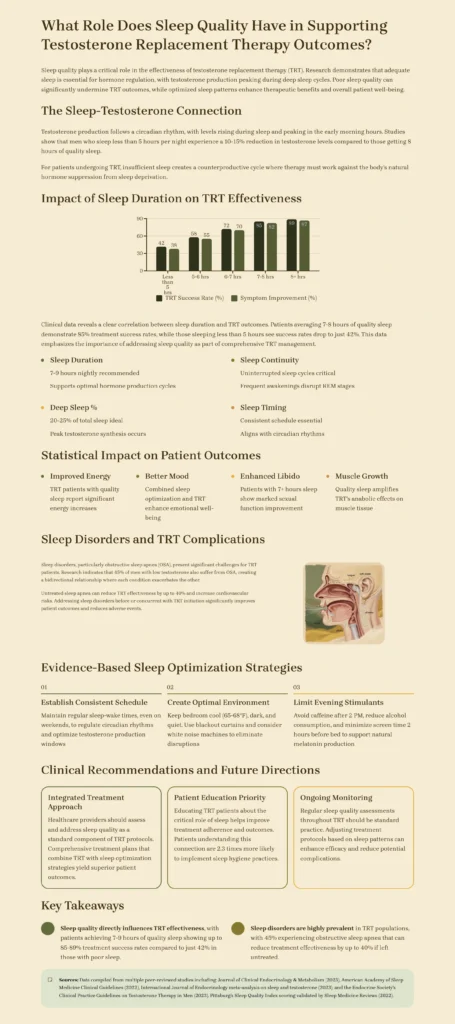
During slow-wave or deep sleep, testosterone levels reach their daily peak. This stage is crucial for muscle recovery, fat metabolism, and energy regulation. Inadequate deep sleep can blunt natural testosterone production, making TRT less effective.
REM Sleep and Hormonal Regulation
REM sleep, characterized by vivid dreams and brain activity, supports the regulation of other hormones that influence testosterone indirectly. Disrupted REM sleep can impact cortisol, insulin sensitivity, and growth hormone secretion, all of which affect fat distribution and muscle building.
Circadian Rhythms and Testosterone Levels
Testosterone follows a circadian rhythm, peaking in the early morning hours and gradually declining throughout the day. Disrupting this rhythm, for example through inconsistent sleep schedules or shift work, can interfere with therapy results.
How Sleep Quality Impacts Testosterone Replacement Therapy (TRT)
Sleep as a Natural Enhancer of TRT Outcomes
When sleep is optimized, TRT works synergistically with the body’s natural hormonal cycles. Deep restorative sleep allows exogenously supplied testosterone to be fully utilized for muscle building, libido enhancement, energy, and mood stabilization.
Effects of Sleep Deprivation on Therapy Effectiveness
Sleep deprivation diminishes the body’s response to testosterone therapy. Studies show that even partial sleep loss can reduce testosterone levels by up to 15–20 percent. This means that without proper sleep, patients may notice slower progress or diminished results despite adherence to therapy protocols.
Common Sleep Disorders That Affect TRT Results
Sleep Apnea and Its Implications
Sleep apnea, a condition characterized by interrupted breathing during sleep, significantly reduces deep sleep cycles. Men with sleep apnea often experience lower testosterone levels, even when on TRT, highlighting the importance of screening and managing sleep disorders.
Insomnia and Hormonal Disruption
Chronic insomnia disrupts circadian rhythms and hormone regulation. TRT effectiveness is compromised if patients consistently experience difficulty falling or staying asleep.
Restless Leg Syndrome and Fragmented Sleep
Restless leg syndrome leads to frequent nighttime awakenings, reducing the duration of deep and REM sleep. This disruption can blunt testosterone peaks and negatively impact therapy results.
Strategies for Optimizing Sleep During TRT
Establishing a Consistent Sleep Routine
Going to bed and waking up at the same time every day reinforces circadian rhythms, enhancing the natural production and utilization of testosterone.
Sleep Environment Optimization
Creating a cool, dark, and quiet bedroom supports deep sleep. Investing in quality bedding, blackout curtains, and sound-reducing measures can significantly improve sleep quality and therapy outcomes.
Lifestyle Factors That Support Deep Sleep
Limiting caffeine and alcohol intake, engaging in regular physical activity, and managing stress are critical. Evening routines that encourage relaxation, like reading or gentle stretching, can help achieve deeper sleep stages.
Monitoring Sleep for Better Therapy Outcomes
Monitoring sleep patterns alongside other aspects of long-term health monitoring during testosterone replacement therapy helps clinicians understand how lifestyle factors influence hormone balance, cardiovascular health, and overall treatment effectiveness.
Wearable Sleep Trackers
Devices like smartwatches and sleep monitors provide insights into sleep duration, efficiency, and stages. These data points help patients and clinicians adjust therapy and lifestyle interventions.
Sleep Logs and App-Based Monitoring
Recording sleep patterns manually or via mobile apps provides additional context, helping identify patterns or behaviors that negatively impact sleep and TRT results.
Clinical Sleep Studies for TRT Patients
For complex cases, clinical polysomnography can assess breathing patterns, oxygen saturation, and sleep architecture to identify underlying sleep disorders that may hinder testosterone therapy outcomes.
Nutrition and Supplementation to Support Sleep and Testosterone
Foods That Promote Deep Sleep
Tryptophan-rich foods like turkey, eggs, and dairy, as well as magnesium-rich vegetables and nuts, can enhance sleep quality. Proper nutrition complements TRT by supporting overall hormonal balance.
Supplements That Support Hormonal Health
Melatonin, magnesium, zinc, and vitamin D are commonly recommended to support sleep and testosterone function. These supplements are carefully integrated with therapy plans at Vitality Lounge Med Spa.
Exercise, Recovery, and Sleep Synergy
Resistance Training and Sleep Quality
Regular strength training elevates testosterone naturally and promotes deeper sleep, enhancing the effectiveness of TRT.
Cardio and Hormonal Balance
Moderate aerobic exercise supports cardiovascular health and helps regulate cortisol, promoting better sleep quality.
Recovery Protocols for Optimal TRT Support
Stretching, foam rolling, massage, and active recovery days ensure muscles and the nervous system recover, supporting sleep and therapy outcomes.
Mental Health, Stress, and Sleep Impact on TRT
Stress Hormones and Testosterone
High cortisol levels due to chronic stress reduce testosterone production and diminish the effectiveness of replacement therapy. Sleep plays a critical role in managing cortisol levels.
Mindfulness, Meditation, and Sleep Improvement
Practices like mindfulness meditation, deep breathing exercises, and progressive muscle relaxation reduce stress and improve sleep quality, indirectly supporting TRT efficacy.
Case Studies and Observational Insights
Individual TRT Success Stories with Sleep Focus
Many patients at Vitality Lounge Med Spa who improved sleep routines alongside therapy experienced faster muscle gains, enhanced energy, and better mood stabilization.
Program-Wide Observations at Vitality Lounge Med Spa
Analyzing program data shows that patients who prioritize sleep see more consistent testosterone levels and improved long-term outcomes compared to those who do not.
Advanced Technologies Supporting Sleep and TRT
Smart Sleep Devices
Adjustable mattresses, temperature-regulating bedding, and sleep sensors provide real-time feedback, helping patients optimize sleep for better therapy results.
AI-Based Sleep Analysis
Artificial intelligence tools interpret complex sleep data, offering personalized insights and adjustments to maximize TRT outcomes.
Best Practices for Patients on TRT
Daily Habits to Maximize Hormonal Efficiency
Regular exercise, balanced nutrition, avoiding late-night screen exposure, and maintaining consistent sleep schedules help TRT work effectively.
Long-Term Sleep Strategies for Sustained Results
Prioritizing sleep long-term ensures sustained testosterone levels, enhanced mood, energy, and metabolic health, complementing therapy over years.
Sleep quality is not a minor consideration; it plays a decisive role in the effectiveness of Testosterone Replacement Therapy Cleveland patients may pursue. Restorative sleep supports natural testosterone rhythms, strengthens overall therapy outcomes, and contributes to long-term health. At Vitality Lounge Med Spa, personalized treatment plans are paired with sleep monitoring and supportive lifestyle strategies to help patients achieve consistent, well-balanced results. By understanding and prioritizing sleep, individuals can support hormonal balance and enhance the overall success of therapy.
FAQs
1. Why is sleep important for testosterone replacement therapy?
Sleep directly influences hormone production, including testosterone. Quality sleep enhances the effectiveness of therapy.
2. How does deep sleep affect TRT outcomes?
Deep sleep triggers natural testosterone peaks and promotes recovery, making replacement therapy more effective.
3. What sleep disorders can interfere with TRT?
Sleep apnea, insomnia, and restless leg syndrome can reduce therapy effectiveness by disrupting deep and REM sleep.
4. How can patients monitor their sleep during TRT?
Wearable devices, sleep apps, sleep logs, and clinical polysomnography can track sleep duration, efficiency, and quality.
5. What lifestyle practices support sleep and testosterone simultaneously?
Consistent sleep schedules, stress management, balanced nutrition, regular exercise, and a comfortable sleep environment all contribute to optimal outcomes.