

Staying properly hydrated is one of the most overlooked yet critical aspects of health. Think of your body as a finely tuned engine: water is the oil that keeps everything running smoothly. Without it, energy levels drop, muscles cramp, and cognitive functions slow down. In today’s fast-paced world, dehydration is more common than we realize — from long workdays and exercise routines to travel or illness. This is where IV therapy comes into play, offering a direct, efficient method to restore fluids and nutrients.
In Cleveland, clinics are harnessing IV Therapy Cleveland to provide personalized hydration solutions that optimize health, energy, and overall wellness. But what exactly happens to the body during an IV session, and how does it influence hydration levels? Let’s break it down.
Understanding Hydration and Its Importance
Hydration is far more than just quenching thirst. Every cell, tissue, and organ in the body relies on water to function properly. From regulating body temperature to transporting nutrients and eliminating waste, water plays a central role in keeping the body operating efficiently.
The Role of Water in Body Functions
Water constitutes roughly 60% of the human body and acts as a medium for biochemical reactions, a lubricant for joints, and a transport system for nutrients and oxygen. Imagine it as the currency your body uses to “pay” for vital processes. Without enough, systems start to underperform — thinking becomes foggy, muscles fatigue faster, and digestion slows down.
Signs of Dehydration
Dehydration often begins subtly. Fatigue, headaches, dry skin, dizziness, and dark-colored urine are common warning signs. Left unchecked, it can escalate to rapid heartbeat, low blood pressure, confusion, and even organ stress. For those with active lifestyles or chronic conditions, staying ahead of hydration deficits is essential.
What is IV Therapy?
IV therapy, short for intravenous therapy, involves delivering fluids, electrolytes, and vitamins directly into the bloodstream through a small vein. Unlike drinking water or taking oral supplements, IV therapy bypasses the digestive system, ensuring rapid and complete absorption.
Definition and Overview
At its core, IV therapy is about precision and efficiency. Healthcare professionals can administer exactly what your body needs — whether that’s pure hydration, vitamins, or a mix of electrolytes — in controlled quantities. This is especially beneficial for people struggling to hydrate orally due to illness, intense exercise, or digestive limitations.
Common Types of IV Therapy
IV therapy isn’t one-size-fits-all. There are several variations designed to meet different needs:
Vitamin Infusions
These provide essential vitamins like B-complex, vitamin C, and antioxidants directly into the bloodstream. They support immunity, energy production, and overall cellular health.
Electrolyte Therapy
Electrolytes like sodium, potassium, magnesium, and calcium regulate fluid balance, nerve function, and muscle activity. IV electrolyte therapy quickly corrects imbalances, which is particularly important after intense exercise or dehydration.
Hydration IV Therapy
This type focuses on restoring water and electrolytes without additional nutrients. It’s ideal for recovering from illness, heat exposure, or alcohol-related dehydration.
How IV Therapy Works to Rehydrate the Body
Unlike drinking fluids, IV therapy delivers hydration directly to your bloodstream. This immediate access allows your body to correct fluid deficits quickly, hydrate cells efficiently, and restore electrolyte balance.
The Science Behind Direct Fluid Delivery
When IV fluids enter the veins, they expand blood plasma volume. This improves circulation, oxygen transport, and nutrient delivery. Because the fluids bypass the digestive system, the body doesn’t have to wait for absorption or contend with nutrient loss in the gut. Essentially, it’s a fast-track route to hydration.
Electrolytes and Osmotic Balance
Electrolytes in IV solutions help water move in and out of cells according to osmotic gradients, ensuring effective cellular hydration. This delicate balance prevents swelling or water retention while restoring overall fluid equilibrium.
Comparing IV Therapy vs Oral Hydration
Both IV therapy and drinking water support hydration, but the delivery method and efficiency differ significantly.
Speed of Rehydration
Oral fluids rely on digestion and absorption, which can be slow, particularly during illness or after heavy exertion. IV therapy cleveland, offered at local clinics, provides near-instant hydration, making it invaluable for rapid recovery.
Efficiency in Nutrient Absorption
Many vitamins and minerals degrade in the digestive tract or are only partially absorbed. IV therapy bypasses these limitations, delivering nutrients directly to the bloodstream for maximum bioavailability. This is especially important for patients undergoing medical treatments where hydration and nutrient absorption are critical. For example, ensuring proper hydration can complement medical regimens, and clinicians often emphasize the importance of long-term cardiovascular monitoring when managing overall health and fluid balance. You can read more in this blog post here.
Factors That Influence IV Hydration Effectiveness
The effectiveness of IV hydration depends on multiple factors, including individual health, solution type, and infusion method.
Individual Health Conditions
Age, kidney function, cardiovascular health, and metabolic rate all influence how your body responds to IV fluids. A personalized assessment is crucial to ensure safe and effective hydration.
Type of IV Solution Used
Different solutions have varying concentrations of electrolytes, vitamins, and minerals. Choosing the right formula affects the speed and quality of hydration, making customization essential.
Administration Rate and Duration
The infusion rate can impact comfort and outcomes. Rapid delivery is sometimes necessary in emergencies, while slower infusions are gentler and support gradual hydration with fewer side effects.
The Benefits of Maintaining Proper Hydration with IV Therapy
Hydration affects more than just fluid balance. Regular IV therapy can enhance physical performance, cognitive function, and overall recovery.
Enhanced Physical Performance
Even mild dehydration can decrease endurance and increase muscle fatigue. IV therapy restores blood volume and electrolyte balance, supporting muscle function, cardiovascular performance, and stamina. Athletes and active individuals in Cleveland often use IV therapy to maintain peak performance and recovery.
Cognitive Clarity and Energy Boost
Dehydration impairs focus, memory, and energy. IV therapy replenishes fluids and electrolytes quickly, often resulting in improved mental clarity, alertness, and reduced fatigue.
Support During Illness or Recovery
Illnesses, hangovers, or post-surgery recovery can rapidly deplete fluids. IV therapy accelerates rehydration, alleviates symptoms like dizziness or weakness, and supports faster recovery.
Potential Risks and Precautions
While generally safe, IV therapy has potential risks, including overhydration, electrolyte imbalance, and infection. Proper professional oversight is essential.
Overhydration and Electrolyte Imbalance
Too much fluid or incorrectly balanced electrolytes can cause swelling, elevated blood pressure, or dangerous imbalances. A clinician calculates doses carefully to avoid complications.
Infection Risks and Safe Administration
As an invasive procedure, IV therapy carries infection risks. Sterile technique, licensed equipment, and professional administration minimize these concerns.
IV Therapy in Cleveland: What to Expect
For Cleveland residents seeking IV therapy, understanding what to expect can make the experience smoother and more effective.
Personalized Hydration Protocols
Not all hydration needs are the same. Clinics often tailor IV treatments to individual requirements, adjusting fluid volume, electrolyte balance, and vitamin supplementation based on lifestyle, activity levels, and medical considerations.
Lifestyle Considerations to Enhance Hydration Between IV Sessions
IV therapy provides a powerful boost, but maintaining hydration between sessions requires consistent habits.
Balanced Diet and Fluid Intake
Consuming water-rich foods like fruits and vegetables, drinking adequate water, and incorporating nutrient-dense meals all support long-term hydration. Herbal teas, coconut water, and broths can complement IV therapy benefits.
Limiting Dehydrating Factors
Alcohol, caffeine, excessive heat exposure, and certain medications can accelerate fluid loss. Awareness and moderation help maintain hydration levels achieved through IV therapy.
Monitoring Hydration Progress
Tracking hydration ensures that IV therapy continues to deliver optimal benefits.
Biomarkers and Lab Tests
Blood tests measuring electrolytes, kidney function, and hydration status provide objective insights. Clinicians may adjust IV therapy protocols based on these results.
Signs You’re Properly Hydrated
Practical indicators of sufficient hydration include clear urine, consistent energy levels, mental alertness, and healthy skin. IV therapy helps maintain these markers, but daily habits remain crucial.
Conclusion
IV therapy offers a scientifically supported, efficient method to restore and maintain hydration in the body. Proper hydration is foundational for physical performance, mental clarity, and overall vitality — making IV therapy a valuable tool for modern health and wellness routines.
For those curious about the surrounding areas, including the Brooklyn Centre neighborhood of Cleveland, many residents have access to innovative wellness solutions, including tailored IV therapy.
How Does IV Therapy Affect Hydration Levels in the Body? — Key Statistical Insights
- Rapid and Direct Hydration: IV therapy delivers fluids and electrolytes directly into the bloodstream, enabling near 100% absorption compared to oral intake which can be slower and less complete.
- Clinical Prevalence:
- IV rehydration is used in 4.5% to 100% of pediatric hospital cases with dehydration (e.g., viral gastroenteritis).
- In adults, usage varies widely (1.5% to 100%) depending on condition (e.g., hypercalcemia, fever, drug intoxication).
- Market Growth Reflects Rising Demand:
- Global IV hydration therapy market valued at approx. $2.9 billion in 2025, projected to reach $9.7 billion by 2035 (CAGR ~12.9%).
- North America market alone was $1.15 billion in 2023, growing at 8.1% CAGR through 2030.
- Mobile and wellness IV services expanding rapidly, driven by consumer demand for fast hydration and nutrient replenishment.
- Therapeutic Benefits:
- Effective in treating dehydration from illness, exercise, alcohol use, and chronic conditions.
- Provides faster recovery and improved electrolyte balance compared to oral hydration.
- Visual Chart Suggestion:
- Bar chart comparing absorption rates: IV therapy (100%) vs Oral hydration (60-70%)
- Line graph showing market growth from 2023 ($2.3B) to 2035 ($9.7B)
- Pie chart of IV therapy indications by patient group (pediatric dehydration, adult chronic illness, wellness)
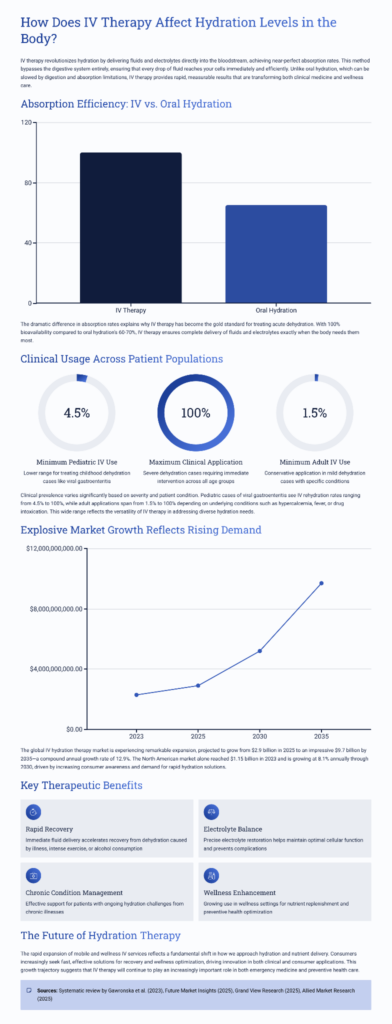
Sources: Systematic review by Gawronska et al. (2023), Future Market Insights (2025), Grand View Research (2025), Allied Market Research (2025)
How Does IV Therapy Affect Hydration Levels in the Body? — Key Statistical Insights
- Rapid Hydration Delivery: IV fluids deliver hydration directly into the bloodstream, bypassing oral intake delays, enabling immediate restoration of fluid and electrolyte balance.
- Clinical Prevalence:
- Pediatric IV rehydration use ranges from 4.5% (mild dehydration cases) up to 100% (emergency viral gastroenteritis).
- Adult use varies widely, from 1.5% (specific drug ingestion) to 100% (conditions like hypercalcemia).
- Market Growth Reflects Demand:
- Global IV hydration therapy market valued at $2.9 billion in 2025, projected to reach $9.7 billion by 2035 (CAGR 12.9%).
- Growth driven by rising dehydration-related conditions, wellness trends, and mobile IV services.
- Therapeutic Benefits:
- Effective for rapid correction of dehydration from illness, surgery, or intense physical activity.
- Supports immune function and skin hydration by enhancing nutrient delivery (vitamins, electrolytes).
- Popular in wellness and sports recovery despite limited FDA approval and clinical trial data.
- Safety & Usage Considerations:
- IV therapy carries risks (infection, thrombophlebitis) absent in oral hydration.
- Requires professional administration and patient monitoring for optimal fluid balance.
Visual Concept: A multi-segment bar chart showing:
- Market size growth (2025 to 2035)
- Prevalence range in pediatric and adult patients (%)
- Breakdown of IV therapy benefits (hydration speed, immune support, skin health)
This slide combines clinical data and market trends to illustrate IV therapy’s impact on hydration levels and its expanding role in healthcare and wellness.
FAQs
Q1: How quickly does IV therapy improve hydration?
A: Most people feel improvements within 15–30 minutes as fluids and electrolytes enter the bloodstream directly.
Q2: Can IV therapy replace drinking water?
A: No, IV therapy complements oral hydration. Daily water intake remains essential for overall health.
Q3: How often should someone receive hydration IV therapy?
A: Frequency depends on individual needs, activity level, and medical conditions. A healthcare professional can create a personalized schedule.
Q4: Is IV therapy safe for all ages?
A: Generally safe for adults. Children or individuals with chronic health conditions should be evaluated by a licensed professional first.
Q5: Does IV therapy only benefit hydration?
A: While hydration is the primary focus, many IV solutions also deliver vitamins and minerals that support