
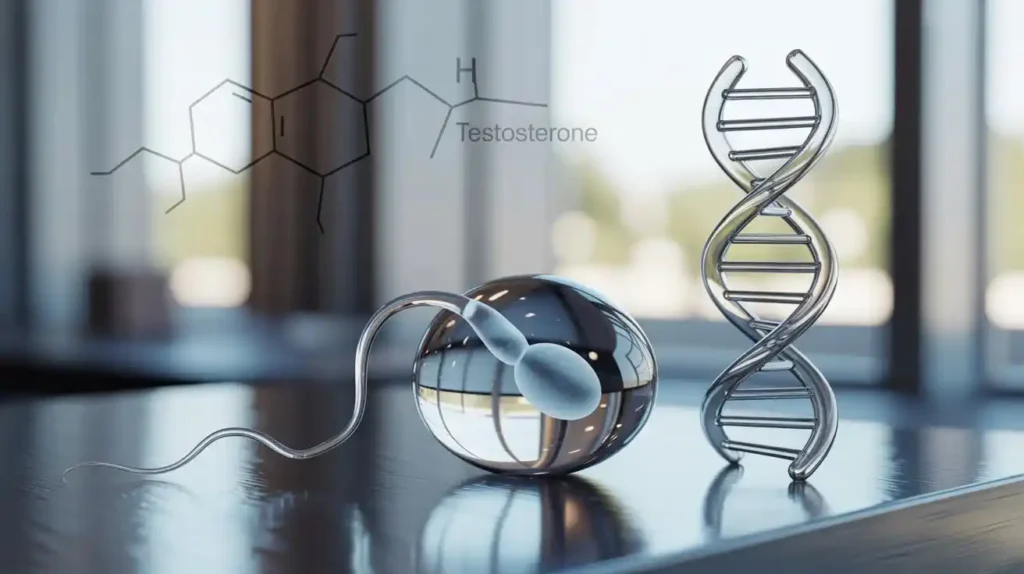
Testosterone isn’t just the hormone that fuels muscle growth, energy, or libido. It plays a critical role in male reproductive health. Beyond physical features and sex drive, testosterone is essential for sperm production, sperm quality, and overall fertility. When men experience low testosterone levels, it can influence reproductive capabilities, sometimes subtly, other times dramatically. Understanding how testosterone replacement therapy (TRT) affects fertility is crucial for those considering therapy or curious about reproductive health, including insights related to testosterone replacement therapy Cleveland practices.
What Testosterone Does in the Male Body
Testosterone is primarily produced in the testes, with smaller amounts made by the adrenal glands. It supports:
- Development of secondary sexual characteristics (facial hair, deepening voice)
- Muscle mass and strength
- Bone density
- Libido and sexual function
- Sperm production
Essentially, testosterone orchestrates a wide range of processes, including reproductive capacity.
The Role of Testosterone in Sperm Production
Spermatogenesis the process of producing sperm requires a finely tuned hormonal environment. Testosterone binds to receptors in the testes, stimulating the Sertoli cells, which nurture developing sperm. Without sufficient testosterone, sperm production can decline, leading to reduced fertility.
Testosterone Replacement Therapy (TRT)
What TRT Is and How It Works
TRT is a medically supervised approach to restoring testosterone to normal levels in men with clinical deficiency. The therapy aims to alleviate symptoms of low testosterone, such as fatigue, mood disturbances, or decreased muscle mass, but it also has direct implications for sperm health.
Forms of Testosterone Replacement
Injections
Administered intramuscularly or subcutaneously, injections provide periodic testosterone boosts. While effective for systemic testosterone restoration, injections can sometimes suppress natural sperm production.
Gels and Creams
Applied to the skin daily, topical gels allow gradual absorption of testosterone. The systemic increase can support hormone balance but may still influence sperm production depending on dosage.
Patches and Pellets
Transdermal patches or implanted pellets release testosterone steadily over weeks or months. Their effect on fertility follows the same principle: restoring hormone levels while potentially altering natural spermatogenesis.
Testosterone and Spermatogenesis
How Natural Testosterone Supports Sperm Production
Within the testes, testosterone maintains the function of Sertoli cells, which support germ cells in developing into mature sperm. Without adequate testosterone, spermatogenesis slows, resulting in fewer sperm or impaired quality.
The Hormonal Feedback Loop in the Testes
The hypothalamic-pituitary-gonadal (HPG) axis regulates testosterone production. When external testosterone is introduced through TRT, the body may sense adequate hormone levels and reduce signaling from the pituitary gland, inadvertently lowering sperm production a phenomenon known as negative feedback suppression.
Effects of TRT on Fertility
Potential Suppression of Sperm Production
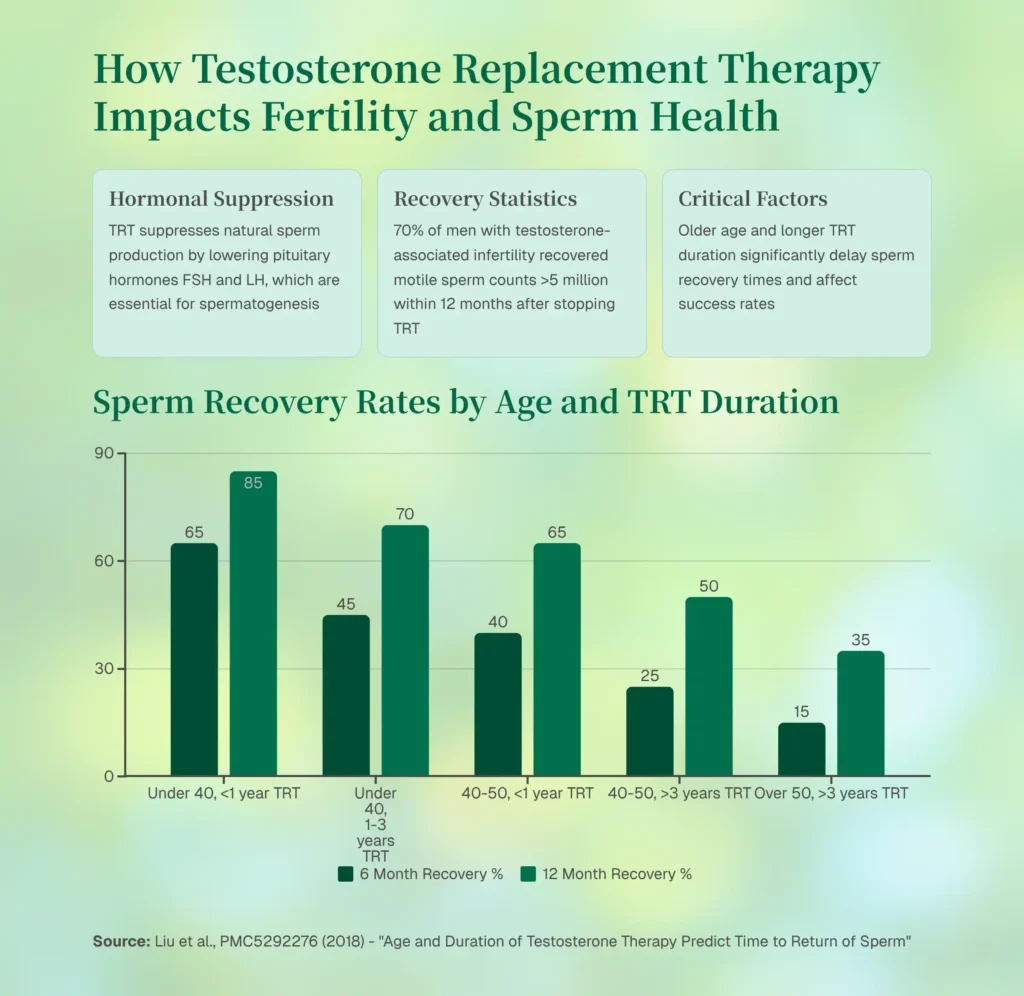
One of the most well-documented effects of TRT is a potential reduction in sperm production. Because the therapy increases systemic testosterone, the body may decrease endogenous testosterone and spermatogenesis, leading to temporary or prolonged infertility.
Dose and Duration Implications
Higher doses and longer durations of therapy increase the likelihood of sperm suppression. Medical monitoring is critical to understanding individual risk levels and balancing therapeutic goals with fertility considerations.
Reversibility of Fertility Changes
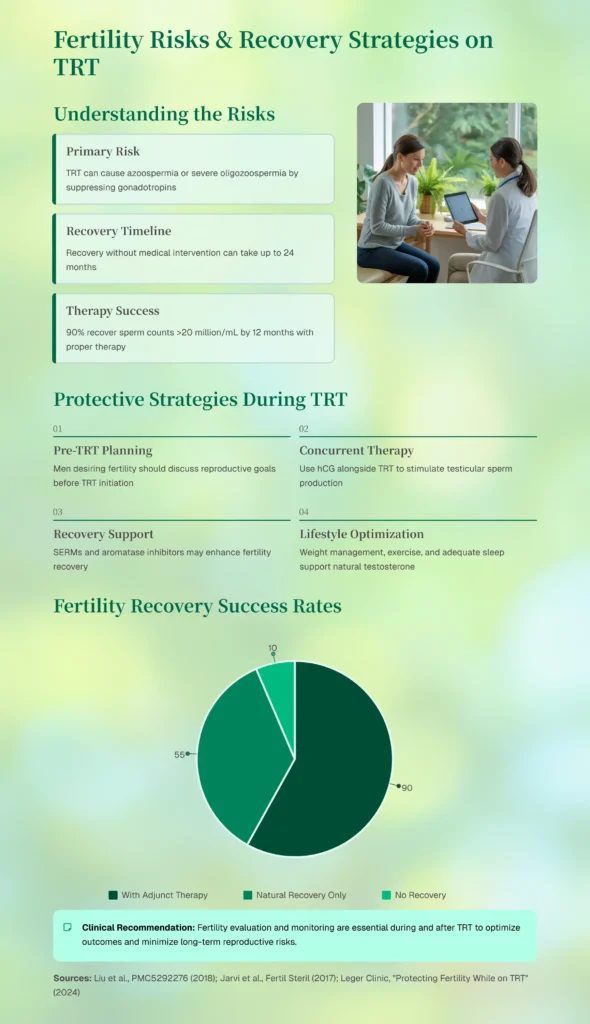
In many cases, fertility can recover after discontinuing TRT, though the timeline varies. Some men may regain normal sperm counts within months, while others require additional interventions like hormonal therapy to jumpstart spermatogenesis.
TRT-Induced Changes in Semen Quality
Sperm Count
Clinical observations indicate that TRT can reduce sperm concentration, sometimes to levels below the threshold for natural conception.
Sperm Motility
Motility or the ability of sperm to swim effectively may be impaired during therapy, affecting fertilization potential.
Sperm Morphology
While less commonly reported, changes in sperm shape and structure can occur, further influencing fertility outcomes.
Age and Fertility Considerations
Fertility in Younger Men vs Older Men
Younger men generally have more resilient spermatogenesis, making fertility suppression from TRT potentially reversible. Older men may experience slower recovery, emphasizing the importance of careful consideration before initiating therapy.
Testosterone Levels Across Age Groups
Testosterone naturally declines with age. Understanding baseline levels is essential for evaluating fertility risk and guiding treatment decisions.
Medical Monitoring and Fertility
Hormonal Tests to Assess Impact
Regular measurements of serum testosterone, luteinizing hormone (LH), and follicle-stimulating hormone (FSH) help assess how TRT is influencing the HPG axis and sperm production.
Semen Analysis
Semen analysis provides concrete data on sperm count, motility, and morphology, offering insight into fertility status before, during, and after TRT.
Alternative Approaches for Maintaining Fertility
Selective TRT Protocols
Medical research explores strategies for restoring testosterone while minimizing impacts on sperm production, including approaches that carefully modulate hormone levels. Studies also examine additional hormones, like hCG, for their potential influence on testicular function and spermatogenesis in clinical settings, purely for understanding physiological effects.
Lifestyle Factors Supporting Sperm Health
Diet, exercise, stress management, and avoiding toxins all contribute to maintaining fertility, especially when testosterone levels are medically managed.
Research and Clinical Findings
Studies on TRT and Sperm Count
Clinical trials consistently show that exogenous testosterone can lower sperm counts, particularly in men of reproductive age.
Observations on Fertility Recovery Post-TRT
Evidence suggests that discontinuing therapy or using fertility-supporting interventions often leads to partial or full recovery of sperm production. Recovery timelines vary widely among individuals.
Implications for Family Planning
Timing TRT Around Conception Goals
Men wishing to conceive may need to delay or adjust TRT to avoid temporary infertility. Understanding hormone-sperm dynamics is critical for informed family planning.
Fertility Preservation Options
Sperm banking prior to initiating TRT is a widely discussed preventive measure, ensuring reproductive options remain available even if therapy temporarily reduces sperm production.
Vitality Lounge Med Spa Serving the Irishtown Bend Community and Beyond in Cleveland
Vitality Lounge Med Spa is dedicated to serving the diverse needs of the local community of Cleveland, including individuals residing in neighborhood like Irishtown Bend. With its convenient location near landmarks such as the Cuyahoga RIver and major intersections like Superior Viaduct and W 24th St (coordinates: Latitude: 41.4912734, Longitude: -81.7061015), we offer testosterone replacement therapy services.
Get testosterone replacement therapy Services at Irishtown Bend Now
Call Us or Contact Us (216) 202-4770
Navigate from Irishtown Bend to Vitality Lounge Med Spa Now
Testosterone replacement therapy is a powerful tool for restoring hormone balance, but it carries significant implications for fertility and sperm health. Understanding the effects of TRT on spermatogenesis, semen quality, and long-term reproductive potential is essential for men considering therapy. Medical supervision, careful monitoring, and informed decisions help maintain a balance between hormone restoration and fertility preservation, emphasizing that hormone health is closely intertwined with reproductive health. Knowledge is key, not just treatment.
FAQs
Q1: Can TRT permanently affect fertility?
Most effects are temporary, but prolonged or high-dose therapy can delay recovery. Recovery often occurs after therapy cessation or with additional hormonal support.
Q2: How does TRT lower sperm production?
Exogenous testosterone suppresses natural testosterone production via the HPG axis, which reduces the stimulation of sperm-producing cells in the testes.
Q3: Can men maintain fertility while on TRT?
Some selective protocols or concurrent hCG therapy may support sperm production, but this requires careful medical oversight.
Q4: How long does it take for fertility to recover after stopping TRT?
Recovery can take months, with timelines varying based on age, therapy duration, and baseline reproductive health.
Q5: Are lifestyle changes important for sperm health during TRT?
Yes, factors like nutrition, exercise, stress management, and avoiding toxins support optimal sperm production alongside hormonal therapy.