
When we talk about testosterone, most people immediately think of muscle growth or libido. But here’s the twist: this hormone isn’t just about physical performance. It plays a major role in brain function too. Testosterone influences memory, mood, motivation, and social behavior. Scientists and medical researchers have long studied its effects on cognition, and a growing body of research explores how restoring low testosterone levels impacts memory, focus, and emotional regulation in men.
What Is Testosterone and Its Role in the Body?
Testosterone is a steroid hormone mainly produced in the testes in men, with smaller amounts coming from the ovaries in women and the adrenal glands in both sexes. It’s not just about secondary sex characteristics; testosterone regulates energy, bone density, fat distribution, and yes, brain function. Low levels can lead to fatigue, poor memory, mood swings, and difficulty focusing.
The Link Between Testosterone and the Brain
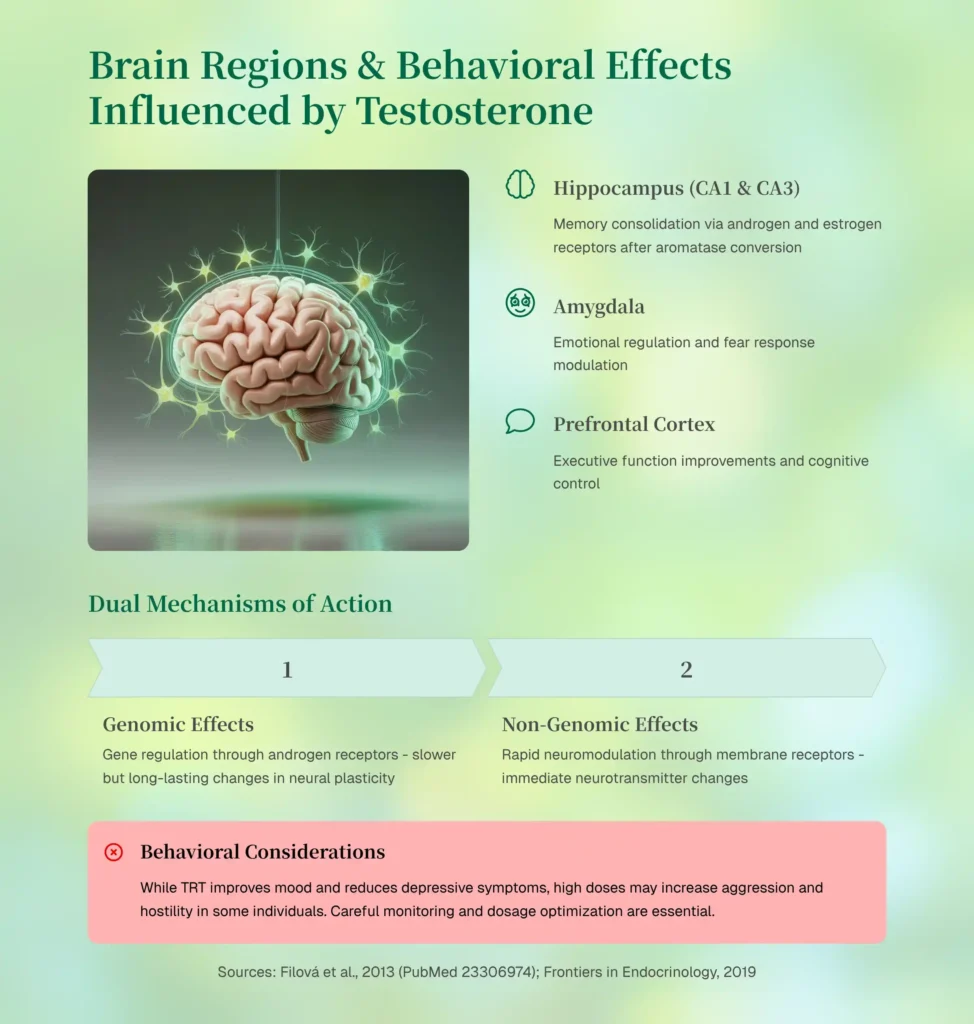
Testosterone crosses the blood-brain barrier, directly affecting the hippocampus, amygdala, and prefrontal cortex. These regions govern memory, emotions, and decision-making. Essentially, testosterone acts like a tuner, helping your brain operate at optimal frequency.
Cognitive Functions Affected by Testosterone
Memory and Learning
Short-Term Memory
Testosterone supports short-term memory, the kind we use to recall phone numbers, conversations, or what you just read. Low testosterone levels can lead to forgetfulness, making daily tasks harder.
Long-Term Memory
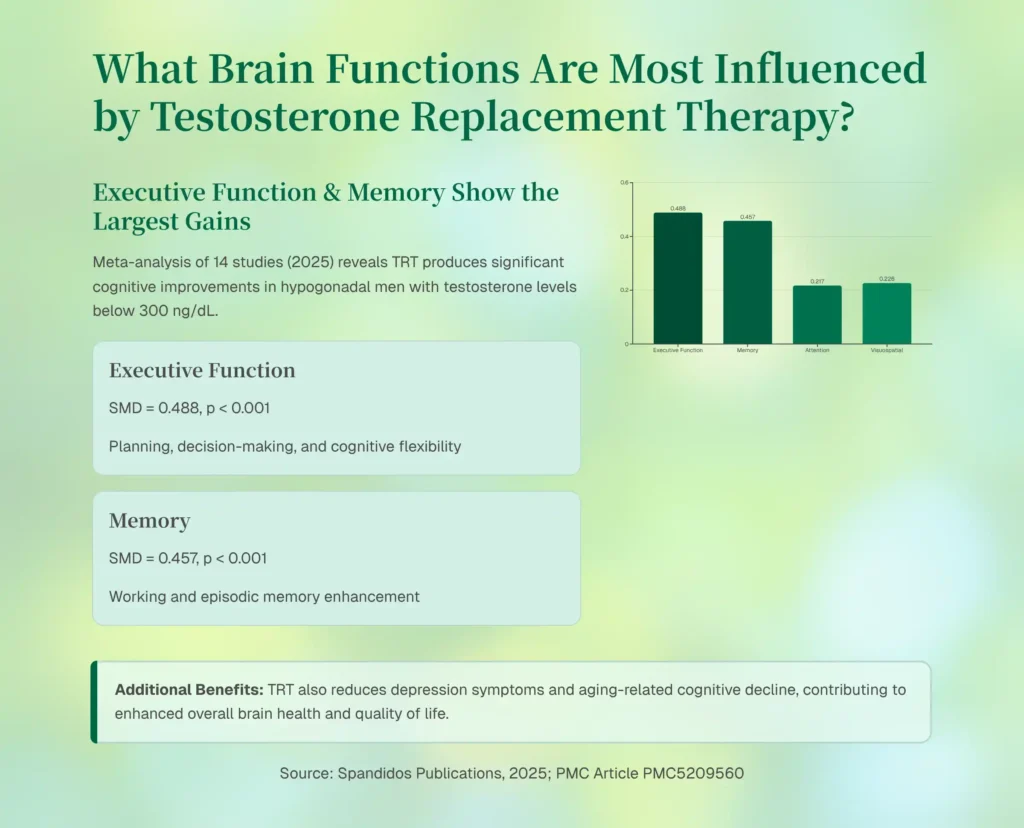
Studies suggest testosterone replacement therapy can improve long-term memory retention, especially for verbal and spatial memory. This is crucial for tasks like problem-solving or navigating new environments.
Attention and Focus
Maintaining attention isn’t just about willpower. It’s chemical. Testosterone influences neurotransmitters like dopamine and serotonin, which regulate focus. Men with low testosterone often report brain fog or difficulty concentrating, which can improve once therapy begins.
Processing Speed
The ability to take in information quickly and respond efficiently is linked to testosterone levels. Replacement therapy has been associated with faster cognitive processing, meaning decisions feel sharper and reaction times improve.
Emotional and Behavioral Changes
Mood Regulation
Testosterone has a significant impact on mood. Low levels correlate with irritability, depression, and lack of motivation. Proper therapy can stabilize mood swings, offering a more balanced emotional baseline.
Anxiety and Stress Responses
The amygdala, the brain’s fear center, is influenced by testosterone. Balanced levels may reduce overactive stress responses, helping individuals feel calmer and less reactive under pressure.
Motivation and Drive
Ever feel sluggish or unmotivated? Low testosterone may be a hidden culprit. Studies show therapy can enhance motivation, goal-setting, and persistence, both professionally and personally.
Testosterone and Social Cognition
Empathy and Understanding Social Cues
While testosterone is often linked to dominance, it also plays a role in social cognition. Replacement therapy can subtly improve empathy, helping individuals interpret social signals and respond appropriately.
Aggression and Assertiveness
Balanced testosterone can lead to healthy assertiveness without tipping into aggression. It’s about fine-tuning behavior, not flipping a switch.
Neuroprotective Effects of Testosterone
Brain Aging and Cognitive Decline
Testosterone has neuroprotective properties. Low levels are linked to faster cognitive decline and increased risk of dementia. Replacement therapy may slow brain aging, particularly in memory-related regions.
Neurodegenerative Diseases
Emerging research suggests testosterone may play a role in neurodegenerative conditions like Alzheimer’s disease, potentially mitigating neuronal loss and supporting cognitive resilience.
Mechanisms Behind Testosterone’s Brain Effects
Hormonal Pathways in the Brain
Testosterone interacts with androgen receptors throughout the brain. These receptors trigger gene expression changes that influence cognitive function, mood, and stress responses.
Neurotransmitter Regulation
Testosterone modulates dopamine, serotonin, and GABA levels, which are vital for mood, attention, and reward processing.
Brain Plasticity and Neural Growth
Testosterone promotes synaptic plasticity. The brain’s ability to form new connections. This supports learning, memory consolidation, and recovery from stress.
How Testosterone Replacement Therapy Works
Testosterone replacement is a medical approach to restoring hormone levels in people with clinically low testosterone. It can be administered in several medically recognized forms, such as injections, gels, patches, or pellets. The goal is to allow the hormone to enter the bloodstream and influence brain regions involved in memory, mood, and decision-making. Researchers are interested in how these methods affect cognitive functions, attention, and emotional well-being, rather than promoting any particular treatment option.
Measuring Testosterone Levels in Patients
Before therapy, blood tests assess baseline testosterone. Adjustments are made carefully to ensure levels support cognitive and physical health without overshooting.
Safety Considerations for Cognitive Health
While therapy can benefit the brain, it must be monitored. Excessive testosterone can disrupt mood and cognitive balance, so careful dosing and medical supervision are crucial
Current Research on Brain Benefits
Studies have demonstrated that testosterone may support hippocampal function and memory consolidation. Research focusing on cognitive outcomes often examines verbal and spatial memory improvements, attention span, and mental clarity. These studies provide insight into how hormone levels influence brain health and cognitive resilience, especially in men experiencing age-related declines.
Studies on Memory Improvement
Clinical trials have shown improved verbal and spatial memory in men undergoing therapy, highlighting testosterone’s role in hippocampal function.
Studies on Mood and Mental Clarity
Participants often report reduced fatigue, clearer thinking, and enhanced motivation, supporting testosterone’s effect on neurotransmitters involved in focus and emotional regulation.
Practical Implications for Daily Life
From an informational standpoint, understanding testosterone’s role in cognition helps explain observed changes in attention, memory, and social processing. Scientists note that men with lower testosterone levels may experience slower processing speeds, reduced motivation, or mild challenges with memory recall. Exploring these effects helps researchers and clinicians understand the broader influence of hormones on cognitive function, independent of any therapy recommendation.
Workplace Performance
Sharper focus, faster processing, and improved memory translate directly into better professional performance. Tasks requiring sustained attention or complex problem-solving become more manageable.
Social Interactions
Enhanced empathy and emotional balance can improve relationships, from casual social encounters to deep personal connections.
Decision Making
Testosterone influences the prefrontal cortex, which governs executive function. Balanced therapy supports better decision-making, risk assessment, and strategic thinking.
Potential Side Effects and Cognitive Risks
Overreplacement Risks
Excess testosterone may lead to irritability, overconfidence, or aggression, highlighting the importance of medically supervised therapy.
Hormonal Imbalance Concerns
Mismanagement can disrupt estrogen and other hormonal levels, indirectly affecting mood, cognition, and long-term brain health.
Monitoring Cognitive Outcomes During Therapy
Standard Assessments for Memory and Mood
Regular cognitive tests and mood assessments help track therapy’s effectiveness, ensuring improvements in memory, attention, and emotional regulation.
Long-Term Tracking Strategies
Combining clinical evaluations with self-reported outcomes allows for personalized adjustments and long-term cognitive benefits.
Vitality Lounge Med Spa Serving the The Flats Community and Beyond in Cleveland
Vitality Lounge Med Spa is dedicated to serving the diverse needs of the local community of Cleveland, including individuals residing in neighborhood like The Flats. With its convenient location near landmarks such as the West Bank Golf Club and major intersections like Winslow Ave and Center St (coordinates: Latitude: 41.4948734, Longitude: -81.7061015), we offer hormone replacement therapy services.
Get hormone replacement therapy Services at The Flats Now
Call Us or Contact Us (216) 202-4770
Navigate from The Flats to Vitality Lounge Med Spa Now
Testosterone is far more than a “male hormone.” It influences memory, attention, mood, social cognition, and neuroprotection. Testosterone replacement therapy cleveland when monitored carefully can enhance brain function, stabilize mood, and improve quality of life. Vitality Lounge Med Spa emphasizes understanding these effects, demonstrating that therapy isn’t just physical. It’s profoundly cognitive.
FAQs
Q1: Can testosterone therapy improve memory in older men?
Yes, studies suggest that testosterone replacement can enhance both short-term and long-term memory in men experiencing age-related declines.
Q2: How quickly can brain function improve after starting therapy?
Improvements can be noticeable within a few weeks, but maximal cognitive benefits often take several months of consistent therapy.
Q3: Does testosterone therapy affect mood?
Absolutely. Balanced therapy can reduce irritability, fatigue, and depression while enhancing motivation and emotional stability.
Q4: Are there risks of cognitive decline with therapy?
When properly monitored, therapy is generally safe. Overreplacement or unsupervised use can potentially disrupt mood or cognitive balance.
Q5: Is testosterone therapy only for men?
While predominantly prescribed for men, women with clinically low testosterone may also experience cognitive and mood benefits under careful medical supervision.