

Testosterone Replacement Therapy (TRT) has become a crucial intervention for men facing low testosterone levels. But success in therapy isn’t one-size-fits-all. One of the most overlooked factors influencing results is genetics. Understanding how your genes interact with hormone therapy can explain why some men experience dramatic improvements while others see only modest changes. For men exploring testosterone replacement therapy Cleveland, this insight can clarify expectations and guide personalized approaches.
Genetics and Hormone Therapy
Why Genetics Matters in Health
Genetics is the blueprint of our bodies. From height to metabolism, our genes influence how our bodies function and respond to interventions. Hormonal health is no exception. Variations in specific genes can determine everything from how much testosterone your body naturally produces to how it responds to supplemental therapy.
The Connection Between Genetics and Testosterone Levels
Even men with similar lifestyles and ages can have vastly different testosterone levels. Genetic factors contribute to this variability, affecting both baseline hormone production and the way the body processes therapy. This explains why some men respond exceptionally well to TRT, while others may require more nuanced approaches.
Basics of Testosterone Replacement Therapy (TRT)
What TRT Is and How It Works
TRT involves supplementing testosterone in men whose natural levels are insufficient. The therapy restores hormones to a normal physiological range, aiming to alleviate symptoms like fatigue, low libido, mood changes, and reduced muscle mass.
Common Methods of Administration
TRT can be delivered through injections, topical gels, patches, or pellets. Each method has different absorption rates and durations of effect, which interact with genetic factors influencing metabolism.
Expected Outcomes and Benefits
The goal of TRT is to restore hormonal balance, improve energy, enhance mood, increase muscle mass, and optimize overall health. Genetics can modulate these outcomes, influencing the degree and speed of improvement.
Genetic Factors Influencing TRT Success
Androgen Receptor Gene Variations
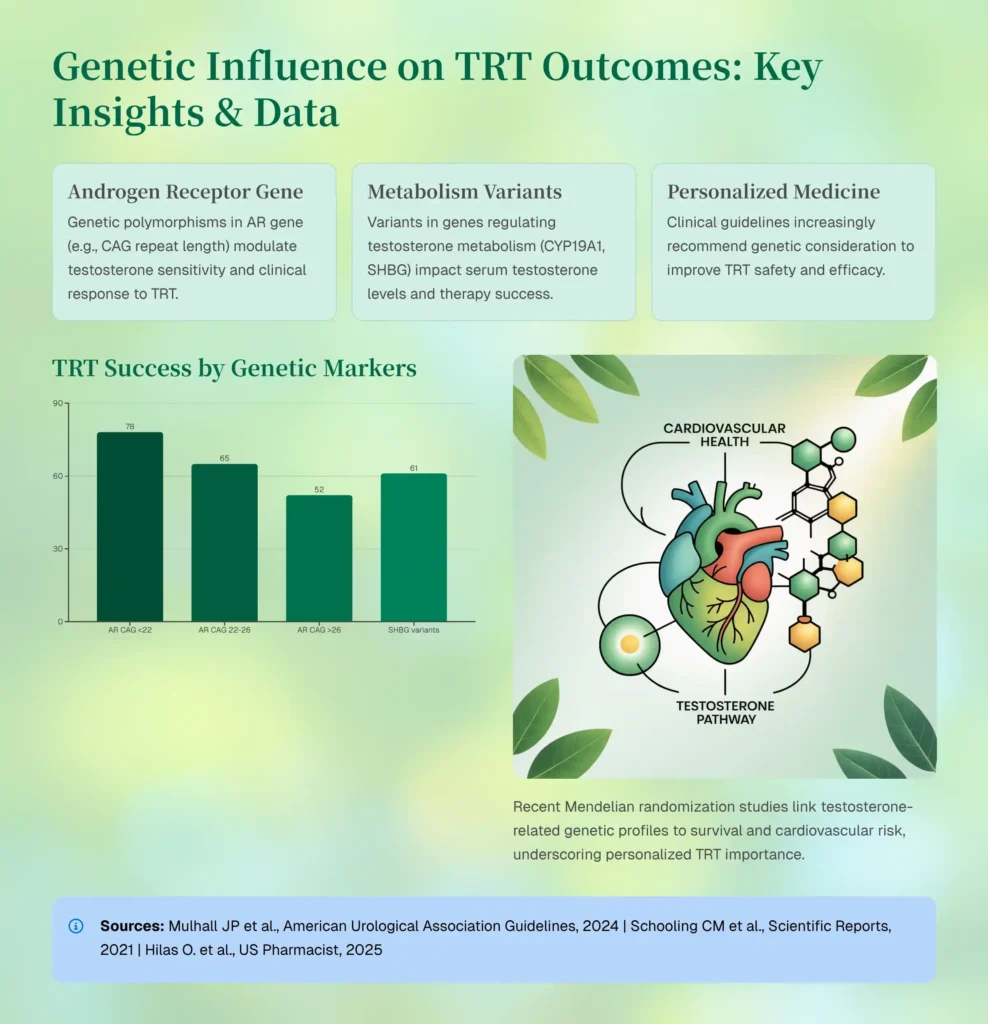
The androgen receptor (AR) gene determines how sensitive your cells are to testosterone. Variations in this gene affect receptor density and responsiveness.
How Sensitivity Affects Therapy Response
Men with more sensitive androgen receptors may experience greater benefits at lower doses, while those with less sensitive receptors may require higher doses or longer therapy periods for noticeable effects.
Enzyme Activity Genes (5-Alpha Reductase & Aromatase)
These enzymes convert testosterone into other hormones like dihydrotestosterone (DHT) and estradiol.
Conversion of Testosterone to Other Hormones
Genetic variations in enzyme activity can increase or decrease conversion rates, affecting both therapeutic outcomes and side effect profiles. For instance, excessive conversion to DHT may influence hair loss, while estradiol levels impact mood and bone health.
Genetic Predisposition to Metabolic Disorders
Genes influencing metabolism, insulin sensitivity, and fat distribution also affect TRT results.
Impact on Fat Distribution and Muscle Gain
Men predisposed to higher body fat may see slower muscle gain, even with optimal testosterone levels. Understanding this genetic influence helps in setting realistic therapy goals.
How Genetics Affects Dosage and Response
Individual Variability in Hormone Absorption
Genetics determines how quickly testosterone is metabolized and cleared from the body. Some men absorb gels more efficiently; others may require injections for consistent blood levels.
Monitoring Blood Levels and Adjusting Therapy
Regular testing of hormone levels allows healthcare providers to tailor dosage. Genetics helps explain why some patients need adjustments more frequently than others.
Lifestyle Interactions with Genetics in TRT
Exercise and Genetic Influence
Genetic variations in muscle fiber type and recovery rate affect how exercise complements TRT. Some men respond rapidly to resistance training, while others require longer periods to see muscular changes.
Nutrition and Hormonal Balance
Genes affect nutrient metabolism, influencing how protein, fats, and micronutrients support hormone function. Personalized nutrition can enhance TRT results.
Sleep and Stress Factors
Genetic predispositions to stress response or sleep patterns interact with TRT outcomes. Poor sleep or chronic stress can blunt therapy benefits, regardless of dosage.

Potential Challenges and Limitations Due to Genetics
Non-Responders and Partial Responders
Some men may see minimal improvement despite therapy. Genetic factors, such as receptor sensitivity or enzyme activity, often explain these variations.
Risk of Side Effects Related to Genetic Makeup
Certain genes increase susceptibility to side effects like acne, mood changes, or altered blood counts. Being aware of these factors allows for safer, more informed therapy planning.
Genetic Testing and TRT Planning
Benefits of Genetic Awareness Before Therapy
Testing can reveal receptor sensitivity, enzyme activity, and predisposition to metabolic issues. This information allows for personalized therapy planning.
Ethical Considerations and Accessibility
While genetic insights are valuable, access, privacy, and ethical concerns must be considered. Not all patients may have access to advanced genetic testing.
Case Studies: Genetics Impacting Therapy Outcomes
Example Scenarios in TRT Response
Men with highly sensitive androgen receptors may notice energy and mood improvements within weeks, whereas those with lower sensitivity require months for tangible results.
Lessons Learned from Research Studies
Studies consistently show that genetic variability accounts for a significant portion of the differences in therapy outcomes, reinforcing the need for personalized approaches.
The Role of Healthcare Providers in Interpreting Genetics
Personalized Medicine Approach
Healthcare providers integrate genetic data with lab results to create individualized therapy protocols, maximizing effectiveness while minimizing side effects.
Combining Lab Results with Genetic Data
Monitoring testosterone, estradiol, and DHT levels alongside genetic information allows for precise, evidence-based adjustments to therapy.
The Future of Genetics in Testosterone Replacement Therapy
Advances in Precision Medicine
Emerging research promises more tailored interventions, considering genetic, lifestyle, and environmental factors to optimize TRT.
Potential for Tailored Hormone Protocols
Future protocols may use genetic insights to determine the ideal method of delivery, dosage, and complementary lifestyle strategies for each individual.
Vitality Lounge Med Spa Serving the Irishtown Bend Community and Beyond in Cleveland
Vitality Lounge Med Spa is dedicated to serving the diverse needs of the local community of Cleveland, including individuals residing in neighborhood like Irishtown Bend. With its convenient location near landmarks such as the Cuyahoga RIver and major intersections like Detriot Ave and Center St (coordinates: Latitude: 41.4939734, Longitude: -81.7049), we offer testosterone replacement therapy services.
Get testosterone replacement therapy Services at Irishtown Bend Now
Call Us or Contact Us (216) 202-4770
Navigate from Irishtown Bend to Vitality Lounge Med Spa Now
Genetics plays a pivotal role in the success of testosterone replacement therapy Cleveland. From receptor sensitivity to enzyme activity and metabolic predispositions, individual variations shape how therapy works.
FAQs
1. Can genetics determine how well I respond to testosterone therapy?
Yes. Variations in androgen receptors, enzyme activity, and metabolic genes influence how your body responds to TRT.
2. Should everyone undergo genetic testing before starting TRT?
While it can be helpful, genetic testing is not mandatory. It provides insight but therapy can still be effective with careful monitoring and lifestyle optimization.
3. Do lifestyle factors override genetic influence on TRT?
Lifestyle factors like diet, exercise, sleep, and stress management can enhance therapy outcomes, but genetics still sets a baseline for responsiveness.
4. Can genetic variations affect TRT side effects?
Yes. Genes influencing hormone metabolism or receptor sensitivity can increase susceptibility to side effects such as mood changes, acne, or altered blood counts.
5. Is TRT success predictable based on genetics alone?
Not entirely. Genetics provides valuable insight, but monitoring, lifestyle, and individualized dosing are equally critical to achieving optimal results.