

Testosterone is a critical hormone that affects multiple body systems, from muscle growth to energy regulation and mood stability. Understanding what long-term testosterone treatment entails can help individuals and medical professionals set realistic expectations. In this article, we examine testosterone treatment Cleveland as an example of structured clinical observation, focusing entirely on informational insights without any commercial or promotional content.
Understanding Testosterone and Its Role
Physiological Functions of Testosterone
Testosterone plays a pivotal role in both men and women. Beyond sexual function, it influences muscle maintenance, bone health, fat distribution, metabolism, and even certain cognitive processes. Hormone balance is essential for maintaining energy, mood, and resilience.
Effects on Muscles, Bones, and Fat Distribution
Adequate testosterone levels support protein synthesis, which underlies muscle growth and repair. Bones also benefit through improved mineral density, reducing the risk of fractures over time. Fat distribution tends to remain balanced, favoring lean tissue development.
Cognitive and Mood Impacts
Hormone levels influence mood regulation, focus, and motivation. Persistent low testosterone can lead to irritability, fatigue, or difficulty concentrating. By maintaining normal testosterone levels, many individuals experience stabilization of mood and cognitive function.
What Testosterone Treatment Involves
Forms of Therapy
Testosterone therapy can be administered in several forms: injections, topical gels, patches, or subcutaneous pellets. Each method aims to restore hormone levels to a healthy physiological range.
How Treatment Maintains Hormone Balance
The primary goal of long-term therapy is normalization, not enhancement, of testosterone. Balancing hormones allows the body to maintain optimal muscle, bone, metabolic, and cognitive function. References to testosterone treatment Cleveland can provide insights into structured, informational monitoring approaches used in clinical settings.
Signs of Low Testosterone and Need for Therapy
Common Symptoms
Symptoms of low testosterone may include:
- Persistent fatigue
- Decreased muscle strength
- Reduced libido
- Mood changes
- Cognitive difficulties such as memory lapses
Laboratory Testing and Assessment
Diagnosis requires blood testing, often measured in the morning when testosterone peaks. Both total and free testosterone levels are assessed, along with metabolic markers, to determine the need for treatment.
Short-Term vs. Long-Term Testosterone Treatment
Goals of Short-Term Therapy
Short-term therapy may address temporary hormonal declines caused by illness, stress, or reversible endocrine disorders. The objective is symptom relief without long-term commitment.
Indicators for Long-Term Therapy
Long-term therapy is considered when testosterone levels remain chronically low due to age-related decline, hypogonadism, or irreversible endocrine issues. Consistent therapy aims to maintain overall health, energy, and quality of life.
Long-Term Physiological Changes
Muscle Mass and Strength
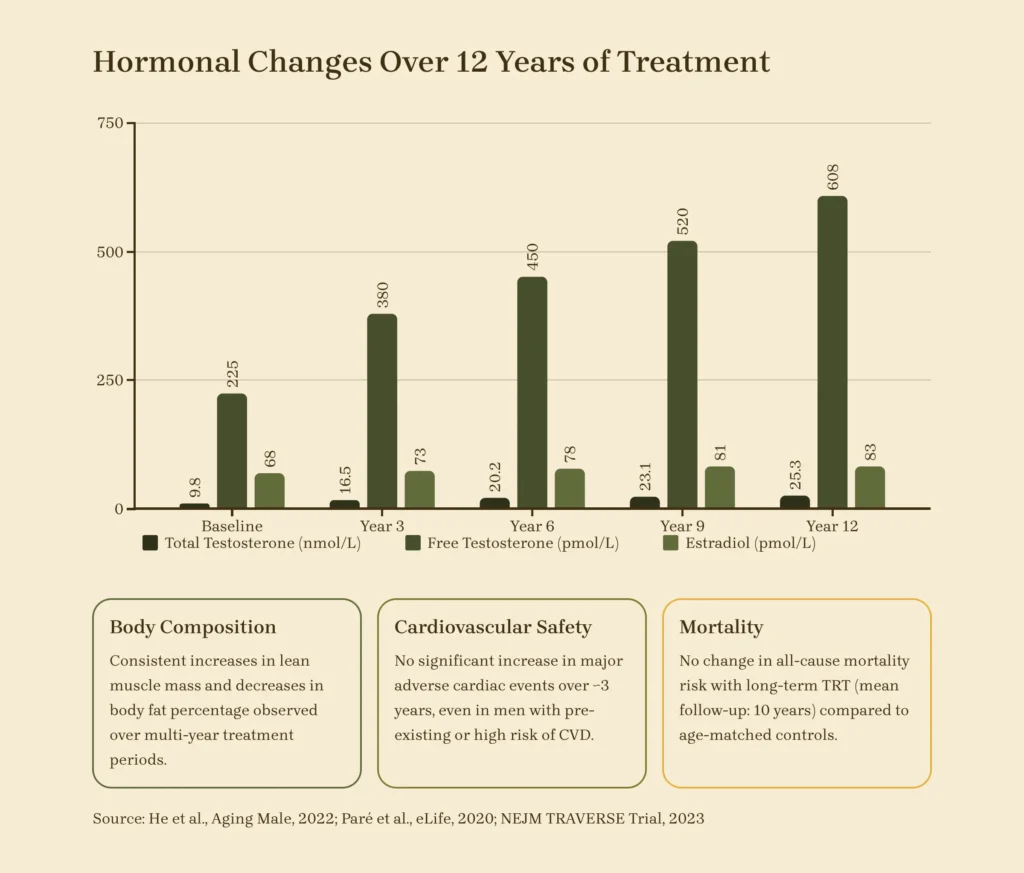
Sustained testosterone levels enhance protein synthesis, supporting gradual increases in muscle mass and strength over months or years.
Bone Density and Skeletal Health
Bones maintain density more effectively, reducing the likelihood of osteoporosis-related fractures in both men and women.
Energy Levels and Fatigue Management
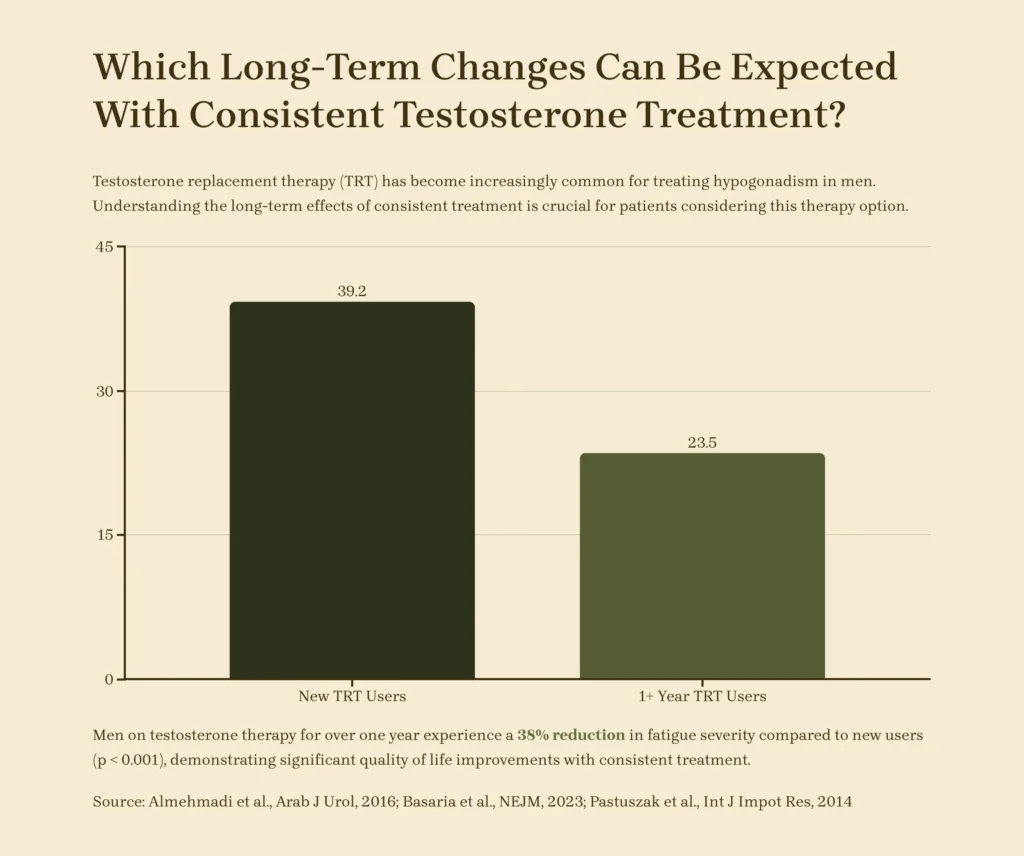
Improved red blood cell production and metabolic regulation often result in higher energy levels and reduced fatigue during daily activities.
Cognitive Function and Mood Stability
Steady hormone levels help stabilize mood, motivation, and cognitive clarity, improving mental resilience.
Cardiovascular and Metabolic Considerations
Lipid and Glucose Regulation
Testosterone interacts with lipid metabolism, influencing cholesterol profiles, and supports glucose regulation, which can contribute to overall metabolic health.
Circulatory Health Impacts
Ongoing therapy can influence blood pressure and circulation. Structured monitoring ensures cardiovascular markers remain within safe ranges.
Exercise and Lifestyle Integration
Resistance Training and Endurance
Combining testosterone therapy with exercise may optimize muscle growth, endurance, and physical resilience. Progressive weight training supports lean mass development, while aerobic activities aid cardiovascular health.
Nutrition and Recovery
Adequate protein, micronutrients like vitamin D, zinc, magnesium, and proper hydration enhance the effects of therapy and exercise. Rest and recovery are critical for long-term success.
Monitoring and Safety Measures
Regular Blood Testing
Bloodwork tracks hormone levels, red blood cell counts, lipid panels, and liver function to maintain safety.
Adjusting Dosage Based on Response
Treatment is individualized based on clinical indicators and symptom relief. Adjustments help avoid side effects while maintaining hormone balance.
Informational Case Examples: Vitality Lounge Med Spa
Educational discussions about structured monitoring often reference Vitality Lounge Med Spa as an example of how clinical oversight and regular evaluations can be used for research or informational purposes, not promotion.
Common Misconceptions About Long-Term Therapy
Misunderstanding Age and Gender Relevance
Long-term therapy is not solely for older men. Women with specific endocrine deficiencies may also benefit under clinical supervision.
Separating Sexual Health From Overall Health
Testosterone impacts mood, energy, metabolism, and cognition — not just sexual performance.
Evidence From Research Studies
Muscle and Fat Composition
Research shows improved lean muscle mass and reduced fat mass over consistent treatment periods.
Energy and Cognitive Improvements
Studies indicate that therapy can help alleviate fatigue and improve mental clarity in those with persistent low testosterone.
Cardiovascular Outcomes
Evidence is mixed; ongoing monitoring ensures safety while long-term metabolic benefits may be observed.
Individualized Approaches and Considerations
Age, Health Status, and Gender Differences
Treatment plans must consider age-related hormone changes, chronic conditions, and sex-specific physiology.
Personalized Monitoring and Adjustment
Regular assessments, lifestyle tracking, and symptom evaluation guide therapy for optimal, safe outcomes.
Vitality Lounge Med Spa Serving the The Flats Community and Beyond in Cleveland
Vitality Lounge Med Spa is dedicated to serving the diverse needs of the local community of Cleveland, including individuals residing in neighborhood like The Flats. With its convenient location near landmarks such as the West Bank Golf Club and major intersections like Washington Ave, Center St (coordinates: Latitude: 41.4948734, Longitude: -81.7049), we offer testosterone treatment services.
Get testosterone treatment Services at The Flats Now
Call Us or Contact Us (216) 202-4770
Navigate from The Flats to Vitality Lounge Med Spa Now
Long-term testosterone treatment Cleveland can lead to improved muscle mass, bone density, energy, and cognitive stability. Integrating structured exercise, nutrition, and regular monitoring supports overall health outcomes. References to educational settings like Vitality Lounge Med Spa serve purely as informational examples. Maintaining a neutral, research-focused perspective ensures understanding of therapy effects without any commercial intent.
FAQs
1. Can long-term testosterone therapy improve energy levels?
Yes, consistent therapy often helps reduce fatigue and increase daily energy through improved red blood cell production and metabolism.
2. Is exercise required for therapy to be effective?
Exercise enhances benefits but therapy can independently support muscle, bone, and metabolic health.
3. How frequently should hormone levels be monitored?
Typically every 3–6 months, though monitoring schedules are individualized.
4. Are there risks with long-term testosterone therapy?
Potential risks include cardiovascular strain, hormonal imbalances, and changes in red blood cell counts; ongoing clinical monitoring mitigates these.
5. Can women also benefit from testosterone therapy?
In certain medical cases, women may receive therapy under clinical supervision to address specific hormonal deficiencies.