

Testosterone replacement therapy (TRT) is often discussed in the context of energy, mood, or sexual health. However, the decision to pursue TRT long-term requires a deeper understanding of hormone balance, persistent symptoms, and medical oversight.
This article explains the circumstances that make testosterone replacement therapy in Cleveland a long-term option, the physiological rationale, safety measures, and expected health outcomes. References to clinical practices, such as those in Cleveland, are included strictly for educational purposes.
Testosterone and Health
Testosterone is much more than a “male hormone.” Both men and women produce it, and it plays a critical role in physical strength, mood regulation, cognitive function, and metabolism. When levels fall below normal, various aspects of daily life may be affected, prompting consideration for therapy.
The Role of Testosterone in the Body
Physical Functions
Testosterone helps build and maintain muscle mass, supports bone density, and regulates fat distribution. Maintaining adequate levels contributes to physical resilience, balance, and mobility.
Mental and Emotional Functions
Hormone balance influences mood, motivation, and stress responses. Low levels can manifest as irritability, fatigue, or depressive symptoms.
Metabolic and Cardiovascular Roles
Testosterone affects glucose metabolism, lipid regulation, and circulatory function. Proper hormone levels may support cardiovascular health and efficient metabolic function.
Signs of Low Testosterone
Common Symptoms
Typical signs include persistent fatigue, reduced muscle strength, low libido, mood changes, and cognitive difficulties such as poor concentration or memory lapses.
Laboratory Testing and Diagnosis
Low testosterone is confirmed through clinical blood testing, often taken in the morning when levels peak. Evaluations typically include total and free testosterone along with related metabolic markers.
Short-Term vs Long-Term Therapy
Goals of Short-Term TRT
Short-term therapy is used for temporary declines due to illness, stress, or reversible endocrine conditions. The aim is symptom relief without long-term commitment.
Indications for Long-Term TRT
Long-term therapy is considered when testosterone levels remain chronically low due to age-related decline, hypogonadism, or irreversible endocrine disorders. The goal is sustained hormonal balance and support of overall health.
Factors Influencing Long-Term TRT Decisions
Age-Related Hormone Decline
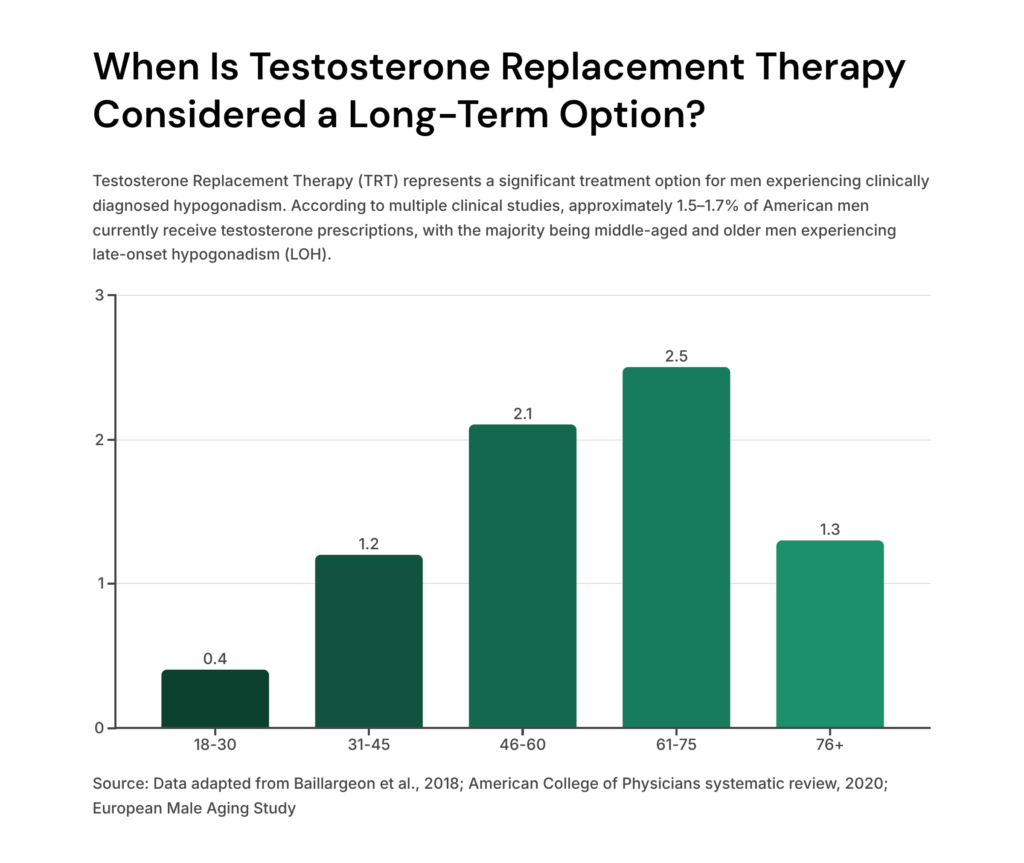
Testosterone naturally declines after age 30. In some men, this decline is significant enough to justify long-term intervention to maintain energy, muscle, and cognitive function.
Chronic Health Conditions
Medical conditions such as pituitary disorders, hypogonadism, or metabolic syndrome may necessitate ongoing TRT for optimal health outcomes.
Risk-Benefit Evaluation
Healthcare providers assess the potential benefits of therapy against risks, including cardiovascular, prostate, and metabolic considerations. This evaluation informs whether long-term treatment is appropriate.
Methods of Long-Term TRT Administration
Injectable Testosterone
Injections provide predictable dosing and absorption, commonly administered weekly, biweekly, or monthly depending on individual response.
Gels and Patches
Topical treatments offer steady absorption but require careful application to avoid transferring hormones to others.
Pellets and Other Delivery Systems
Subcutaneous pellets release testosterone gradually over months, maintaining consistent hormone levels.
Monitoring and Safety Considerations
Regular Blood Testing
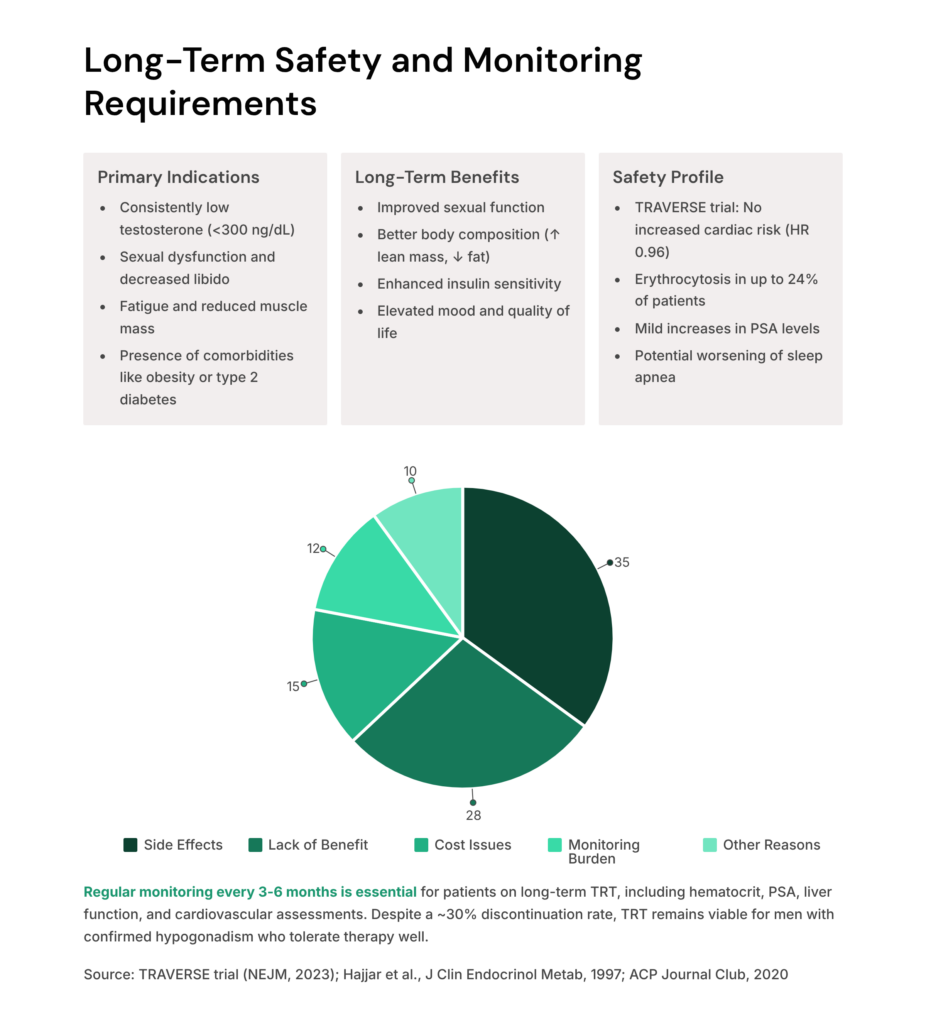
Blood tests monitor hormone levels, red blood cell counts, liver function, and lipid profiles to ensure therapy remains safe.
Cardiovascular and Metabolic Health Checks
Ongoing monitoring of blood pressure, cholesterol, and glucose helps detect potential issues early.
Adjusting Treatment Based on Response
Dosing is adapted based on symptom relief, hormone levels, and overall health markers to maintain balance and reduce side effects.
Potential Long-Term Benefits
Muscle Mass and Bone Density
Sustained testosterone levels help maintain muscle strength and bone integrity, lowering fracture risk.
Energy and Fatigue Reduction
Many individuals experience improved stamina and reduced fatigue with long-term therapy.
Cognitive Function and Mood
Consistent hormone balance can support memory, focus, and emotional regulation.
Sexual Health Support
Long-term TRT helps normalize libido and sexual function as part of overall wellness.
Risks and Precautions
Cardiovascular Considerations
Monitoring is essential since testosterone may influence blood pressure, cholesterol, and heart health.
Prostate Health Monitoring
Regular assessments help detect changes in prostate health for men on long-term therapy.
Other Potential Side Effects
Side effects such as fluid retention, elevated red blood cells, or skin changes may occur, requiring ongoing medical review.
Importance of Professional Oversight
Role of Clinical Guidance
Professional oversight ensures therapy is safe, effective, and tailored to the individual’s health profile.
Informational Example: Practices in Cleveland Clinics
Clinical practices in Cleveland demonstrate structured monitoring, regular testing, and professional adjustments, illustrating safe TRT management strictly for informational purposes.
Long-Term Safety and Monitoring Requirements
Common Misconceptions About TRT
“It’s Only About Sexual Health”
Testosterone impacts energy, muscle, bones, mood, cognition, and overall metabolic function—not just sexual performance.
“Only Older Men Need TRT”
Younger individuals with hormonal deficiencies may also benefit from long-term therapy under medical supervision.
Vitality Lounge Med Spa Serving the The Flats Community and Beyond in Cleveland
Vitality Lounge Med Spa is dedicated to serving the diverse needs of the local community of Cleveland, including individuals residing in neighborhood like The Flats. With its convenient location near landmarks such as the Old River and major intersections like Loop Rd, Division Ave (coordinates: Latitude: 41.4939734, Longitude: -81.7109077), we offer low testosterone treatment services.
Get low testosterone treatment Services at The Flats Now
Call Us or Contact Us (216) 202-4770
Navigate from The Flats to Vitality Lounge Med Spa Now
Informed Decisions on Long-Term TRT
Long-term TRT is considered when chronic low testosterone significantly affects daily life and health. Careful monitoring, clinical guidance, and personalized adjustments help maximize long-term benefits in physical, mental, and emotional well-being. Examining professional practices in Cleveland serves as a neutral educational reference on structured monitoring and safety protocols.
FAQs
Q1: How is long-term TRT determined?
Chronic low testosterone confirmed via lab tests and persistent symptoms guide long-term therapy decisions.
Q2: Is there an age limit for TRT?
No; therapy is guided by hormone levels and individual health rather than age alone.
Q3: What kind of monitoring is necessary?
Blood tests, cardiovascular and metabolic checks, and prostate evaluations are recommended.
Q4: Can women receive TRT?
Under certain conditions and supervision, women may receive therapy for hormone deficiencies.
Q5: Are there misconceptions about TRT?
Yes; it is not only about sexual health, nor is it exclusive to older men.